

LEWISTON, Maine – In Maine politics, controversies that once might have ended political careers now seem to generate little more than a brief news cycle and a shrug.
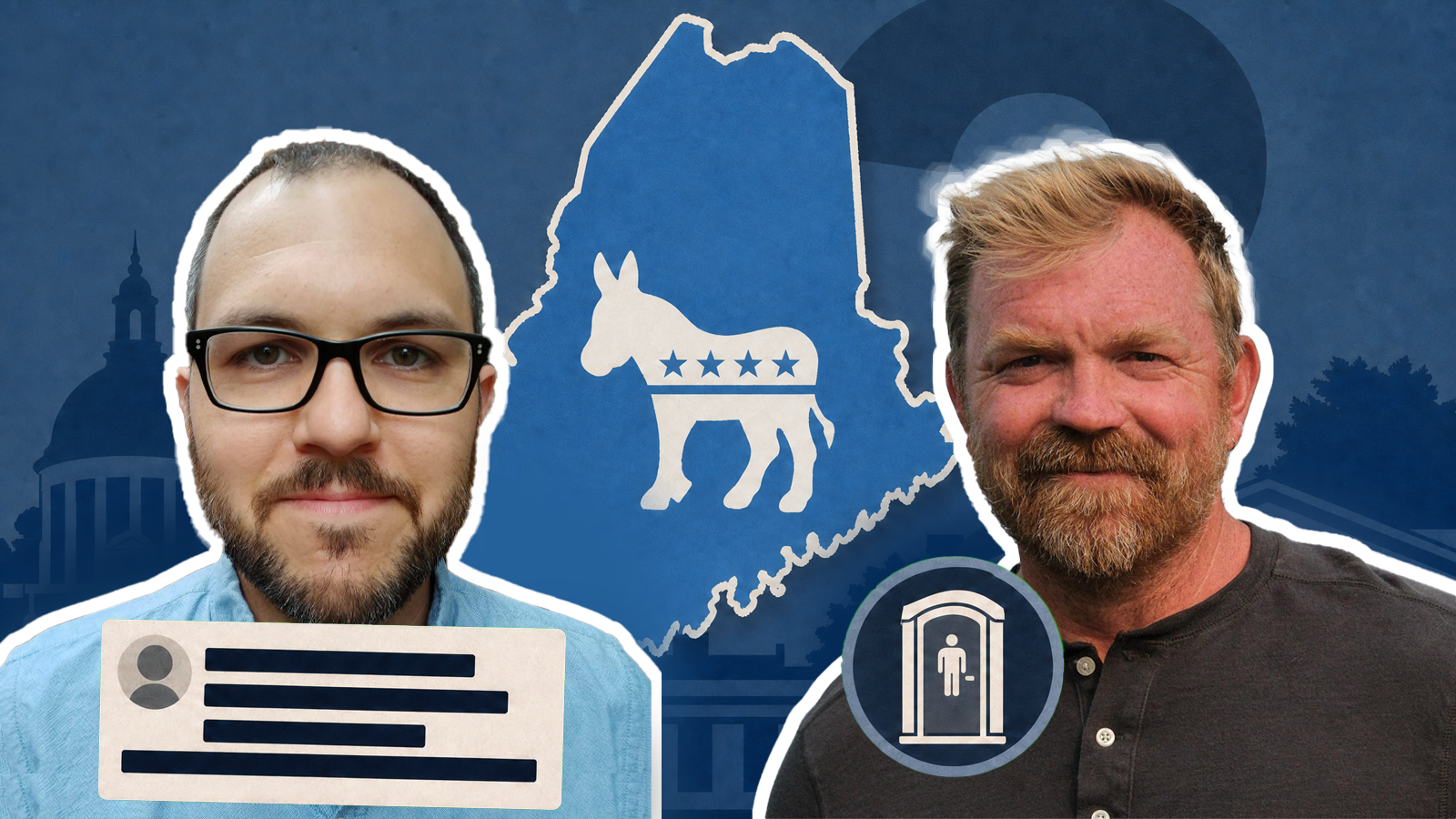
On one side is Lewiston City Councilor, School Committee member, and State Rep. Scott Harriman, who publicly admitted in 2024 that he had urinated in downtown alleys and parking garages “several times,” while defending the need for more public bathrooms in Lewiston.
On the other is Graham Platner, Democrats’ presumptive U.S. Senate nominee, who is again facing scrutiny after resurfaced Reddit posts reportedly included graphic references to porta-potties, vulgar military humor, and explicit sexual commentary posted under the username “P-Hustle.”
For many Mainers, the obvious question is simple: what exactly is happening to the modern Democratic Party in Maine?
Platner’s online history has already become a political liability throughout his Senate run. Past reporting uncovered thousands of Reddit comments touching on race, police, political violence, and controversial sexual remarks. The latest wave of attention has centered on comments describing masturbation in porta-potties and fascination with vulgar military graffiti.
Meanwhile in Lewiston, Harriman’s public urination comments became one of the most bizarre local political stories in recent memory. In remarks reported by The Maine Wire, Harriman openly acknowledged urinating in public garages and alleys because there were not enough restroom options downtown.
Individually, the stories are strange. Together, they paint an increasingly uncomfortable picture for Democrats trying to present themselves as the party of professionalism, dignity, and responsible governance.
The issue for voters is larger than crude comments or embarrassing admissions. It is the growing perception that standards no longer matter. Mainers are watching elected officials and major candidates repeatedly stumble into controversies that would have been politically devastating just a few years ago, yet party leadership often responds with silence, deflection, or outright support.
Platner continues to receive backing from major progressive figures despite the steady drip of controversial revelations. Harriman, despite multiple controversies surrounding his tenure in Lewiston politics, continues to hold influential positions in municipal and state government.
For many Maine voters, especially independents and moderates, the concern is not simply about personality quirks or internet history. It is about judgment.
At a time when Maine faces rising housing costs, public safety concerns, drug addiction, strained schools, and growing distrust in government, voters may reasonably ask why so much attention surrounding Democratic leadership keeps revolving around scandal, vulgarity, and controversy instead of solutions.
And as the 2026 elections approach, Republicans are likely to continue asking a blunt political question:
Is this the new face of the Democratic Party in Maine?



Suburban voters are the deciders.
Yes.
This is exactly what the Democrat party looks like in Maine .
It ain’t good .
$10 says that Mills will reinstate her ‘suspended’ campaign soon! I hate to say ‘l told you so’ when l warned everyone that she wasn’t simply going away.
She’s up to something!
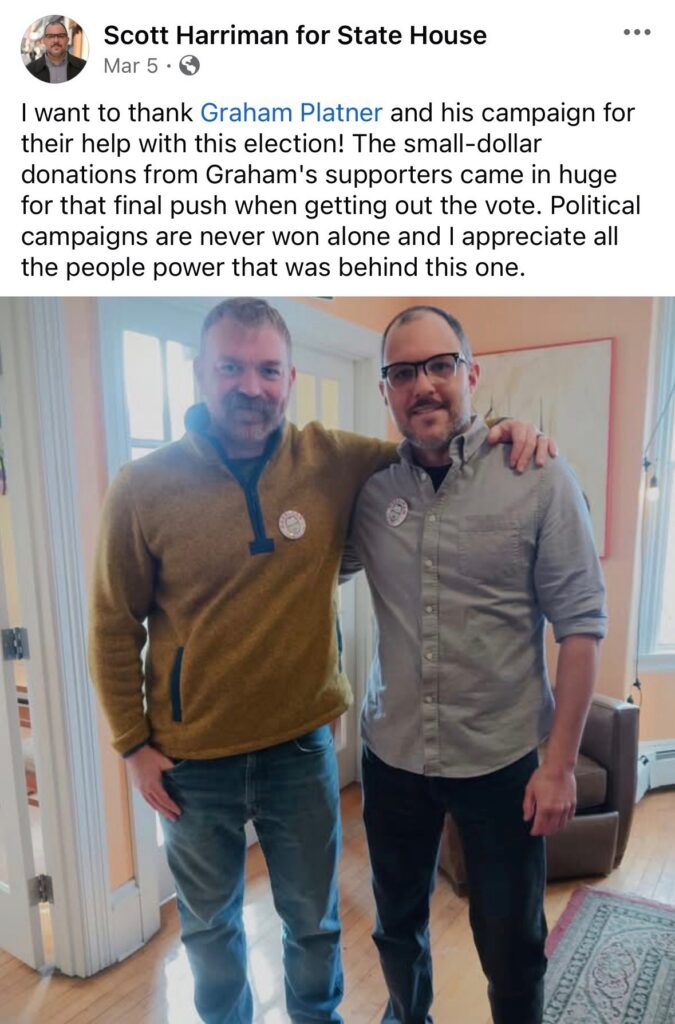
That picture of Harriman and Platner, arm and arm, make them look to be fairy good friends.
I suspect General Mills and her ilk are the ones digging up all the dirt on the Commie Platner so she can swoop back into the race on her broom. She’ll still lose badly.
I HATE GRAHAM PLATNER tee-shirts will be a big seller at Janet’s gift shop in Farmington.
This is the democrat party not only in maine but everywhere. Liberal voters do not give a sh*t what these guys do (oh but they care if Trump says f*ck) …they just vote for the person who is most opposed to conservative policy and law. Liberals are a bunch of hypocrites; delusional, dumb, self-rightous, angry hypocrites
desperation is not pretty
It’s easy to be a socialist growing up rich, white, privileged, then living of of other peoples (yours and mine) money as an adult.
Democrats say all Republicans are Nazis although only their Clownish poster boy actually has one of which he was very proud until the leftist billionaires backing him told him to hide it. There isn’t an oyster in the gulf of Maine thatisn’t smarter than Graham, the RICH DILLETANT.
Democrats say all Republicans are Nazis although only their Clownish poster boy actually has one of which he was very proud until the leftist billionaires backing him told him to hide it. There in’t an oyster in the gulf of Maine thatisn’t smarter than Graham, the RICH DILETTANTE.
The new democrat/communist mantra:
“Everywhere is freaks and hairies
Dykes and fairies, tell me where is sanity
Tax the rich, feed the poor
Till there are no rich no more”
Democrats are illiberal Marxo-fascist nihilists and tyrants. Period.
It never gets mentioned, but there is an anti-paramilitary training law in the state of Maine that was aimed at “Right Wing” “militia” types when it was passed. Platner has been openly engaged in such illegal training for several years with the Maine Socialist Rifle Association. which is an ANTIFA aligned paramilitary train band. ANTIFA is a declared domestic terrorist organization. Platner’s comments about training with weapons to fight fascists and oligarchs and “all cops are bastards” quotes can be seen in clear context in light of his leadership role in this organization.
Catcha- she’s going to slide back into the Attorney General position
Racist, check. Sexist, check. Anti-Semitic, check. Denigrating fisherman, rural voters, fellow soldiers, and the military in general, check. Praising terrorist, check. All will be overlooked by local Democrats, PPH and the BDN for towing The Party line.
Common decency went out the window with the oversaturation of social media in our culture now. There really isn’t any such thing as standards which is a real shame because we all need to be held accountable for the things we say.
Not new. Same sick demented corrupt policies. Just different mugs.