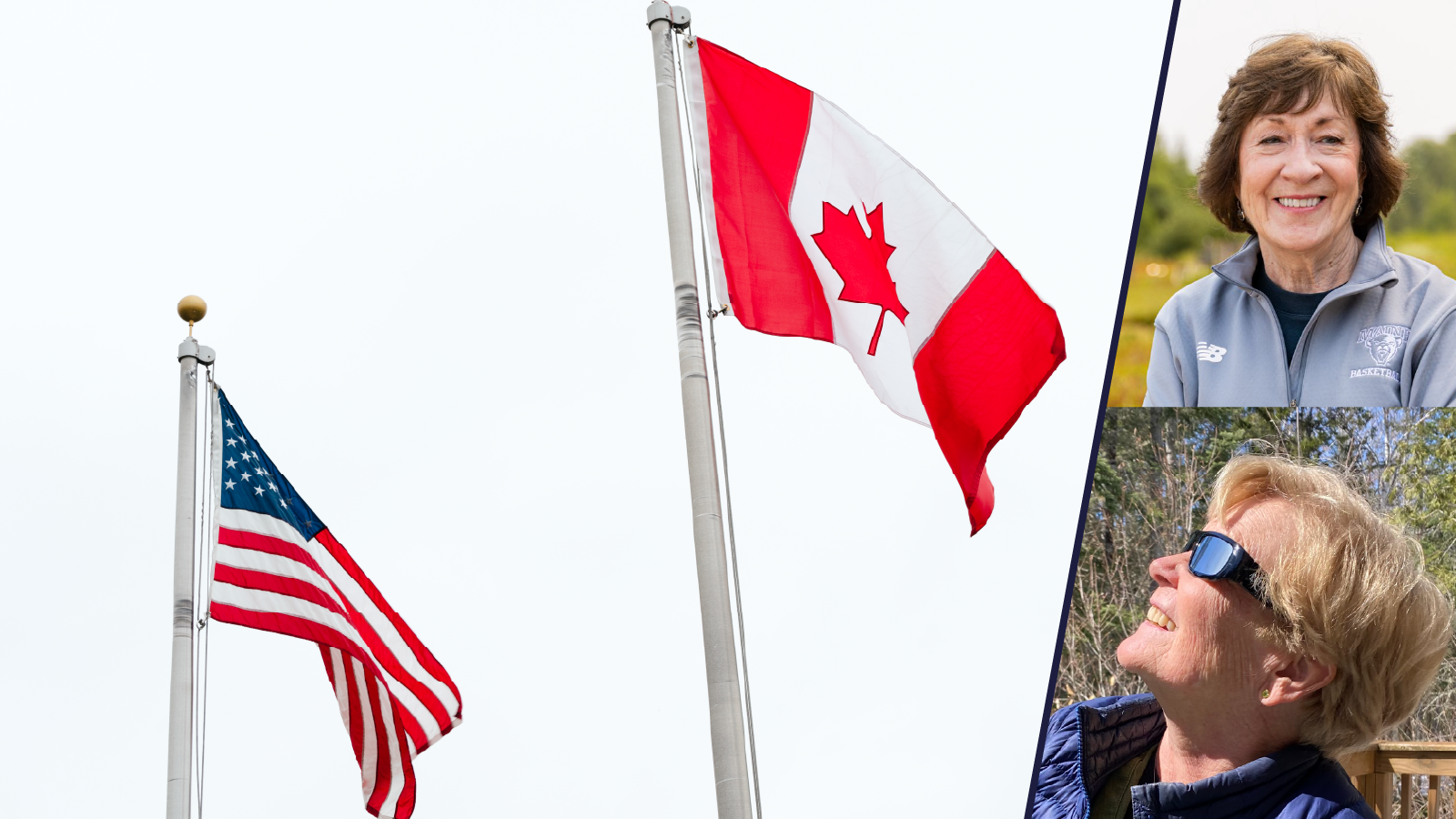
Maine Republican Sen. Susan Collins and Democratic Rep. Chellie Pingree rarely approach President Donald Trump from the same political direction, but the escalating trade fight with Canada has put the two lawmakers on increasingly similar ground.
Both are warning that the latest round of tariffs could hit Maine particularly hard, raising costs for families while squeezing manufacturers, farmers, lobstermen and other businesses that have spent decades building supply chains across the Canadian border.
The warnings have taken on new urgency after U.S.-Canada trade negotiations collapsed late Friday and a new 50 percent tariff took effect on roughly $20 billion worth of Canadian goods. Canada has announced plans for retaliatory tariffs beginning Sept. 8.
For Maine, the dispute is hardly an abstract fight between Washington and Ottawa.
Canada is deeply woven into the state’s economy, from paper mills and construction materials to agriculture, seafood, fuel and manufacturing. Maine imports approximately $2 billion in non-petroleum products from Canada annually, according to Collins.
“The on-again/off-again trade talks between the U.S. and Canada lead to higher costs, risk, and uncertainty for Maine businesses,” Collins said Saturday following the breakdown in negotiations.
“If the Administration proceeds with these tariffs, they will increase costs for Maine families, as most businesses will have no choice but to pass on the tariffs to their customers through higher prices,” she added.
From a Near Deal to a Trade War
The latest escalation came after several days in which Washington and Ottawa appeared close to reaching an agreement.
Trump temporarily postponed the tariffs last week, announcing that the two countries had a deal subject to final documents. Canadian Prime Minister Mark Carney offered a more cautious assessment, saying substantial progress had been made but significant work remained.
By Friday night, those negotiations had collapsed.
The result was a 50 percent tariff on roughly $20 billion worth of Canadian products, covering hundreds of categories of goods. The latest duties include products ranging from cement and paper products to consumer goods, while other Canadian industries are already subject to separate U.S. tariffs.
The Trump administration has defended the tariffs as necessary to counter what it describes as discriminatory Canadian trade practices. Trump invoked Section 338 of the Tariff Act of 1930, which allows a president under certain circumstances to impose additional duties of up to 50 percent against a country found to discriminate against American commerce.
Canada isn’t backing down.
Carney announced that his government intends to match the new American tariffs “dollar for dollar,” setting up another round of retaliatory duties against American exports.
That is precisely the kind of tit-for-tat escalation Maine’s congressional delegation has warned about for more than a year.
Collins: Maine Families Could Pay the Price
Collins has become one of the most prominent Republican voices urging the Trump administration to reconsider broad tariffs against Canada.
Her concern has focused heavily on the practical consequences for Maine businesses that cannot simply replace Canadian suppliers with American alternatives overnight.
“I have heard from many businesses, farmers, and lobstermen concerned about the cost of navigating the tariffs, the lack of domestic supply chains, and the likely imposition of retaliatory tariffs by Canada,” Collins said Saturday.
“I urge both sides to return to the negotiating table.”
Earlier this month, Collins wrote Commerce Secretary Howard Lutnick and U.S. Trade Representative Jamieson Greer asking the administration to provide Maine businesses with greater clarity and to examine the economic consequences before imposing the tariffs.
Her office said the proposed duties covered more than 500 categories of Canadian imports. Maine paper and concrete businesses were among those raising concerns that insufficient domestic supplies could leave them little choice but to absorb the tariff costs, or pass them along.
Collins has also backed legislation aimed at placing additional congressional checks on presidential tariff authority.
The bipartisan Trade Review Act would generally require the president to notify Congress shortly after imposing or increasing a tariff, explain the reasoning and provide an assessment of the potential consequences for American businesses and consumers. Tariffs covered by the legislation would expire after 60 days unless Congress approved them.
Collins also co-sponsored the CANADA Act, legislation designed to exempt goods imported by small businesses from certain tariffs imposed on Canadian products.
Pingree: Maine Is Caught in the Middle
Pingree has been more sweeping in her criticism of Trump’s trade policies.
“At a time when millions of Americans are already being crushed by Trump’s disastrous economic policies, his decision to raise tariffs on all Canadian imports to 50% will only make things worse, while further eroding one of our most critical global alliances,” Pingree said following the latest escalation.
Her opposition is not new.
When Trump announced tariffs against Canada in February 2025, Pingree warned they would drive up costs for working families while destabilizing Maine industries dependent on Canadian energy, raw materials and processing capacity.
She specifically pointed to northern and eastern Maine communities dependent on electricity imported from New Brunswick and Maine’s lobster industry, which relies heavily on Canadian processing facilities.
Pingree has also criticized the administration’s use of sweeping executive tariff authority and praised the Supreme Court’s February 2026 decision striking down earlier Trump tariffs imposed through emergency powers.
Despite their political differences, Pingree and Collins have previously joined forces on the Canada issue.
In March 2025, Collins, Pingree and independent Sen. Angus King sent a joint letter to the Trump administration warning against what they described as a potentially “catastrophic trade war” with America’s northern neighbor.
Their numbers illustrated just how much Maine has at stake.
According to the delegation, Maine and Canada exchanged more than $6 billion in two-way trade, supporting more than 60,000 Maine jobs connected to manufacturing, production and transportation.
Canada also supplies energy products that ultimately reach Maine homes, businesses and military facilities.
“Given the deeply integrated nature of our economies, any tariffs on imports from Canada — and any retaliatory measures by Canada in response — may raise prices on gasoline, energy, groceries, and much more,” the lawmakers wrote at the time.
Maine Could Feel the Fight From Both Directions
That may now be the central problem facing Maine.
Tariffs on Canadian imports can make materials purchased by Maine businesses more expensive. Canadian retaliatory tariffs, meanwhile, can make Maine products more expensive north of the border.
That leaves some businesses potentially exposed on both ends.
Manufacturers could pay more for Canadian materials while facing higher barriers when selling finished products back into Canada. Farmers could see costs rise for Canadian inputs while agricultural exports face retaliation. Maine’s forest-products sector, seafood industry and construction businesses could face similar pressure.
The situation is especially complicated because simply telling businesses to “buy American” does not immediately solve shortages in domestic supply chains.
Collins has repeatedly made that point.
Maine’s potato growers, for example, have historically depended heavily on Canadian fertilizer, while Maine’s forest-products sector has relied on a cross-border supply chain that does not stop at an international boundary.
The question now is how long the standoff lasts.
Trump has argued that tariffs can protect American industries, encourage domestic manufacturing and give the United States leverage against foreign trade practices. His administration maintains that Canada’s policies have disadvantaged American commerce and justified the latest duties.
Collins and Pingree are effectively warning that whatever leverage Washington gains could come with a significant price tag for Maine.
And in a state where Canada is not merely another trading partner but a neighbor whose economy has been intertwined with Maine’s for generations, a prolonged trade war could quickly become something much more tangible.
It could show up at the mill.
At the farm.
At the lobster dock.
And eventually, at the checkout counter.