



In an attempt to curb the effects of climate change, state governments across the nation have adopted renewable portfolio standards (RPS). The purpose of these standards is to mandate that a certain percentage of retail electricity originates from renewable resources. In addition, the RPS serves to diversify states’ energy portfolios, thereby reducing overall reliance on fossil fuels. According to the National Conference of State Legislatures, 29 states and the District of Columbia have adopted RPS requirements and eight states have created renewable energy goals.
In 1999, Maine’s Public Utility Commission (PUC) adopted specific rules that required electricity providers to supply at least 30 percent of their total electricity sales from renewable and energy efficient resources. However, this government mandate wasn’t necessary because the existing percentage supplied already surpassed the amount required by law at the time. Since then, Maine’s RPS requirements have been changed several times.
Before the First Session of the 129th Legislature, Maine’s RPS requirements stipulated that 40 percent of total retail electricity sales in the state come from renewable resources. This changed when Maine lawmakers recently passed LD 1494, which makes a commitment to increase the threshold to 80 percent by 2030 and 100 percent by 2050.
By doing this, Maine joined six other states and the District of Columbia in requiring 100 percent clean electricity by 2050. The other states are New York, California, Hawaii, Nevada, New Mexico, and Washington. While embracing renewable energy is something that should be encouraged, the changes made by LD 1494 likely won’t affect climate change overall; it is purely a symbolic gesture made by the legislature and the Mills administration.
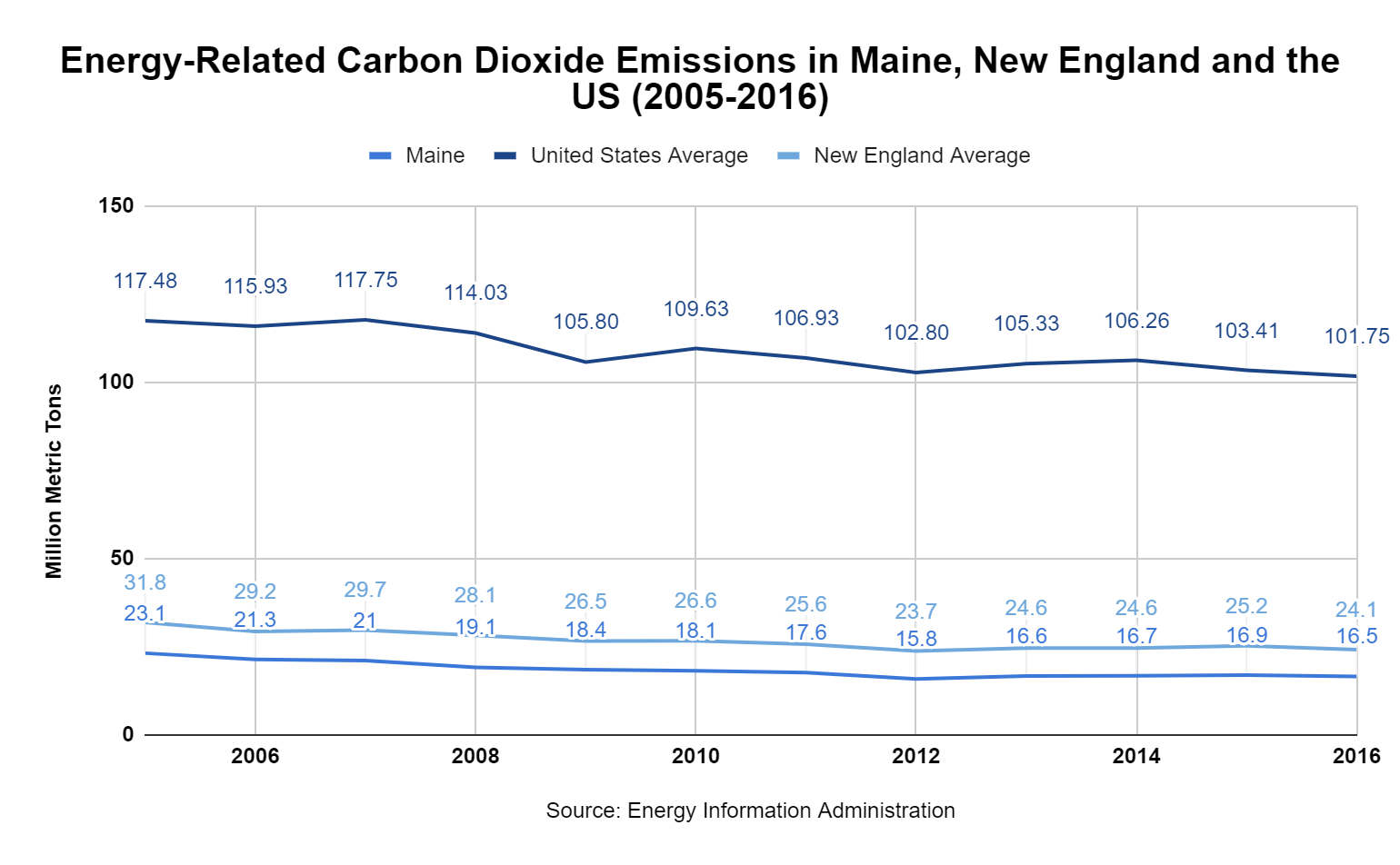
The United States Energy Information Administration (EIA) provides independent statistics and analysis on energy related topics in the United States. Using data compiled from the EIA, we were able to measure the impact Maine has on climate change. On average, states emitted 101.75 million metric tons of carbon into the atmosphere in 2016.
In contrast, the average New England state emitted 24.1 million metric tons and Maine released 16.5 million metric tons. Therefore, according to the data released between 2005 and 2016, Maine produced less energy-related carbon dioxide emissions than the average state, both in New England and nationwide.
When more closely examined, Maine contributes approximately 0.32 percent of energy-related carbon emissions that emanate from the United States. More striking, Maine emits approximately 0.05 percent of total energy-related carbon emissions worldwide.
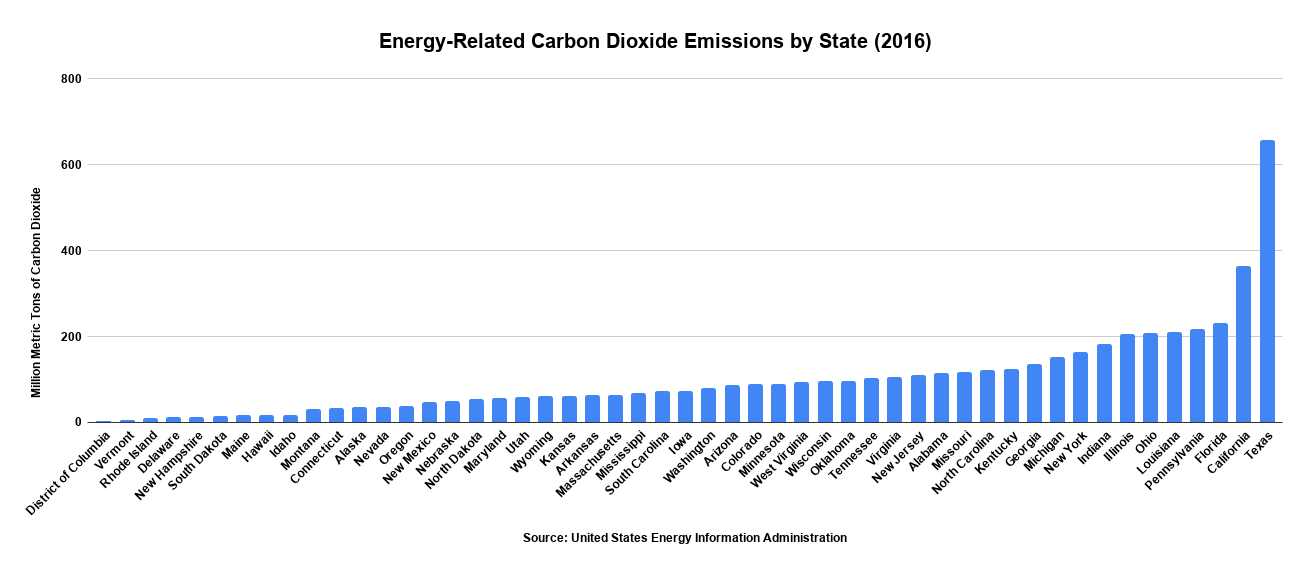
When the data is focused solely on energy-related carbon emissions in each state, Maine ranked 45th for lowest emissions overall. The only jurisdictions that had lower emissions were South Dakota, New Hampshire, Delaware, Rhode Island, Vermont and the District of Columbia. In other words, Maine could halt its carbon emissions tomorrow and the change would not have any measurable or significant impact on climate change.
While increasing Maine’s RPS would do nothing to mitigate climate change, it could lead to increased retail electricity costs for ratepayers. In April 2019, a working paper from the University of Chicago measured the impact of RPS requirements from 1990 to 2015 and found that average retail electricity prices are 11 percent higher (1.3 cents per kilowatt hour (kWh)) seven years after states’ RPS programs were enacted.
Those prices increase to 17 percent (2 cents per kWh) when the policies had been implemented for 12 years. In fact, several studies have predicted that retail electricity prices increase between 2 and 13 percent as a result of RPS requirements. Maine ratepayers were doling out 13.2 cents per kWh in 2017, the 11th highest rate in the country.
While these figures seem small, they add up over time. According to the Energy Information Administration, the average residential household used 10,972 kWh in 2018. Therefore a one cent increase per kWh would cost the average household nearly $110 annually. If average electricity prices increase, it would disproportionately harm low-income Mainers who already struggle to pay for basic necessities such as electricity and other utilities.
The University of Chicago paper also found that the monetary cost of replacing each metric ton of carbon emitted with renewable resources was equivalent to at least $115 and could cost up to $530 per metric ton, borne by ratepayers. These figures were generated by measuring the estimated declines of carbon emissions and combining them with the overall impact on average retail electricity prices.
This estimate is much more expensive than the most credible figures measuring the social cost of carbon, which is more than $50 per metric ton. The social cost of carbon is a monetary measurement that reflects the amount of damage done by a single metric ton of carbon that is released into the atmosphere. Therefore, replacing non-renewable energy with renewable resources appears to cost more than the economic harm done per metric ton of carbon.
In addition, the legislature has taken it upon themselves to define what resources are considered renewable and which are not. In 2009, the legislature removed the 100 megawatt cap on wind facilities. This session, LD 1494 removed the cap on solar arrays and facilities as well, while leaving it in place for other renewable resources. In other words, LD 1494 set a mandate for all retail sales of electricity to come from renewable resources by 2050 yet limited the options electricity retailers can choose from regarding what forms of energy “count” toward that goal.
Currently, hydroelectric generators with a capacity of more than 100 megawatts do not count toward the RPS mandate. If these resources were to count toward the state’s RPS requirements, retail electricity prices would likely decrease because the number of eligible facilities would increase. Simple economics show that prices decrease when supply increases.
In summation, requiring 100 percent of retail electricity sales to come from renewable resources will do nothing to curb climate change overall. In addition, these policies may cost ratepayers more over time with little added benefit. If lawmakers are going to retain the current requirements, they should remove the 100 megawatt cap on hydroelectric generators and other renewable resources to decrease electricity prices for ratepayers.


