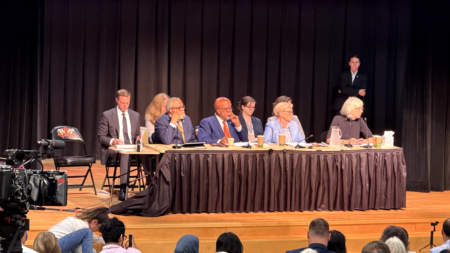
Some members of the Maine Legislature are speaking out against Gov. Janet Mills’ newest mandates and urging their colleagues to join them in calling for the legislature to start directing the state’s response to the COVID-19 pandemic.
Gov. Mills updated her existing mask mandate on Dec. 11 to require all businesses in the state to deny entry and service to patrons who refuse to wear a mask, even if they have a medical condition that prevents them from being required to wear one. The mask mandate was updated after the administration abruptly issued an order requiring some businesses to close by 9 p.m. just before Thanksgiving. That business curfew order was supposed to end in early December, though the governor has since extended it into 2021.
A joint release from conservatives in the Maine Legislature last Friday said the governor’s new order is “punitive, makes little scientific sense and will hurt Maine citizens already struggling to adhere to the ever-increasing mandates with little to show for it.”
“I really hope the governor knows what she is doing,” Sen. Jeff Timberlake said in the release. “I am scared to death for the average people who are running little general stores, often alone, who must now confront customers who may already be stressed out over the pandemic when they walk in the door.”
“Those responsible for using evidence-based, scientific data to support these decisions should focus less on their celebrity status and more on the credibility of these arbitrary decisions in the face of growing public mistrust and discontent,” said Rep. Kathleen Dillingham.
When lawmakers convened in Augusta earlier this month to be sworn in as members of Maine’s 130th Legislature, it was the first time the full body had met since March. Many House Republicans, including Rep. Peter Lyford, are not happy about the legislature’s inactivity and feel the legislative branch has abdicated its responsibility of being the voice for the people of Maine throughout the pandemic.
“People’s lives are impacted every day, with no ability for their voices to be heard. We need to begin legislative committee work now, in December of this year, not in January of 2021. The situation demands bipartisan action with legislative involvement,” Rep. Lyford said in a recent weekly address, urging fellow lawmakers to join him in approving a resolution that would end the state of emergency declared by the governor on March 15. Rep. Lyford wants the legislature to end the emergency and give Maine people a voice in the state’s response to the virus through their legislature.
“Faith in our government’s ability to respond to the challenges of the coronavirus cannot be restored, maintained or enhanced without a true bipartisan response and shared decision making. The public must be allowed to participate in the decisions that affect their life, health and wellbeing,” Rep. Lyford said.
It’s unclear if there’s an appetite among majority Democrats to review emergency executive authority or take the state’s virus response away from Gov. Mills. In a Dec. 3 interview on the WGAN Morning News, Rep. Ryan Fecteau, Maine’s new Speaker of the House, wasn’t energized by the idea.
“Ultimately the importance of the governor’s emergency power is allowing the state to be able to receive federal funding that becomes available during such declarations. I think we have to be mindful of the fact that, during a state of emergency, we want to make sure that if the legislature can’t convene as we couldn’t back in March when the pandemic arrived on our shores, that there’s a leader in our state who is able to maximize the state’s effort in terms of getting help to Mainers,” Speaker Fecteau said.
“We need to be very mindful that we don’t take this one scenario and make public policy based on this one instance, because emergencies come in different shapes and sizes and we want to make sure we’re not handcuffing ourselves in the future for any kind of emergency that may occur,” he added.
There appears to be no angst among majority Democrats to get back to work. But how much longer can Maine people tolerate arbitrary executive action without a voice in their government?