The controversies surrounding Maine Secretary of State Shenna Bellows continue to pile up, raising serious questions about competence, accountability, and whether Maine’s top elections and motor vehicle official is focused more on her official duties or politicking.
The most recent questions followed a legislative oversight committee hearing, on Wednesday, examining the deaths of Mainers linked to drivers who allegedly used paid interpreters to fraudulently pass driver’s permit tests. Whistleblower Jon Moran has stated that the system is riddled with fraud and abuse involving interpreters, failures that fall squarely under the authority of the Secretary of State’s office.
Bellows did not attend the hearing.
Instead, Assistant Secretary of State Cathy Curtis appeared on her behalf. Curtis struggled to answer basic questions, reinforcing criticism that Bellows once again avoided direct accountability while sending a perhaps equally unprepared surrogate to face lawmakers. Many questions were left unanswered, requiring Curtis repeatedly saying ‘we will get back to you with that information.”
That absence is part of a broader pattern.
More than 13 weeks after 250 absentee ballots surfaced in Newburgh inside an Amazon package, Bellows has still offered no clear public explanation. No timeline. No findings. No corrective action. For an official who routinely casts herself as a defender of democracy, the continued silence on a real election irregularity has only deepened public distrust.
Bellows also drew national attention, and criticism, for her attempt to remove President Donald Trump from Maine’s 2024 primary ballot, a unilateral move that plunged the state into legal chaos before being ultimately being overturned by the U.S. Supreme Court. Critics argue the episode revealed a troubling willingness to use the powers of the office to advance political outcomes rather than administer neutral election law.
At the same time, Bellows has publicly acknowledged that non-citizens have voted in Maine elections, while resisting broader audits, voter roll verification, or systemic reforms. To skeptics, admitting the problem exists while opposing deeper scrutiny has only amplified concerns about election integrity.
The operational failures extend beyond elections.
Bellows’ office also presided over the botched new license plate rollout, leaving motorists confused, municipalities frustrated, and law enforcement struggling with inconsistent plate designs and shifting deadlines. What should have been a routine administrative change instead became another example of mismanagement within the Department of State.
Those failures take on added significance during the investigation into the Brown University shooting, when law enforcement have confirmed that the suspect was driving a vehicle displaying an unregistered Maine license plate. According to investigators, the plate had not been active since 2011 and was not linked to the suspect, raising questions about how such plates circulate and how effectively Maine’s motor vehicle records are monitored and enforced.
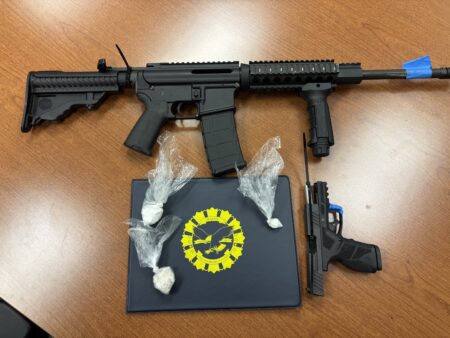
Rather than addressing these mounting issues head-on, Bellows has leaned further into overt political activism. Last weekend, she marched in Lewiston alongside Iman Osman, a local official who has repeatedly refused to disclose his address amid unresolved residency questions. For Maine’s chief elections officer to publicly align herself with a figure facing eligibility concerns and is under indictment for stolen gun charges, has raised alarms across the political spectrum.
Bellows has also remained highly active on social media, posting videos during the workday from a sunny, leafy location, raising questions about whether she was in her Augusta office, or even in Maine, as theses multiple controversies unfolded. One such video appeared to respond to criticism from Tucker Carlson (whose surname she managed to mis-spell), rather than addressing the substance of the allegations facing her department.
Perhaps most troubling to critics, Bellows has stated in a social media video that she believes she will become governor. For the official charged with administering elections and certifying results, openly projecting her own political future strikes many as an ethical red flag.
Taken together, skipped oversight hearings, unexplained absentee ballots, an overturned attempt to bar Trump from the ballot, admissions of non-citizen voting without reform, a bungled license plate rollout, and public safety concerns tied to unregistered plates, Bellows’ tenure has become a case study in eroding public trust.
Election integrity and public safety depend on competence, neutrality, and transparency. As controversies continue to accumulate and answers remain elusive, a growing number of Mainers are asking a blunt but unavoidable question:
Who is actually minding the store at the Secretary of State’s office, and how much more can Maine afford to get wrong?