


The Mills Administration’s mismanaged spending is once again in the spotlight after another bombshell audit revealed a $6 billion web of sloppy bookkeeping, missed deadlines, and “material noncompliance” with federal law.
- State Auditor Auditor Matthew Dunlap’s team identified 19 “material weaknesses”—the gold medal of accounting failures. These represent cases where the state’s “controls” are so weak they can’t even prevent or detect a major mistake before it happens.
- The Dead Participation: In the SNAP program, auditors found that benefits were issued to 29 cases more than 75 days after the client had died. Seven single-member households had $4,335 in EBT purchase activity recorded after the client passed away.
- The $1.6 Billion Free-for-All: The state blew through $1.6 billion in contracts while ignoring its own rules. Nearly two-thirds of tested contracts weren’t signed on time, with some signed nearly a year after the contract started.
- Accounting Voodoo: The state’s new Paid Family and Medical Leave Fund was an absolute disaster, initially missing $47 million in receivables. Meanwhile, the state had to fix a $119.3 million tax-reporting blunder.
- The Medicaid Black Hole: Despite handling $3.4 billion in federal funds, the state didn’t finish a single one of its 88 required nursing home audits.
- Known “questioned costs”—taxpayer money potentially spent in the wrong places—totaled $657,755, but the audit warns the actual number could be much higher since many errors were “undeterminable”
- State agencies largely agreed with the findings but pointed to “staff turnover” and “lack of resources” as the reason for the chaos.
- RELATED: Maine Audit Reveals Systemic $2.1 Billion Financial Mismanagement and Corruption Risk
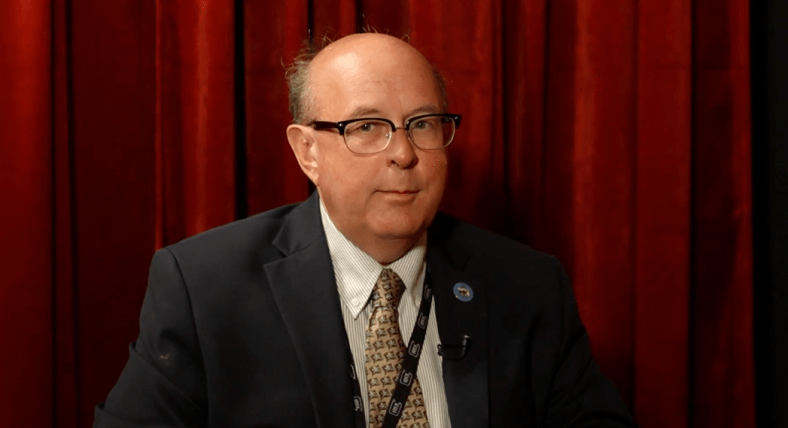
At the top of the wild breaches of basic good governance identified by the Office of State Auditor (OSA): Maine failed to complete a single one of the 88 nursing facility audits due in fiscal year 2025 even as $382.4 million in federal and state Medicaid money flowed to nursing homes.
That’s according to the state’s annual single audit, prepared by the OSA and released by State Auditor Matt Dunlap, a longtime Democrat official who is currently a candidate for the Democratic nomination in Maine’s Second Congressional District race.
That finding was among the biggest in a series of fiscal failures flagged by the Office of the State Auditor in the single annual report released Thursday evening.
The flubbed nursing home audits were part of broader trend of control failures observed statewide for yet another year: auditors also said they could not determine whether Maine’s Medicaid utilization-control program was complete across a $3.2 billion program serving about 10,600 providers, and they found procurement failures across roughly $1.6 billion in contract-related payments.
The nursing-facility finding was not a one-year miss.
Auditors traced it back through every fiscal year from 2018 through 2025. The report says Maine completed 61 desk reviews — i.e. phone call surveys in place of site visits — during fiscal 2025, but all of them were for prior years, leaving the entire current-year population of required reviews undone when auditors tested the program in October 2025.
The Office of the State Auditor recommended that departments “enhance oversight to ensure that federal program cash balances are tracked by program in accordance with federal requirements”. While the state provided unmodified opinions on its basic financial statements, the volume of internal control failures suggests a strained administrative infrastructure struggling to keep pace with federal mandates.
The procurement finding was the audit’s other statewide alarm bell.
Perhaps most striking was the state’s handling of its $1.6 billion procurement and contract payment portfolio. Auditors tested 57 active contracts and found that 36 were not signed at least 14 days prior to the start date, as required by policy. In some instances, contracts and justification forms were signed up to 360 days after the work had supposedly commenced.
To translate that from CPA speak: The Mills Administration is brazenly disregarding the rules for handing out taxpayer cash for good and services. Money is leaving state accounts before contracts are signed, non-transparent processes are being used in ways that violate state policies, and the state continues to use no-bid contracts with little regard for transparency or the law.
The Single Audit Report identified 62 separate deficiencies in internal controls over federal compliance. Of these, 19 were classified as material weaknesses, the most severe category of reporting failure. The audit led to qualified opinions on 10 major federal programs, including Medicaid, SNAP, and Child Nutrition, due to material noncompliance with federal requirements.
Every material control issue involving federally funded projects raises the prospect that the Trump Administration could claw back that funding.
Maine Audit Uncovers ‘Brazen’ Disregard for Taxpayer Cash, Kids in Danger
The mismanagement has even trickled down to the state’s most vulnerable, an area of the state policy that has received considerable attention due to the stunningly high rate of child fatalities in state care. Auditors found children were placed in homes that did not satisfy required abuse-and-neglect registry checks. In one finding, auditors said five clients were placed in a resource family home where the foster or adoptive parent did not satisfactorily meet the registry check, producing $7,629 in questioned foster care costs and $42,689 in questioned adoption-assistance costs. The audit says two of those five children were later removed from the home after the checks were completed.
Auditors also found a separate case in which a prospective foster parent failed the check and the home still received $12,566 in federal foster care benefits on behalf of two clients, and another two clients who had been deemed ineligible kept receiving payments because of a child-welfare system conversion problem.
A separate foster care finding showed the same pattern of weak controls after placement. Auditors tested 60 cases and found 36 children did not receive the required level-of-care assessment within 90 days, with delays ranging from 11 to 302 days. They also found one child’s level-of-care designation was automatically changed by the child welfare information system under draft policies that had not been formally approved, generating $3,003 in questioned costs. Taken together, the audit describes a state government that kept moving money while basic oversight, procurement and child-safety controls lagged behind.
Taken together, the audit describes a state government that kept moving money while basic oversight, procurement, and child-safety controls lagged behind.
The audit also captured a blunt management response from DHHS. In the procurement finding, the department said “there is not a requirement to provide documentation” that personnel assertions on procurement justification forms are accurate. In other words, DHHS argued there’s no requirement for them to tell the truth when they’re directing taxpayer-funded contracts via no-bid contracts.
Auditors rejected that argument, writing that without documentation supporting those assertions, “the best value for the State cannot be ensured.” The same statewide procurement finding says the comprehensive purchasing policy and operations manual had not been formally updated since 2015.
Accounting Errors and Procurement Risks
The report detailed significant accounting lapses within the newly established Paid Family and Medical Leave (PFML) Fund — the Democrat plan to levy a one-percent tax on paychecks so that workers can get paid vacations for pretty much any reason. Auditors found that accounts receivable were initially understated by $47 million, while $7.1 million in software expenditures were erroneously expensed rather than capitalized.
That’s an inauspicious beginning for a program that hasn’t even started providing the alleged benefits to Maine’s workers.
Further fiscal friction was noted in individual income tax reporting. A methodology error resulted in a $119.3 million overstatement of taxes receivable and deferred inflows, requiring a retroactive restatement of the state’s beginning net position.
Big Picture: Nothing has changed since last years single annual report exposed more than $2.1 billion in spending at risk for fraud and corruption due to terrible internal controls.
The last state audit, published just one year ago, said taxpayers were exposed to major financial risk because the state lacked basic oversight over contract spending and procurement controls. The audit found $2.1 billion in FY2024 contract payments were made under a system the audit found lacked adequate supervisory controls.
Last year’s report reviewed 45 procurement actions and found no documentation of cost analysis in any of them. They also found that 16 of 31 sole-source contracts lacked documentation of the required “reasonable investigation.” In one case, a sole-source contract was approved only after the work had already been completed.
In the audit published last year, auditors also found evidence that low-cost contracts were being used to avoid competitive bidding, a practice known as “stacking” contracts. In one example, a department awarded seven concurrent low-cost service contracts to the same vendor in a single year, which the article describes as a way to dodge oversight.
The Mills Administration never commented publicly on the 2024 annual report and there’s no evidence that any state employee was disciplined for the financial mismanagement.


Obviously competence is not a requirement for state employment. Loyalty to the Democratic Ruling Family is paramount. Nothing will change unless the Democrats are flushed out of Augusta.
unless people are charged and convicted this is all just theatre.Look at the survivors and victims fund in Lewiston, no one is going to jail and the money is GONE!!!! Had enough Mainers? I don’t think you have and you are just too apathetic to make an effort to change it.