

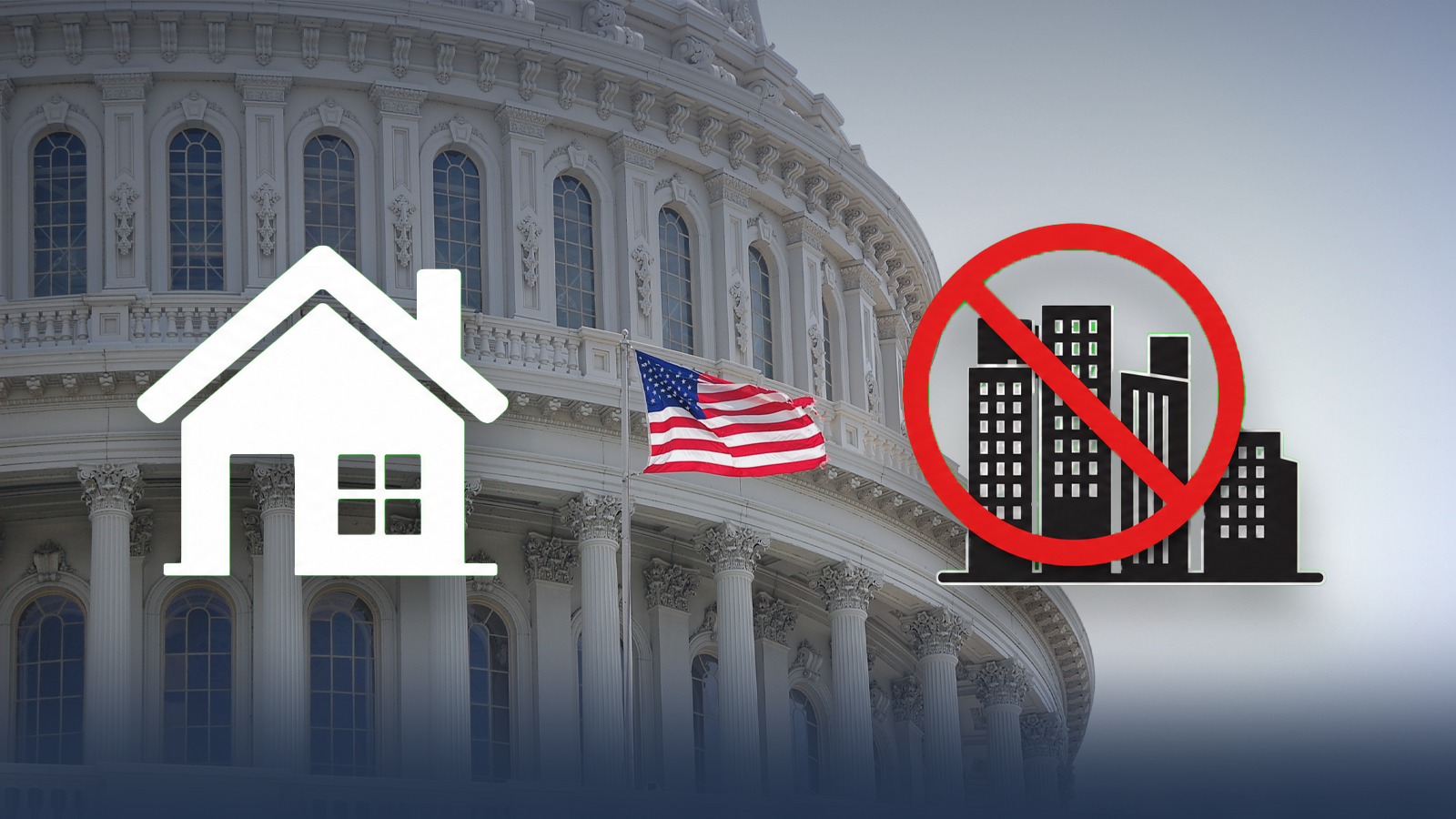
The U.S. House overwhelmingly passed a massive bipartisan housing bill on Wednesday that bars institutional investors from buying single-family homes, eases regulatory barriers to housing construction, and bans the creation of a Central Bank Digital Currency (CBDC).
[RELATED: Trump Signs Executive Order Barring Investors from Buying Single-Family Homes…]
“The Administration is pleased that Congress continues to work on legislation to make housing more affordable. The 21st Century ROAD to Housing Act builds on the President’s agenda by eliminating regulatory barriers to construction and enabling innovative housing solutions. The bill would also prohibit the development of a Central Bank Digital Currency that could undermine personal privacy,” said the Executive Office of the President in a letter to the House.
“This legislation includes the president’s signatory promise: banning large institutional investor purchases of single-family homes,” it continued.
The letter specified that if the bill appears on President Donald Trump’s desk in the form in which it was passed in the House, his advisors would recommend that he sign it.
The bill, sponsored by Rep. French Hill (R-Ariz.), passed in a 396-13 vote, with all Democrats and all but 13 Republicans supporting the bill.
The bill bars large investors or corporations from buying single-family homes in an attempt to make housing more affordable for American families. That provision would build on an executive order signed by President Trump in January ordering the government to in no way facilitate the institutional purchase of single-family homes.
The bill also eases housing regulations that hinder the construction of new homes.
The amended version passed through the House also bars the construction of a CBDC, which would be a centralized, government-issued cryptocurrency that would give the government essentially unrestricted access to all transactions. Bureaucrats would be able to see every purchase and could unilaterally prevent some purchases.
The nearly unanimous bipartisan support the bill saw in the House suggests that it may have a chance to pass through the deadlocked Senate and actually be signed into law by Trump.



Pingree opposes this bill .
I don’t like government interfering in business, but I think in this case it’s OK. Something has to be done to make the path to home ownership less onerous for working class families.