

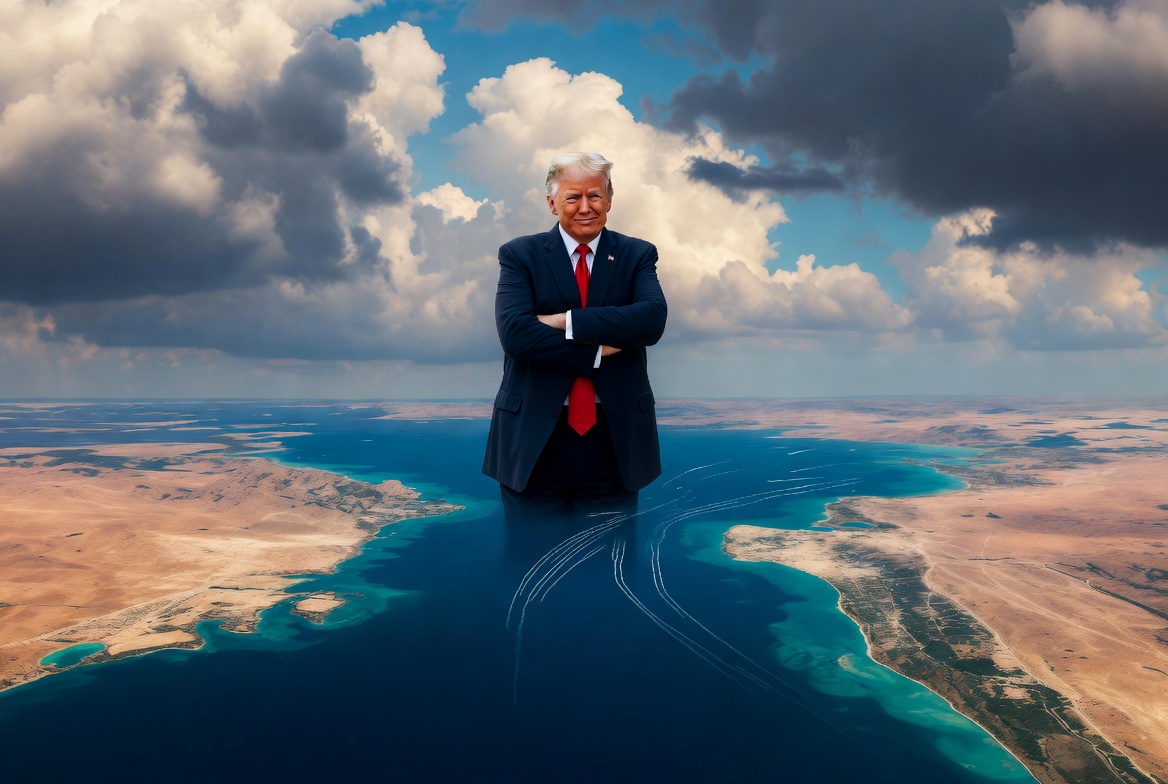
President Donald Trump has temporarily paused a major U.S. naval operation in the Strait of Hormuz, citing “great progress” in negotiations toward a possible agreement with Iran, a move that sent stock markets higher Wednesday morning and pushed oil prices sharply lower.
WASHINGTON – The operation, dubbed “Project Freedom,” was launched in early May as a U.S.-led effort to guide commercial and neutral vessels out of the Strait of Hormuz, one of the world’s most critical energy shipping lanes. Trump announced the pause on May 5, saying the United States would temporarily halt the active escort mission to allow diplomacy with Iran to move forward.
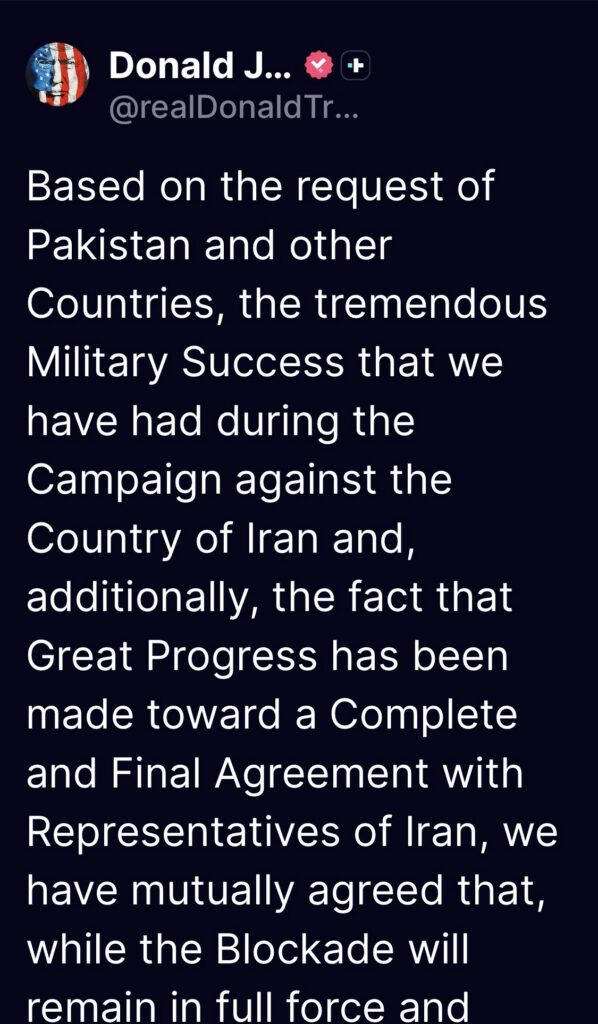
https://truthsocial.com/@realDonaldTrump/116524418935002706
The announcement immediately calmed financial markets. Global stocks moved higher Wednesday morning on hopes that a broader agreement could ease the Middle East crisis, while oil prices dropped sharply. Some market reports showed crude falling roughly 9 to 10 percent, with West Texas Intermediate down 9.5 percent and Brent crude down 8.5 percent in early trading; other reports showed Brent falling more than 9 percent as investors priced in the possibility of de-escalation.
For Maine, the market reaction matters. A decline in oil prices could eventually ease pressure on gasoline, diesel, home heating oil, trucking costs, fishing operations, municipal budgets, and small businesses already exposed to global energy volatility.
Trump’s pause does not end the standoff. The president said the broader U.S. blockade on Iranian ports remains in force, keeping economic and military pressure on Tehran while negotiations continue.
The Strait of Hormuz has been at the center of the crisis because of its role as a global energy chokepoint. A prolonged disruption there can drive up fuel costs around the world, including in Maine, where high energy prices hit families, fishermen, haulers, farmers, and heating oil customers directly.
Project Freedom had been described by the Trump administration as a humanitarian and security mission aimed at helping ships and civilian crews trapped in the region after Iran moved to restrict passage through the strait. According to reports, more than 1,500 ships remained stranded because of the closure, with the waterway handling a major share of global oil and gas shipments.
The pause follows an intense period of military escalation in the Middle East. Reports indicate the conflict has included U.S. and Israeli strikes against Iranian targets, attacks on shipping, and continued tension despite a fragile ceasefire. Defense officials have said the ceasefire remains in effect, though the region remains volatile.
At the United Nations, the U.S. and Gulf allies have also pushed a proposal threatening Iran with sanctions or other measures if Tehran does not end its chokehold on the Strait of Hormuz. The proposal calls on Iran to stop attacks on ships, halt illegal tolling, and cooperate with efforts to establish a humanitarian corridor.
The diplomatic track remains uncertain. Reports Wednesday indicated the U.S. and Iran may be moving toward a preliminary framework to end hostilities and resume nuclear negotiations, but no final deal has been secured.
For now, Trump’s pause has given markets a reason to rally and energy traders a reason to pull back. But the blockade remains, the strait remains unstable, and any breakdown in talks could quickly reverse Wednesday morning’s gains.




I can throw a handful of sand further than you can trust the Iranians .
Blow them up and let’s be done with it .
They will never understand anything else .
Sorry George but Islam is NOT the religion of peace .