

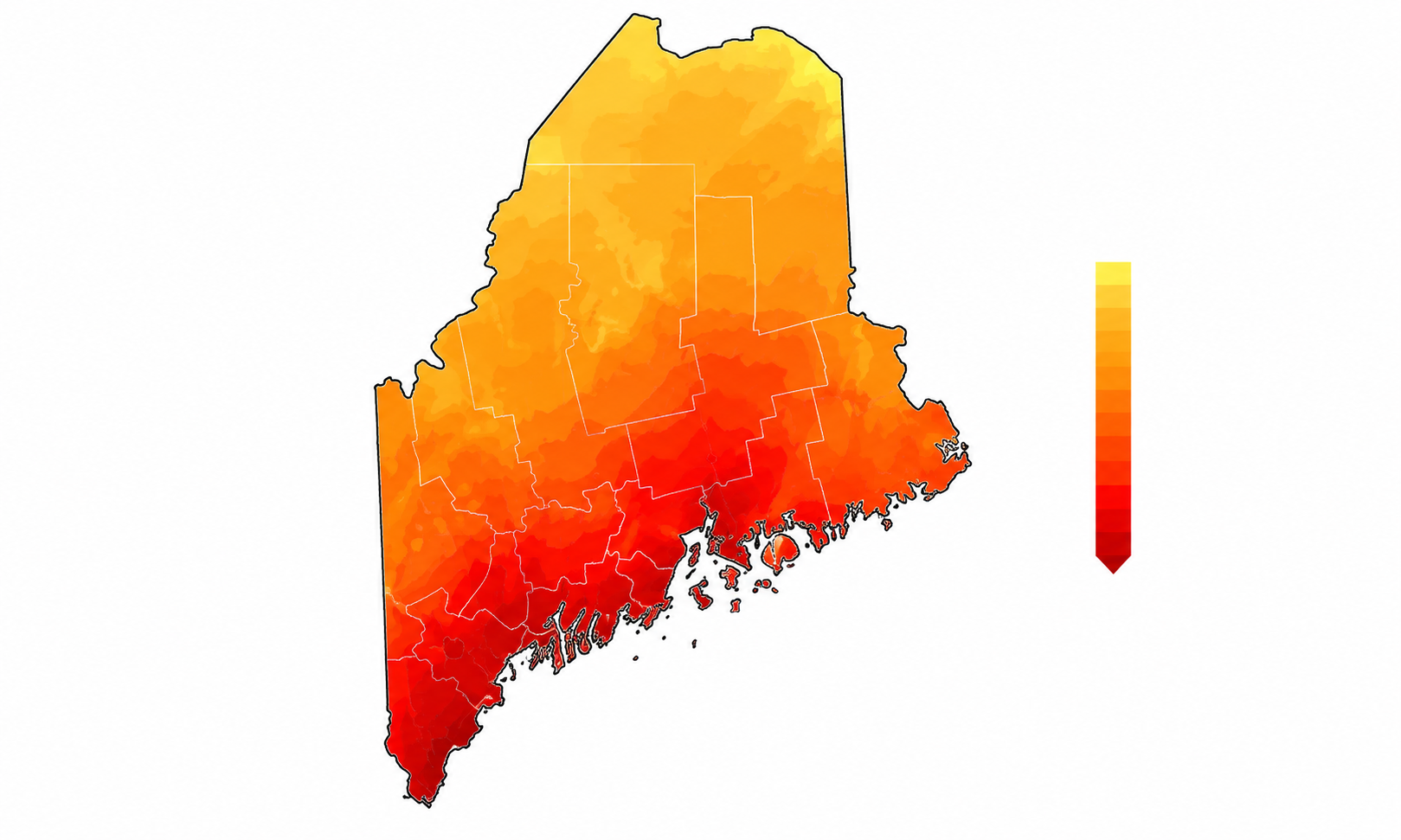
More than 80 percent of Maine is now abnormally dry or in drought, with severe drought returning to the Midcoast and southern communities beginning to restrict water use
Maine’s brief early-summer reprieve from drought is disappearing fast.
More than 82 percent of the state is now classified as abnormally dry or experiencing drought conditions, according to the latest U.S. Drought Monitor, as weeks of limited rainfall have once again pushed portions of southern and coastal Maine into severe drought. Approximately 841,800 Mainers are now living in areas classified as drought, according to federal drought data.
The deterioration comes after an exceptionally dry July that left Maine struggling to recover from drought conditions that carried over from 2025.
Statewide, July 2026 ranked as Maine’s fourth-driest July since recordkeeping began in 1895, with just 2.06 inches of precipitation, 1.73 inches below normal. Portland fared even worse, recording just 0.60 inches of rain and its second-driest July in more than 150 years of records.
The latest numbers paint a stark picture.
As of the Aug. 11 data used in the most recent Drought Monitor, 44.87 percent of Maine was classified as abnormally dry, another 31.76 percent was in moderate drought and 5.44 percent had fallen into severe drought. Only about 18 percent of the state was free from any drought or abnormal dryness designation.
The severe drought is concentrated largely along the coast and Midcoast, where conditions have deteriorated rapidly.
Nearly all of Knox County, 99.86 percent, is classified in severe drought, along with 99.82 percent of Sagadahoc County and 98.27 percent of Lincoln County.
Cumberland County is also taking a substantial hit, with nearly one-third of the county in severe drought and another roughly 31 percent in moderate drought.
York County is almost entirely experiencing some degree of dryness or drought, with nearly 73 percent classified as moderate drought. Penobscot County is also roughly 70 percent moderate drought, while drought and abnormally dry conditions have pushed farther north into Aroostook County.
The worsening conditions represent a sharp reversal from earlier this summer, when rainfall temporarily improved surface-water conditions across parts of Maine. A National Weather Service drought assessment in early July said surface hydrologic conditions had shown significant improvement, even as groundwater struggled to fully recharge.
That distinction is increasingly important.
A few thunderstorms or isolated heavy downpours may green up lawns and raise streams temporarily, but they do not necessarily replace the groundwater lost during a prolonged drought.
Groundwater levels in parts of Maine were already running significantly below normal this spring, despite improvements visible on the Drought Monitor. Monitoring data from Sanford, for example, showed groundwater remaining well below its historic monthly averages.
That lingering deficit is now colliding with another exceptionally dry summer.
Kittery Orders Water Restrictions
In Kittery, the drought has moved beyond colored maps and rainfall statistics.
The Kittery Water District has imposed mandatory restrictions on outdoor water use as its water supplies continue to feel the effects of prolonged dry conditions.
Residents are permitted to water lawns, gardens and outdoor plants only two days per week, based on whether their addresses are odd or even numbered. Watering is limited to overnight hours between 8 p.m. and 7 a.m., and weekend watering is prohibited.
The penalties increase quickly.
A first violation brings a written warning. A second can result in a $100 fine, while a third violation carries a $500 penalty and could result in water service being shut off.
Kittery Water District Superintendent Stephen Berube told Maine Public that the problem is not simply the lack of rain this summer. The district has been dealing with the cumulative effects of inadequate recharge over multiple years, leaving source ponds unable to consistently return to full levels.
That long-term problem may be one of the most consequential aspects of Maine’s latest drought.
Private Wells Remain Vulnerable
For Mainers who rely on private wells, falling groundwater levels can mean something far more serious than a brown lawn.
Nearly half of Maine homes rely on groundwater wells, making prolonged drought a direct threat to household water supplies in many rural and suburban communities. Private wells were already running low in portions of the state this spring, with homeowners reporting low pressure, water-quality problems and wells going dry entirely.
Maine Emergency Management Agency is currently directing residents whose private wells run dry to report the problem through the state’s Dry Well Survey. MEMA uses the reports to measure the scope and geographic spread of water-supply failures across Maine.
The concern is not theoretical.
During Maine’s 2025 drought, hundreds of private wells were reported dry. By December, MEMA had received 541 reports, with some of the largest concentrations coming from Oxford, Somerset, Cumberland, York, Franklin and Androscoggin counties.
The Maine CDC advises homeowners not to simply pour water into a dry well, warning that doing so is often ineffective, may contaminate the water supply and can potentially damage the well or pump. Bottled water is recommended as a temporary emergency drinking-water source.
Farms Face Another Dry Growing Season
Maine farmers may also be watching the skies with particular concern.
Agriculture was hit hard by last year’s drought, including hay shortages, water-supply problems and damage to fruit and berry crops that state officials warned could carry into the 2026 growing season.
The Department of Agriculture, Conservation and Forestry has responded by investing in wells, storage ponds and other water infrastructure intended to make farms more resilient during prolonged dry periods. The state expected roughly $1.2 million to be available in 2026 for additional drought-relief projects.
The University of Maine Cooperative Extension notes that drought can have enormous consequences in a state where large amounts of agricultural land are not irrigated and many homes rely on private wells. A historic drought between 1999 and 2002 caused approximately 17,000 private wells to run dry and resulted in more than $32 million in crop-production losses, according to research cited by the university.
Fire Danger Another Concern
Dry soils, vegetation and forest fuels also increase concerns about wildfire as Maine moves through the second half of summer.
The Maine Forest Service operates a daily wildfire-danger system throughout the fire season, which generally runs from late March through late November, allowing residents to check local conditions before burning or undertaking other activities that could ignite dry vegetation.
Last year showed how quickly drought can translate into fire activity.
Maine recorded 848 wildfires during 2025, burning more than 500 acres statewide. State officials said August was the busiest wildfire month that year, with debris burning, open fires and equipment or vehicle use among the causes.
What Maine Needs Now
The outlook offers little reason for complacency.
The U.S. Drought Monitor’s latest national discussion anticipated only light precipitation across northern New England during the Aug. 13-17 period, although portions of southern New England could receive heavier rainfall.
Even when thunderstorms arrive, the larger problem is replenishing water that has been depleted over months — and, in some areas, years.
That requires more than an afternoon downpour.
Maine entered 2026 with groundwater systems already struggling to recover from the previous year’s drought. Spring and early-summer rain brought some improvement, but July’s lack of precipitation quickly erased much of that progress.
Now severe drought has returned to the coast, hundreds of thousands of Mainers live in drought-designated areas, one southern Maine water district has begun mandatory conservation measures and the state is again asking homeowners to report dry wells.
For Mainers looking toward the sky for relief, the issue is no longer whether it will rain on a particular afternoon.
It is whether enough sustained rain will fall to replenish the water beneath their feet.




Meanwhile millions of gallons of water are shipped on trucks every day out of state. That water is pumped out of the ground and bottled every day.