By Jon Fetherston
Walk into almost any restaurant today and look around.
A family of four sits together, but all four are staring at their phones. A couple waits for dinner while scrolling separately. Teenagers sit inches apart but communicate through screens. Somewhere else, two people who have never met are calling each other vile names on Facebook because they disagree about politics.
We have never had more ways to communicate.
So why does it feel like we have forgotten how to talk?
Technology was supposed to make our lives easier. It was supposed to bring us closer together. In many ways, it has.
We can talk to someone across the country in seconds. We can FaceTime our children and grandchildren. We can watch breaking news unfold in real time. We can reconnect with someone we haven’t seen since high school.
But somewhere along the way, we confused the ability to broadcast with the ability to communicate.
The cellphone did not destroy civil discourse by itself.
It simply gave us permission to stop looking one another in the eye.
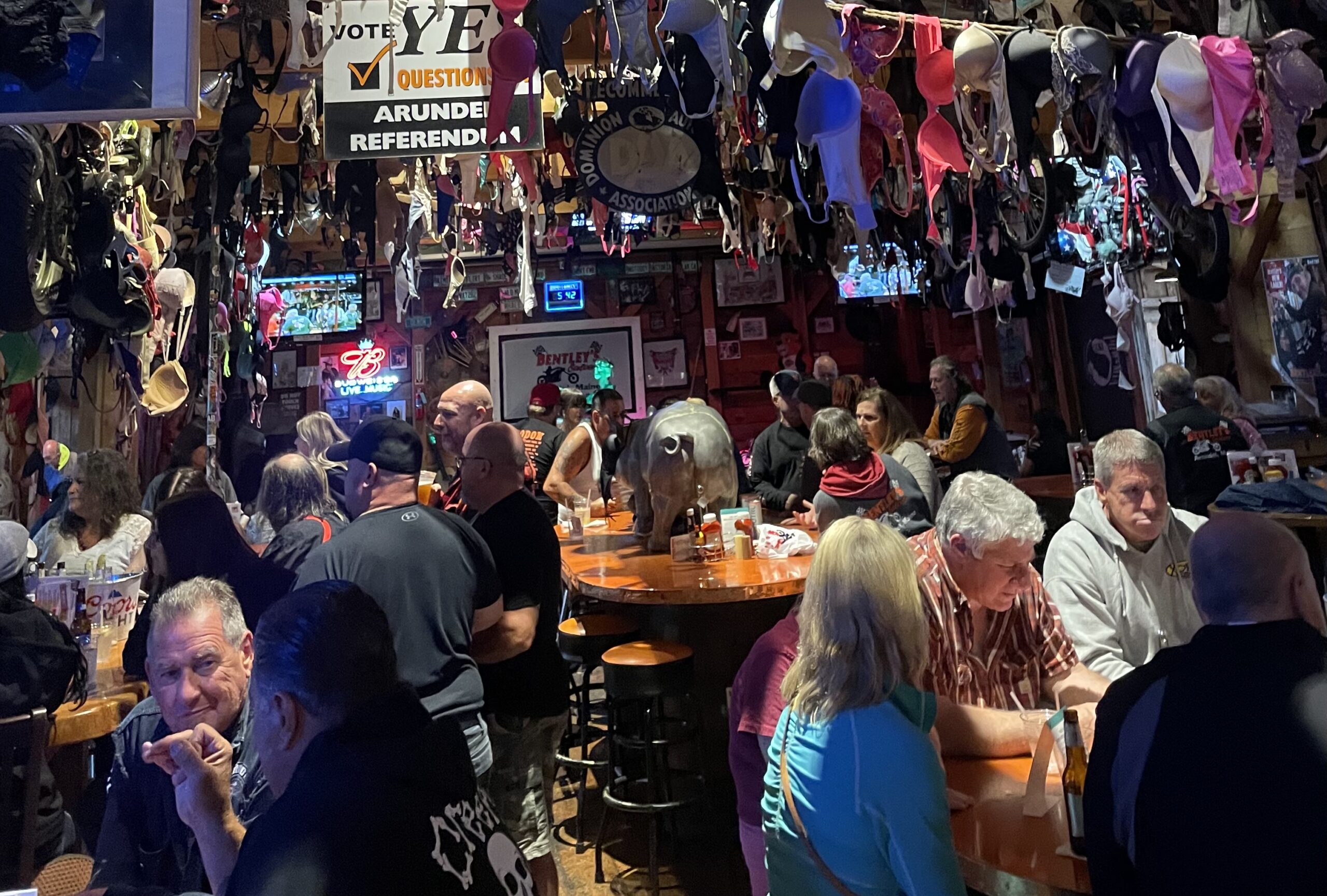
There was a time when two people could sit across from each other, argue passionately about politics and still say afterward, “I think you’re completely wrong. Now let’s go grab a beer.”
Maybe that version of America was never quite as perfect as nostalgia makes it seem. Politics has always been rough. Newspapers have always taken sides. Candidates have always attacked one another.
But something has changed.
Disagreement now becomes personal almost immediately.
You’re a fascist.
You’re a communist.
You’re racist.
You’re woke.
You’re MAGA.
You’re a snowflake.
You’re an idiot.
Pick your insult.
Once the label has been applied, there is no longer any need to listen.
That may be the most damaging part of our modern political culture. We no longer simply disagree with someone’s argument. We convince ourselves that disagreement reveals something fundamentally wrong with the person making it.
Social media has made that easier.
Most people would never walk up to a stranger in the grocery store and say the things they are willing to type underneath a Facebook post.
Why?
Because standing in front of another human being changes the equation.
You see their face.
You hear their voice.
You watch their reaction.
You are reminded that the person you are disagreeing with is still a person.
A screen removes much of that restraint.
Type.
Post.
Wait for the likes.
Read the comments.
Repeat.
And the platforms themselves reward it.
Calm rarely goes viral.
Outrage does.
A thoughtful discussion about property taxes, immigration or health care might generate a few comments. Somebody screaming at somebody else can generate thousands.
Anger creates engagement.
Engagement keeps people scrolling.
So we should not be surprised that we increasingly live in a culture built around outrage.
Politics has poured gasoline on that fire.
Too much modern political messaging is no longer about persuading someone that your ideas are better.
It is about convincing voters that the other side is awful.
For too many Democrats, the message has become painfully simple: Donald Trump is terrible, Republicans are terrible, therefore vote for us.
Opposing Trump may motivate part of the Democratic base, but hatred of one politician is not an economic plan.
It doesn’t tell a Maine family why groceries cost what they do.
It doesn’t explain how to make housing more affordable.
It doesn’t tell taxpayers where their money is going.
And Republicans have their own communication problem.
In some ways, it is mind-boggling.
They have issues sitting directly in front of them that should be simple to explain: affordability, transparency, government accountability, public safety and fraud.
Tell people where their money is going.
Show them where government is wasting it.
Explain why their electric bill is increasing.
Explain why a young family cannot afford its first home.
Demand transparency from state government.
Expose fraud wherever it exists.
And for goodness sake, vet your candidates.
That should not be a partisan position.
Allegations involving abuse of women should matter whether the accused politician has an R or a D beside his name.
They should be investigated fairly.
They should be reported responsibly.
The accused should be given an opportunity to respond.
And political parties should not suddenly discover a different moral standard depending on whose name appears on the ballot.
Recent controversies involving Maine political figures Graham Platner and Troy Jackson demonstrate exactly how quickly tribalism can overwhelm judgment.
Platner has denied serious allegations made against him. Jackson has faced renewed scrutiny over allegations concerning his past.
The point is not that an allegation automatically proves guilt.
It doesn’t.
The point is what happens next.
When allegations involve someone on the other team, people race toward judgment.
When the allegations involve someone on their own team, suddenly everyone discovers nuance.
They demand context.
They attack the messenger.
They question the timing.
They explain why the allegations really aren’t important.
That isn’t a standard.
That’s fandom.
And politics should not be professional wrestling.
Which raises another uncomfortable question.
How does Graham Platner become a featured speaker at a Labor Day rally while serious allegations surrounding him remain part of the public conversation?
Good grief.
That is not an outrageous question.
It is exactly the kind of question political organizations should be willing to answer.
If a political movement claims to stand for women, accountability and certain standards of personal conduct, then voters have every right to ask whether its decisions reflect those values.
But today even asking the question can get you labeled.
That is the problem.
As a reporter, I see this mentality constantly.
People can decide what they think about you before you have spoken a word simply because they know where you work, what story you are covering or what they assume your politics must be.
Sometimes people who have never met you believe they already know everything about you.
They don’t.
And we do the same thing to one another every day online.
Republican.
Democrat.
Conservative.
Liberal.
MAGA.
DSA.
Once we put somebody into the box, we stop being curious about what’s actually inside it.
Journalists should ask Democrats difficult questions.
They should ask Republicans difficult questions.
Republicans should be willing to criticize Republicans.
Democrats should be willing to criticize Democrats.
And ordinary Americans should be able to say, “I think you’re wrong,” without immediately following it with, “and therefore you are a terrible person.”
There is another problem with communicating almost entirely through screens.
Context disappears.
An awkward sentence becomes a screenshot.
A 30-minute conversation becomes a 12-second video clip.
A complicated argument becomes a meme.
A person’s worst moment can travel around the world before he or she has even had time to explain what happened.
Everything becomes content.
And once everything becomes content, we stop talking to each other and start performing for an audience.
The goal isn’t persuasion anymore.
The goal is the dunk.
The viral clip.
The clever insult.
The screenshot that gets shared by thousands of people who were never there and know nothing about what happened before or after it.
But democracy requires persuasion.
It requires living alongside people who do not think exactly as we do.
You cannot scream half the country into agreeing with you.
Calling someone stupid is rarely an effective way to change his mind.
Humiliating someone publicly doesn’t make him more interested in hearing your argument.
And treating every political disagreement as a moral emergency eventually makes genuine conversation impossible.
Before we blame Donald Trump, Democrats, Republicans, cable news, Facebook, Reddit or the latest political outrage, maybe we should ask ourselves a more uncomfortable question.
When was the last time you truly listened to someone you disagreed with?
Not listened while waiting for your turn to speak.
Not listened while composing the comeback in your head.
Actually listened.
When was the last time you asked someone why they believe what they believe?
When was the last time you considered the possibility that they might know something you don’t?
When was the last time you admitted that someone from the other political party had a point?
Those things should not require courage.
But increasingly, they do.
Maybe the answer to our communication crisis is far less complicated than the technology that helped create it.
Put down the phone.
Sit across from somebody.
Ask a question.
Listen to the answer.
Disagree.
Push back.
Laugh.
And maybe buy the next round.
We don’t have to agree about Trump.
We don’t have to agree about immigration, taxes or what is happening in Augusta.
We don’t even have to like each other’s politics.
But we do have to figure out how to live together.
A country cannot function when everyone who disagrees with us becomes an enemy.
Technology gave us the ability to speak to almost anyone, anywhere, at any moment.
Now we have to relearn the harder skill:
How to listen.
So find somebody you disagree with.
Look them in the eye.
Talk to them.
And if after an hour you still think they’re completely wrong?
Fine.
Grab a beer anyway.
Let’s talk about it.