

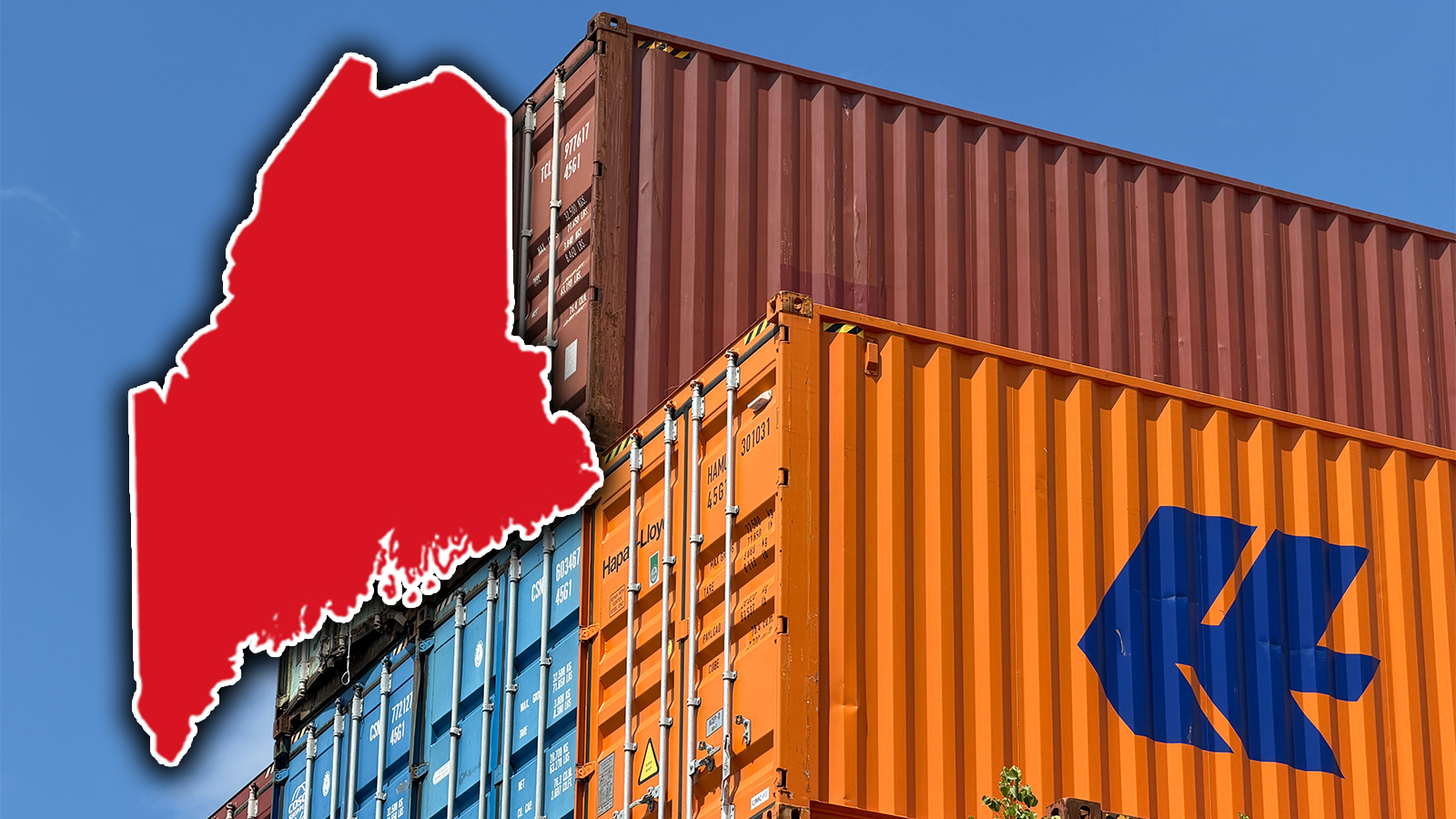
Maine joined a coalition of 25 states on Monday in filing a federal lawsuit seeking to block the Trump administration’s latest round of tariffs on dozens of countries and the European Union.
The lawsuit, filed Aug. 3 in the U.S. Court of International Trade in New York, argues that the administration acted illegally and exceeded its constitutional authority when it imposed double-digit tariffs on imports from 59 countries and the European Union.
The states contend that the administration used a rapidly conducted investigation into the use of forced labor overseas as a pretext to impose a new tariff system after the U.S. Supreme Court struck down an earlier round of emergency import taxes in February.
According to the lawsuit, the administration failed to establish sufficient grounds for imposing tariffs on each affected country and economy, violating the procedural requirements of Section 301 of the Trade Act.
The coalition, led by states including California and New York, argues that the tariffs will ultimately be paid by American consumers and businesses rather than foreign governments.
The states claim the new import duties will increase the cost of groceries, household necessities, construction supplies, and other goods while placing additional financial pressure on families and local businesses.
The White House and the Office of the U.S. Trade Representative have defended the tariffs, arguing that Section 301 gives the executive branch the authority to penalize countries accused of relying on forced labor or engaging in other unfair trade practices.
Administration officials maintain that the tariffs are lawful and fall within powers granted to the president by Congress.
Section 301 tariffs have historically survived legal challenges, potentially giving the administration a stronger foundation than it had for the emergency tariffs rejected by the Supreme Court earlier this year.
The case is expected to test whether the administration followed the procedural safeguards required under federal trade law or used the forced-labor investigation to work around limits imposed by the nation’s highest court.
The states are asking the federal court to declare the tariffs unlawful and block the administration from enforcing them. They are also seeking refunds for duties already paid by businesses and state entities under the new tariff framework.


How many does that make Aaron ?
How many lawsuits filed by other people / states have you signed on to ?