Federal court clears Trump administration to terminate protections for nearly 1,100 Somalis nationwide, but officials have yet to say how many live in Maine
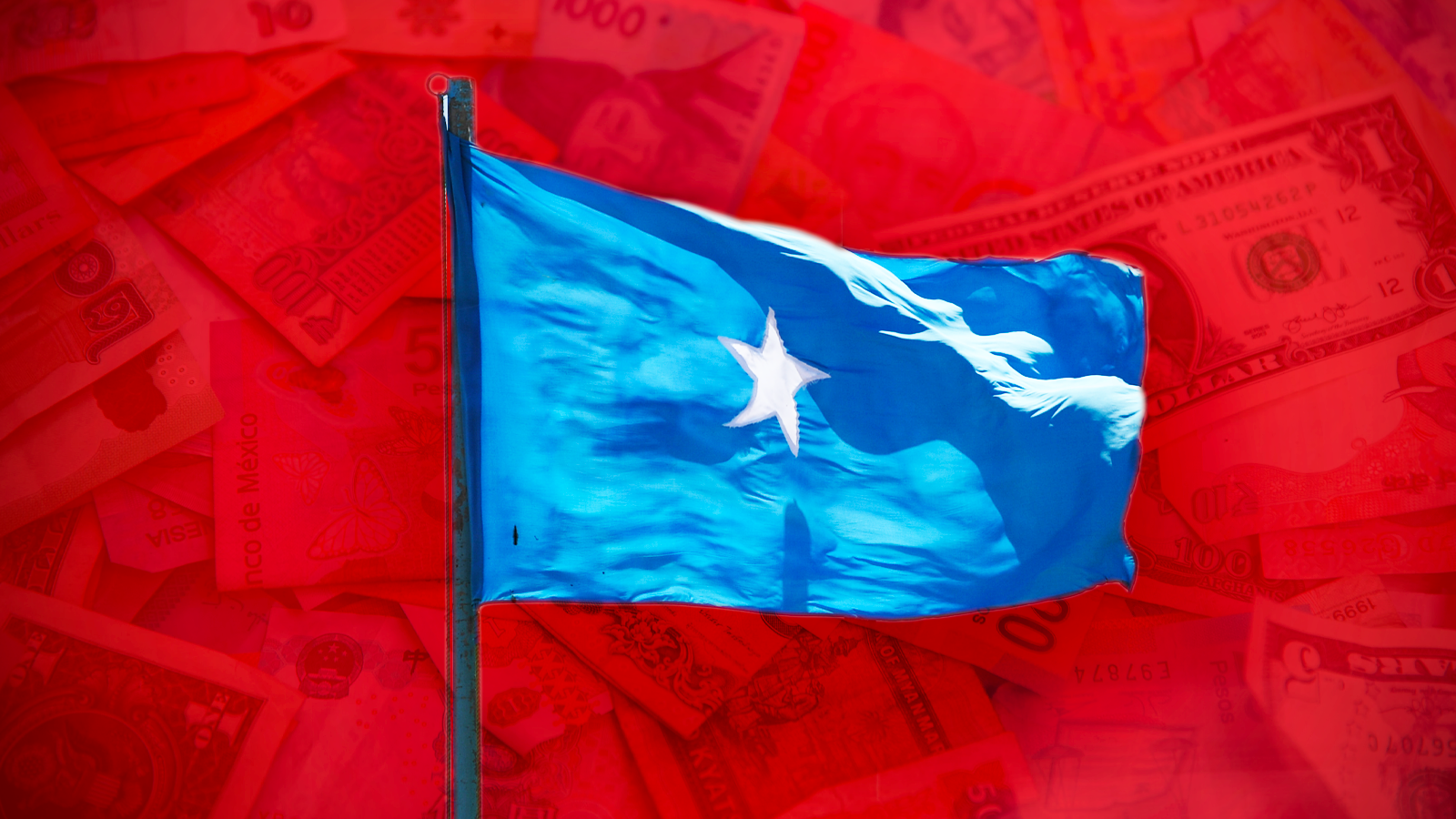
A federal judge on Friday cleared the way for the Trump administration to end more than three decades of Temporary Protected Status for Somalia, potentially stripping deportation protections and work authorization from nearly 1,100 Somali nationals across the country.
In Maine, where Somali immigration has reshaped parts of Lewiston and Portland over the past quarter-century, the ruling raises an immediate question that neither federal officials nor immigration advocates have publicly answered:
How many people in Maine are actually affected?
The answer is important because Somalia’s TPS termination does not revoke the legal status of Maine’s broader Somali population.
Many Somali Mainers are American citizens — either born in the United States or naturalized after immigrating — while others are lawful permanent residents or have obtained legal status through refugee, asylum, family or other immigration programs.
Only those whose ability to remain and work in the United States depends specifically upon Somalia’s TPS designation face the immediate consequences of Friday’s ruling.
Earlier this year, U.S. Citizenship and Immigration Services did not provide the Bangor Daily News with a Maine-specific number when asked how many people here would be affected.
Census data cited by the newspaper showed approximately 3,200 Maine residents identifying as Somali in 2021, with nearly 65 percent reportedly U.S. citizens by birth or naturalization.
Roughly 1,000 were noncitizens, but even that figure does not establish how many held TPS. Noncitizens can have numerous other forms of lawful immigration status.
That leaves Maine without one of the most basic pieces of information needed to measure Friday’s decision: how many Somali TPS holders actually live in Lewiston, Portland or elsewhere in the state?
Judge Clears Trump Administration to Move Forward
U.S. District Judge Allison Burroughs, an Obama appointee sitting in Boston, lifted an administrative stay Friday that had prevented the Department of Homeland Security from implementing the termination.
Burroughs acknowledged that the Somali plaintiffs challenging the administration had made a convincing showing that they could suffer irreparable harm if the protections disappeared.
But she concluded they had not demonstrated a sufficient likelihood of succeeding on the merits of their lawsuit, a critical requirement for obtaining an injunction.
The decision follows a June ruling from the U.S. Supreme Court that curtailed federal judges’ ability to review DHS decisions terminating TPS designations.
The administration has subsequently been allowed to move forward with terminating similar protections for nationals of Haiti, Syria, South Sudan and Myanmar. Litigation involving Ethiopia remains ongoing.
The Somali case was brought by four Somali nationals and two advocacy organizations after the administration announced plans to terminate the country’s designation.
Approximately 1,082 existing Somali TPS beneficiaries nationwide were potentially affected by the termination, according to figures cited in the litigation, while another 1,383 people had pending applications.
Friday’s decision removes the legal barrier that had prevented DHS from carrying out the termination.
A Decision That Began Under Noem — Now Overseen by Mullin
The Somalia TPS termination was initiated under former Homeland Security Secretary Kristi Noem.
Noem announced in January that the administration would end the designation, arguing that conditions in Somalia had sufficiently improved and that continuing the program was no longer justified.
“Temporary means temporary,” Noem said at the time.
President Donald Trump subsequently removed Noem from the department in March.
Former Oklahoma Republican Sen. Markwayne Mullin replaced her and was sworn in as the ninth secretary of Homeland Security on March 24.
Mullin now oversees DHS as the administration moves forward with the termination following Friday’s ruling.
The change is also reflected in the federal litigation, where Mullin replaced Noem as the government defendant in his official capacity.
How Temporary Is 35 Years?
At the center of the controversy is a question that has followed TPS for years: What does “temporary” mean when a country’s designation lasts for decades?
Congress created Temporary Protected Status in the Immigration Act of 1990.
The program allows the federal government to temporarily protect qualifying foreign nationals already in the United States when armed conflict, natural disaster or other extraordinary conditions make returning home unsafe.
Somalia received its initial TPS designation in September 1991 under President George H.W. Bush as the East African nation descended into civil war following the collapse of Mohamed Siad Barre’s government.
That protection survived administration after administration.
Republicans extended it.
Democrats extended it.
More than three decades later, Somali nationals were still receiving temporary protection.
The Biden administration extended and redesignated Somalia for another 18 months beginning in September 2024, with the designation scheduled to expire in March 2026.
The Trump administration determined that the cycle of extensions should end.
Opponents argue that the length of the designation is not the proper test. They maintain that the question should be whether present-day conditions allow people to return safely.
And Somalia remains dangerous.
The Somali government continues battling al-Shabaab, the al-Qaeda-linked terrorist organization responsible for attacks throughout the country.
That leaves the two sides arguing fundamentally different points.
The Trump administration maintains that the statutory justification for continuing the temporary designation no longer exists.
Immigration advocates argue that sending people back to Somalia could still expose them to violence and instability.
After 35 years, the courts are now allowing the administration to bring the designation to an end.
How Did Thousands of Somalis End Up in Maine?
The ruling has particular significance in Maine because of the Somali communities that developed in Portland and Lewiston beginning in the 1990s and early 2000s.
But the history is often misunderstood.
Thousands of Somali refugees were not simply placed in Lewiston by the federal government.
In fact, Lewiston was not an official federal resettlement destination for the Somali refugees who began transforming the city in 2001.
Much of the migration was voluntary secondary migration.
Somalis had fled civil war and refugee camps before being legally admitted to the United States, often settling initially in larger metropolitan areas.
Some subsequently moved to Maine.
Portland developed a Somali population during the 1990s.
Researchers found that Somali families were attracted by Maine’s relatively low crime, quieter communities, schools, lower cost of living and available assistance.
But Portland soon encountered another problem: housing.
By early 2001, Portland’s public housing was full.
Academic research by Colby College anthropologist Catherine Besteman found that Portland officials drove several Somali families north to Lewiston, where substantially more housing was available.
Lewiston was a former textile city struggling with population decline and vacant housing.
The families liked what they found.
Then they called relatives and friends.
The migration accelerated.
Within months, hundreds of Somalis who had been living elsewhere in America began arriving in Lewiston.
A recent historical examination of the migration found that Portland and Lewiston initially coordinated the relocation of approximately 30 to 40 families from Portland shelters and hotels.
But that organized effort quickly gave way to migration over which neither city had control.
Word spread through Somali family and community networks.
By the end of 2001, estimates placed Lewiston’s Somali population at approximately 400.
Other academic research has estimated that the population reached roughly 1,000 within approximately a year.
By 2007, approximately 3,000 Somalis had settled in Lewiston.
A decade after the migration began, estimates put the Somali population at roughly 5,000.
The transformation happened extraordinarily quickly.
Why Lewiston?
Housing was a major factor.
One academic study found Portland’s housing vacancy rate around the beginning of the migration was below three percent.
Lewiston’s was approximately 20 percent.
The city had lost manufacturing jobs and population as the textile economy that once powered Lewiston declined.
Apartments were empty.
Downtown storefronts were vacant.
Somali families needed housing.
Lewiston had it.
But housing wasn’t the only attraction.
Researchers interviewing Somali migrants repeatedly heard similar reasons for choosing Lewiston: lower crime, schools, affordability, employment opportunities and the belief that a smaller community offered a better environment in which to raise children.
What happened next became one of the most consequential demographic changes in modern Maine history.
Lewiston Scrambled to Keep Up
The speed of the migration created immediate pressure.
Lewiston’s schools suddenly received large numbers of students who did not speak English.
A 2007 account found that the school system went from employing a single English Language Learner instructor to 25 in approximately seven years.
City employees also found themselves functioning almost like refugee resettlement workers despite Lewiston not being the original federally designated resettlement location.
That distinction mattered financially.
Federal resettlement funding generally remained with organizations in the original resettlement locations rather than following refugees who independently relocated to another city.
Lewiston therefore found itself confronting the challenges of rapid immigration without necessarily receiving the federal resettlement resources that would have accompanied an initial placement.
The arrival also generated debate over General Assistance, housing, schools and the capacity of a relatively poor former industrial city to absorb hundreds of new residents.
In 2002, then-Mayor Laurier Raymond made the debate national news.
Raymond wrote an open letter asking Somali leaders to discourage additional migration into Lewiston, arguing that the city’s resources were being strained by the speed of the influx.
The letter sparked enormous controversy.
An out-of-state white nationalist organization subsequently announced plans for a rally in Lewiston.
Thousands of people participated in a counter-demonstration opposing the group and supporting the city’s Somali residents.
Lewiston suddenly found itself at the center of America’s immigration debate.
More than two decades later, that debate has never entirely disappeared.
https://www.wmtw.com/article/lewiston-mayor-under-fire-for-comments-about-somalis/1992029
Costs — and Contributions
The impact on Lewiston cannot accurately be reduced to one side of the ledger.
The arrival of thousands of immigrants created additional demands on schools, language programs, housing and municipal assistance.
Those costs deserve scrutiny, particularly as Maine taxpayers continue debating immigration and public assistance.
But the economic story does not end there.
Somali families also occupied apartments in neighborhoods that had experienced population decline.
Somali entrepreneurs opened grocery stores, restaurants and other businesses.
Vacant downtown storefronts found new tenants.
Community organizations and mosques were established.
Children who arrived in Maine or were born here graduated from Lewiston schools and colleges.
Somali-Americans entered Maine business, government, nonprofit organizations and politics.
Lewiston changed.
Whether residents view that transformation primarily as a burden, a revival or some combination of both has fueled political debate for more than two decades.
What cannot seriously be disputed is that the city of 2026 looks very different from the Lewiston that existed before 2001.
What Happens Now to Someone With Somali TPS?
Friday’s ruling could have far more immediate consequences for the relatively small number of people whose legal protection depends entirely upon TPS.
TPS provides protection from removal and allows beneficiaries to obtain employment authorization.
When that protection ends, a Somali national who has no other lawful status can potentially become subject to immigration enforcement.
TPS-based work authorization can also disappear.
That does not necessarily mean every TPS holder will immediately be deported.
Immigration cases are individual.
Someone who originally obtained TPS may have subsequently qualified for another immigration benefit.
Others may have pending asylum cases, family-based petitions or other claims that could allow them to remain.
Some may have American spouses or children.
Ending a parent’s TPS does not affect the citizenship of a U.S.-born child.
Likewise, Friday’s ruling has no effect on the citizenship of naturalized Somali-Americans.
What Does This Mean for Lewiston?
That question cannot be completely answered without one number:
How many Somali TPS holders live there?
So far, that figure has not been publicly established.
If the number is small, the citywide economic impact could be limited.
For the individual families involved, however, it could be enormous.
Workers could lose employment authorization.
Employers could lose workers.
Families could face immigration proceedings.
Immigration attorneys could see increased demand from people trying to determine whether they qualify for another status.
And mixed-status families could face the possibility of one family member being removable while spouses or children remain lawful permanent residents or American citizens.
Those are serious consequences.
But suggesting that Friday’s ruling suddenly places thousands of Lewiston’s Somali residents at risk of deportation would be misleading.
Available data indicate that a substantial portion of Maine’s Somali population consists of American citizens, while many noncitizens may possess immigration status entirely unrelated to TPS.
What Does It Mean for Portland?
Portland faces essentially the same uncertainty.
The city served as an early destination for Somali refugees in Maine and remains a center for immigrant communities and the organizations providing them with legal and social services.
Portland-based immigration attorneys and advocacy groups could see increased demand even if only a relatively small number of affected TPS beneficiaries live within the city itself.
Employers could also be affected if employees’ work authorization depends exclusively upon TPS.
But without Maine-specific numbers, predictions of a significant impact on Portland’s overall economy, housing market or workforce remain speculative.
That data gap should now become part of the story.
Maine Still Doesn’t Know How Many People Are Affected
When the Trump administration announced the termination earlier this year, USCIS did not provide the Bangor Daily News with a Maine-specific number of affected Somali TPS holders.
That unanswered question has become substantially more important following Friday’s ruling.
The federal government knows how many Somali nationals have received TPS nationwide.
Yet Mainers still do not know how many live here.
Without that information, politicians and advocates on either side should be cautious about claiming the decision will either transform Maine communities or have virtually no impact at all.
The appropriate questions for DHS and USCIS are straightforward:
How many active Somali TPS beneficiaries reside in Maine?
How many live in Androscoggin County?
How many live in Cumberland County?
How many have pending TPS applications?
And how many have another immigration status that could allow them to remain in the country?
Those answers would provide a far clearer picture of what Friday’s ruling actually means for Maine.
A Temporary Program That Lasted 35 Years
There is a larger policy question hanging over the case.
Temporary Protected Status for Somalia began under President George H.W. Bush in 1991.
George H.W. Bush left office in 1993.
Since then, the United States has had five presidents and administrations controlled by both parties.
Somalia’s temporary protection remained.
During those same decades, Somali refugees built permanent lives in America.
Children were born.
Families bought homes.
Businesses opened.
Immigrants became citizens.
And in Maine, a migration that began with a relatively small number of families helped transform one of the state’s largest cities.
Now the Trump administration is attempting to close a chapter that began 35 years ago.
For approximately 1,100 Somali TPS beneficiaries nationwide, Friday’s court decision could determine whether they can continue living and working in the United States.
For Maine, however, one of the most important facts remains unknown.
How many of them are here?
Until the federal government answers that question, nobody can say with certainty what ending Somali TPS will mean for Lewiston, Portland, or Maine.