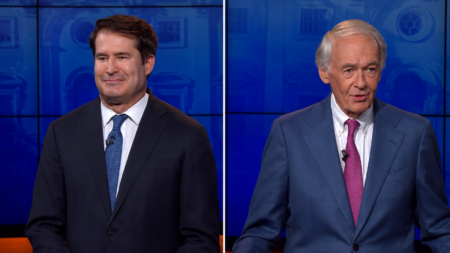
Democratic U.S. Senate candidate Troy Jackson has a message for Republican Sen. Susan Collins: Show up.
But after two town halls, two empty-chair stunts and two decisions to keep The Maine Wire outside, Jackson’s campaign is facing its own questions about accessibility, while simultaneously balking at a proposed televised debate with Collins.
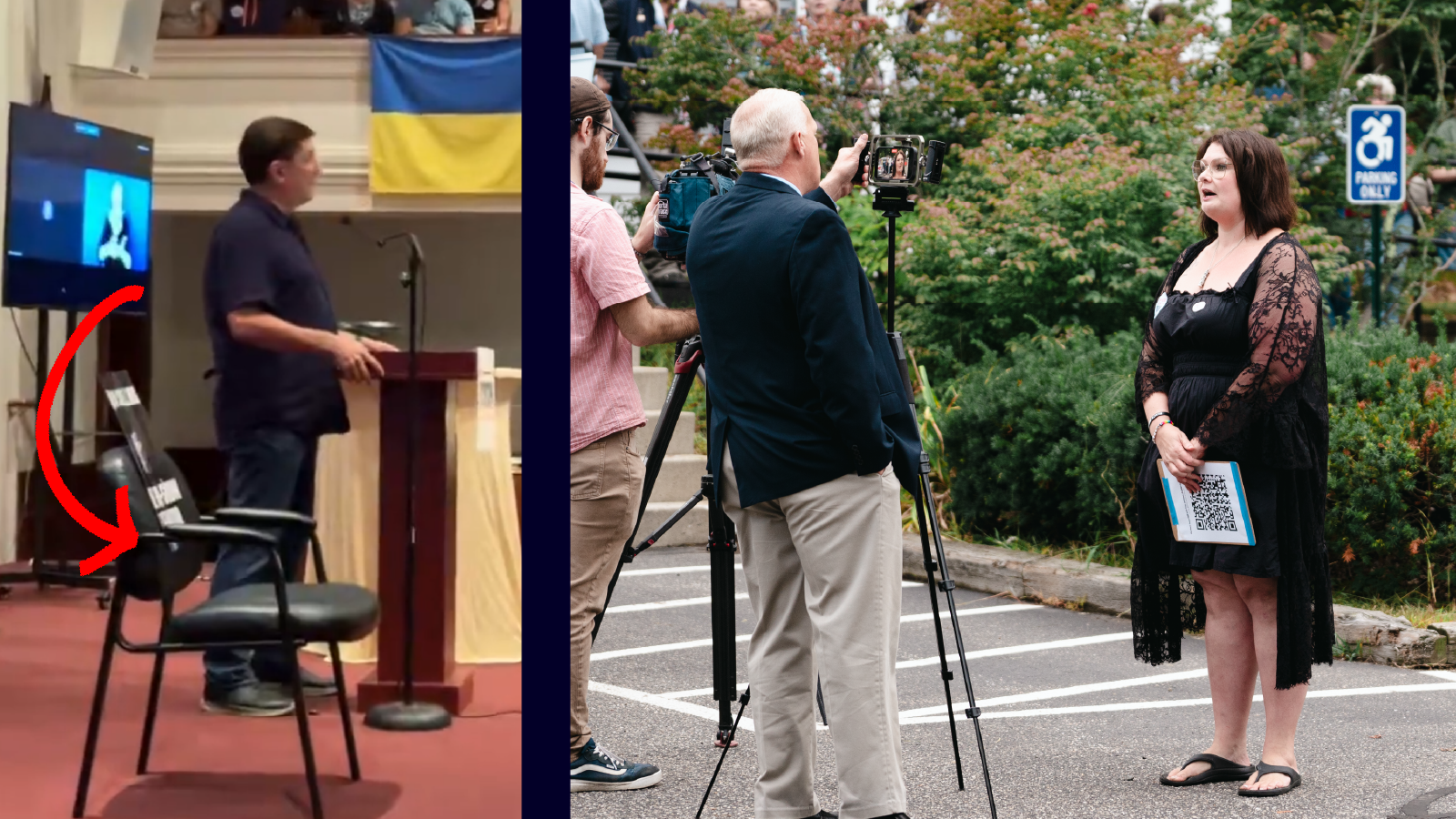
Jackson held the second stop of his “Solidarity Forever” town hall tour Thursday evening in Gorham, where his campaign once again placed an empty chair on stage for Collins.
The symbolism is hardly subtle.
Jackson wants voters to see an empty chair and conclude that Collins is unwilling to show up, face Maine voters and answer difficult questions.
There is just one problem.
The Maine Wire has shown up to both of Jackson’s town halls and has been denied access to both.
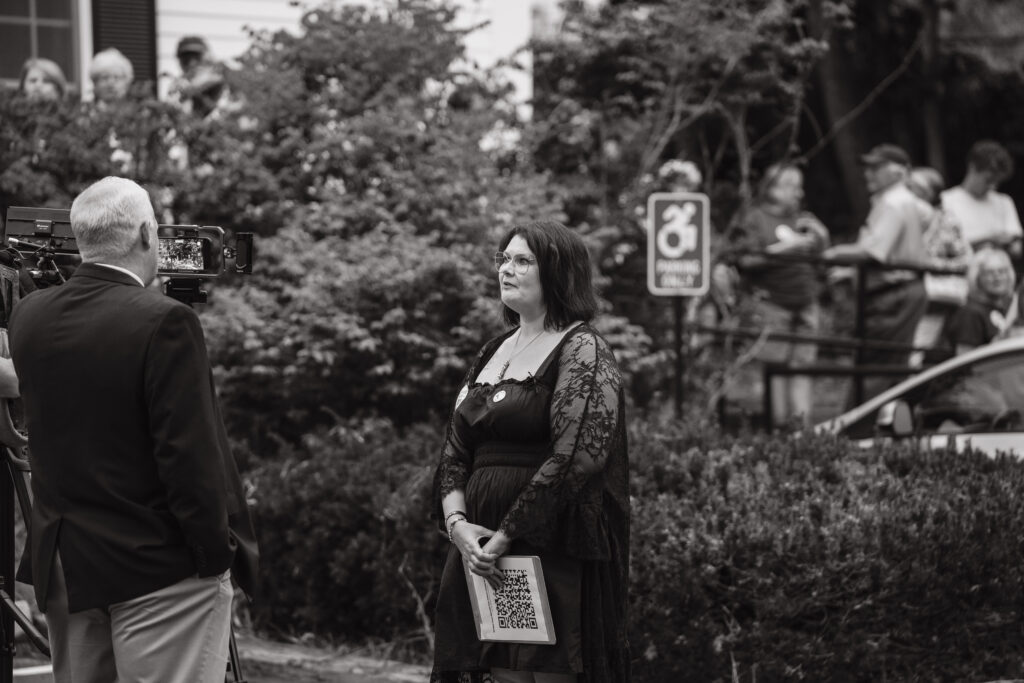
Jackson’s campaign first barred The Maine Wire from his Tuesday evening town hall at the Franco Center in Lewiston. This reporter complied with the registration process, scanned the required QR code and provided the requested information before organizers learned The Maine Wire was there.
Other media outlets were allowed inside.
The Maine Wire was not.
Thursday evening in Gorham, it happened again.
Jackson once again put out an empty chair for Collins. And once again, The Maine Wire was not permitted to attend his town hall.
The irony was already apparent earlier Thursday when this reporter caught up with Collins during her visit to Brunswick and put the issue directly to the senator.
“Senator Collins, Troy Jackson is leaving an empty chair for you at his town halls, but denies me entry to cover and now he is afraid to debate you. Isn’t it hypocritical?” this reporter asked.
The question came as Jackson and Collins are engaged in an increasingly contentious dispute over debates in one of the most closely watched U.S. Senate races in the country.
Collins has accepted invitations to participate in four televised debates this fall.
Jackson says he is willing to debate Collins, but has pushed for at least two debates to use a town-hall format where Maine voters can question the candidates directly.
Collins’ campaign, meanwhile, said Jackson had not committed to a proposed first debate jointly hosted by NewsCenter Maine, Maine Public and the Portland Press Herald.
The Collins campaign said the senator offered Tuesday, Wednesday, Thursday or Friday next week in an effort to make the debate happen.
That distinction matters.
Jackson cannot accurately be described as refusing all debates. He has publicly said he will debate Collins and is arguing over how those debates should be conducted.
But it also leaves Jackson’s campaign with an obvious political problem.
He is using an empty chair to accuse Collins of failing to show up while Collins has already accepted four televised debate invitations and her campaign is publicly challenging Jackson to finalize the first face-to-face encounter.
At the same time, Jackson is demanding greater access to Collins while his own campaign has now denied The Maine Wire access to two consecutive town halls.
It is becoming difficult to square the two positions.
Jackson is perfectly entitled to criticize Collins for not attending his campaign-organized town halls. Maine voters can decide whether that criticism is justified.
But a candidate campaigning on accessibility should expect questions about his own accessibility.
The Maine Wire has aggressively investigated Jackson’s political record, finances and other controversies surrounding his candidacy. Our reporting has undoubtedly produced questions Jackson would rather not answer.
That is precisely why access matters.
Political journalism is not supposed to consist exclusively of friendly questions from reporters and outlets a candidate prefers.
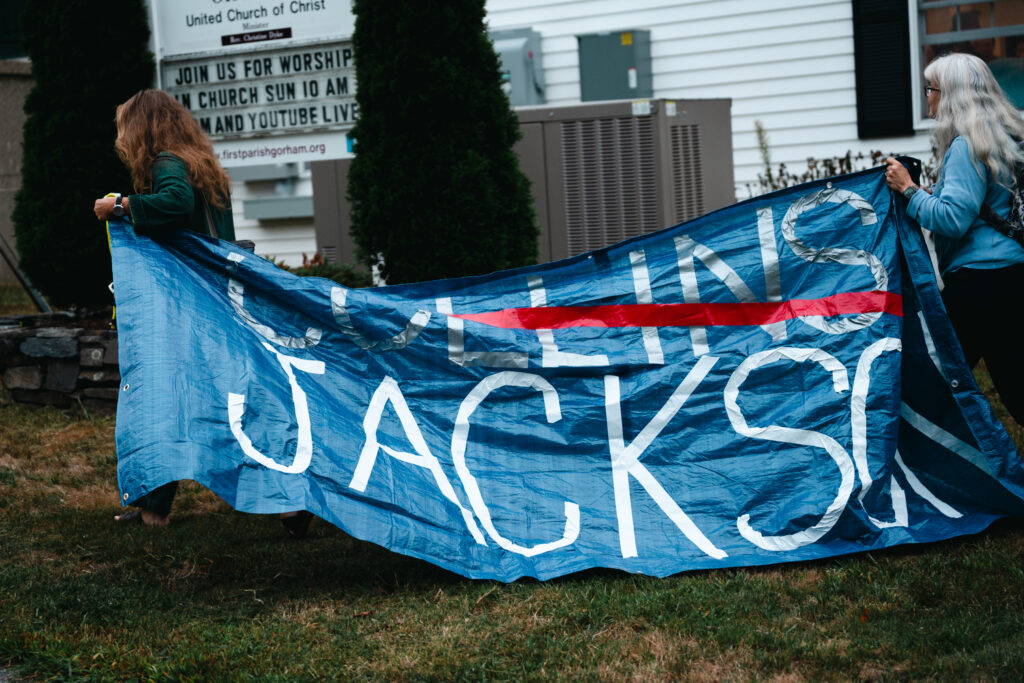
Jackson is running for the United States Senate. If elected, he would represent every Mainer, including those who disagree with him and journalists whose questions he may find uncomfortable.
An empty chair is an effective campaign prop.
It becomes considerably less effective when the candidate sitting next to it is deciding which reporters are allowed through the door.
Two town halls.
Two empty chairs.
Two exclusions of The Maine Wire.
And Collins is still waiting for Jackson to finalize a debate.
For a campaign built around the demand that Susan Collins “show up,” Jackson may soon have to answer a much simpler question himself:
Will he?