

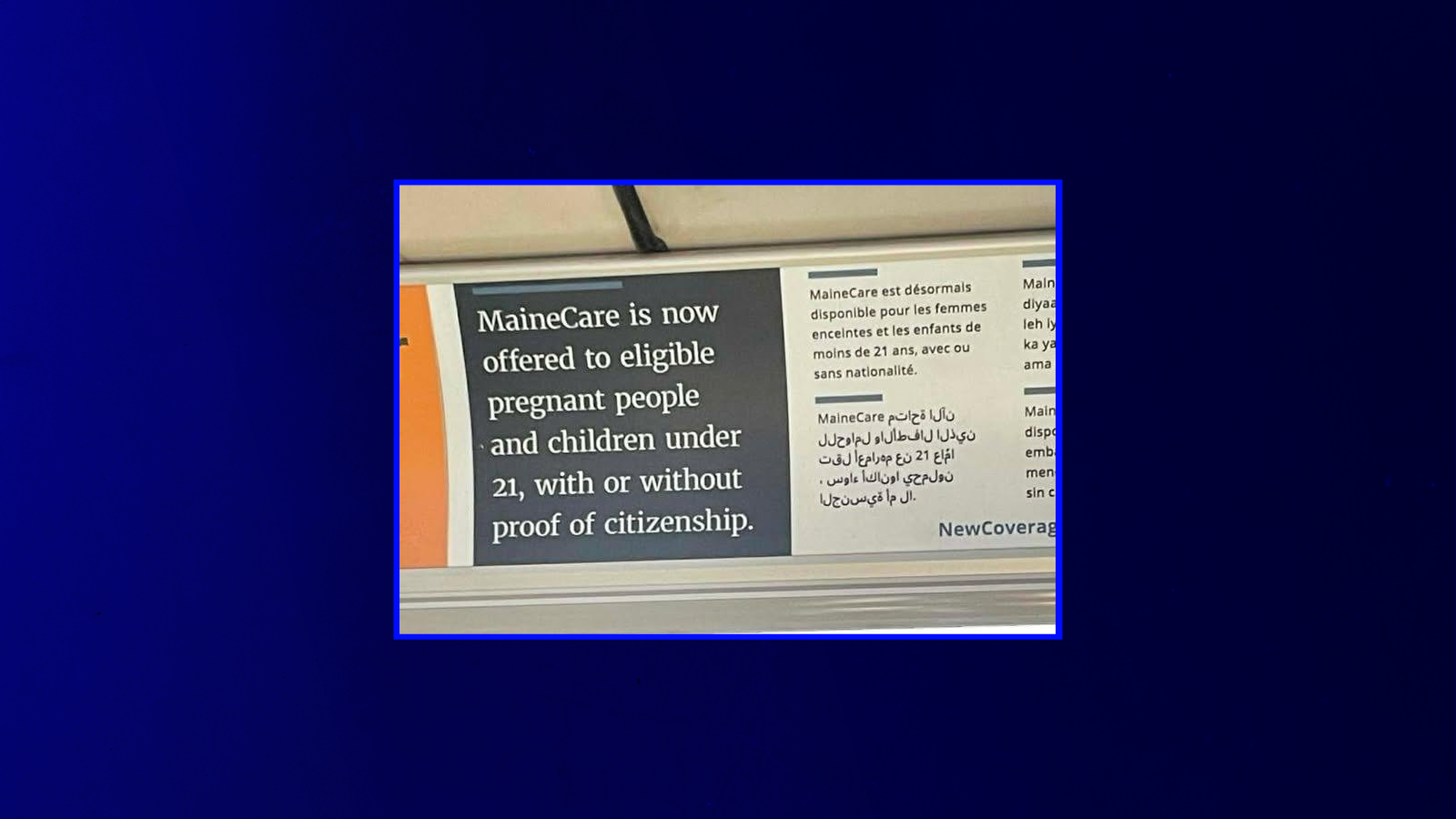
A new legal opinion from the U.S. Department of Justice could have significant consequences for Maine, where state officials have maintained policies limiting when information about undocumented immigrants receiving public benefits is shared with federal immigration authorities.
The Justice Department announced Wednesday that its Office of Legal Counsel has reversed a nearly three-decade-old interpretation of federal welfare law, concluding that states participating in certain federal assistance programs must require their entire state government, not merely the agencies administering those benefits, to report individuals they know are unlawfully present in the United States to the Department of Homeland Security.
The change could place Maine directly in the middle of another immigration dispute with the Trump administration.
The Office of Legal Counsel withdrew a 1998 Clinton-era opinion that interpreted Section 404 of the Personal Responsibility and Work Opportunity Reconciliation Act of 1996 more narrowly.
Under that interpretation, reporting requirements were generally applied to the particular state agencies administering Temporary Assistance for Needy Families, or TANF, and Supplemental Security Income, or SSI.
The new opinion reaches a dramatically broader conclusion.
According to DOJ, Congress used the term “State” to mean the state government as a whole. Therefore, when a state accepts TANF or participates in SSI, the federal reporting requirement applies across that state’s agencies.
“Congress wrote this requirement plainly,” Assistant Attorney General T. Elliot Gaiser said in announcing the decision. “When a state chooses to participate in TANF, it accepts the obligation to report illegal aliens in the United States.”
DOJ also warned that failure to comply could carry financial consequences.
“States that accept TANF funding must abide by federal law, and failure to comply may lead to serious consequences, including loss of program funding,” Deputy Assistant Attorney General Joshua Craddock, who authored the opinion, said.
The opinion applies prospectively, meaning states will not be penalized for actions taken under the government’s previous interpretation. Federal agencies may now revise future TANF and SSI agreements and compliance procedures to incorporate the new interpretation.
Maine could face an immediate policy question
The decision is particularly noteworthy in Maine because the state’s own Department of Health and Human Services currently tells SNAP applicants that it generally does not report undocumented applicants to federal immigration authorities.
Maine DHHS states on its website that Maine extends SNAP benefits to certain noncitizens who do not qualify for federal SNAP.
More significantly, the department explicitly tells applicants: “The Department does not report to USCIS, CBP, or ICE when an applicant reports being undocumented or presents expired documents.”
DHHS says information is shared only when legally required, including certain circumstances involving sponsored lawful permanent residents and situations in which department employees have seen proof of a deportation notice and the deportation date has passed.
That policy could now face scrutiny because Maine participates in TANF.
The DOJ opinion does not directly eliminate Maine’s state-funded benefit programs, nor does Wednesday’s announcement establish that federal SNAP or MaineCare funding can automatically be withheld.
Instead, it raises a potentially much larger question: whether Maine can continue maintaining agency-level restrictions on immigration information sharing while simultaneously accepting federal TANF funding.
The Justice Department’s answer appears to be no.
What does Maine actually “know”?
The practical impact may depend heavily on one word: known.
The opinion does not simply require state employees to speculate about a person’s immigration status. The statute concerns individuals the state “knows” are not lawfully present.
Determining what qualifies as actual government knowledge could become one of the central legal questions surrounding the policy.
Maine’s benefit system already gathers immigration information in some circumstances to determine program eligibility. DHHS conducts eligibility determinations for SNAP, MaineCare and TANF, and the state has separate state-funded assistance available to some noncitizens.
That creates an obvious question for the Mills administration: If one Maine agency obtains definitive information showing that an individual is unlawfully present, does the new federal interpretation require that information to be reported to DHS?
Maine’s Bureau of Motor Vehicles presents a somewhat different situation than states that issue driver’s licenses regardless of immigration status.
Maine requires applicants for driver’s licenses and state identification cards to provide evidence of legal presence in the United States. The Secretary of State’s office says an individual “cannot obtain or renew a driver’s license or non driver identification card” without acceptable evidence of legal presence.
That distinction is important because simply possessing a Maine driver’s license would not, by itself, indicate that someone is unlawfully present.
Another federal-state fight could be coming
The new interpretation is likely to generate legal challenges from states that contend the federal government is attempting to force state agencies to participate in immigration enforcement.
DOJ anticipated some of those arguments in its opinion, maintaining that the reporting requirement does not violate constitutional restrictions on coercive federal spending conditions.
The administration’s argument is relatively straightforward: states do not have to participate in TANF, but states choosing to accept federal money must comply with the conditions Congress attached to it.
Maine now faces the same choice as every other state participating in the program.
But Maine could become a particularly important test case because of the state’s existing benefit policies toward noncitizens and DHHS’s publicly stated restrictions on sharing immigration information.
The immediate question for Gov. Janet Mills and Maine DHHS is no longer theoretical.
Does Maine believe its current information-sharing policies comply with the Justice Department’s newly announced interpretation of federal law?
And if Washington says they do not, will Maine change those policies, or take the Trump administration to court?




Paging shanna bellows, paging shanna bellows. Please see the man at the money distribution window with a complaint. You’d think that with this much running around in circles she’d be in a little better shape.
Oh hell ….if Washington stops paying the welfare bills , the Maine democrats will be glad to get the deficit from all of us taxpayers .
Janet , Sheena , and Hanna are already mixing up a witches brew of lies to convince the voters to go along with their virtuous foolery . Just make the sales tax double . That outta cover it .
Choose Wisely in November .
How about sharing the info with the people who are paying the bills, you know Maine citizens, the forgotten man.