President Donald Trump scored a significant victory at the U.S. Supreme Court Monday after the justices ruled 5-4 that construction may continue on his massive $400 million White House ballroom project while the legal fight surrounding the development moves forward.
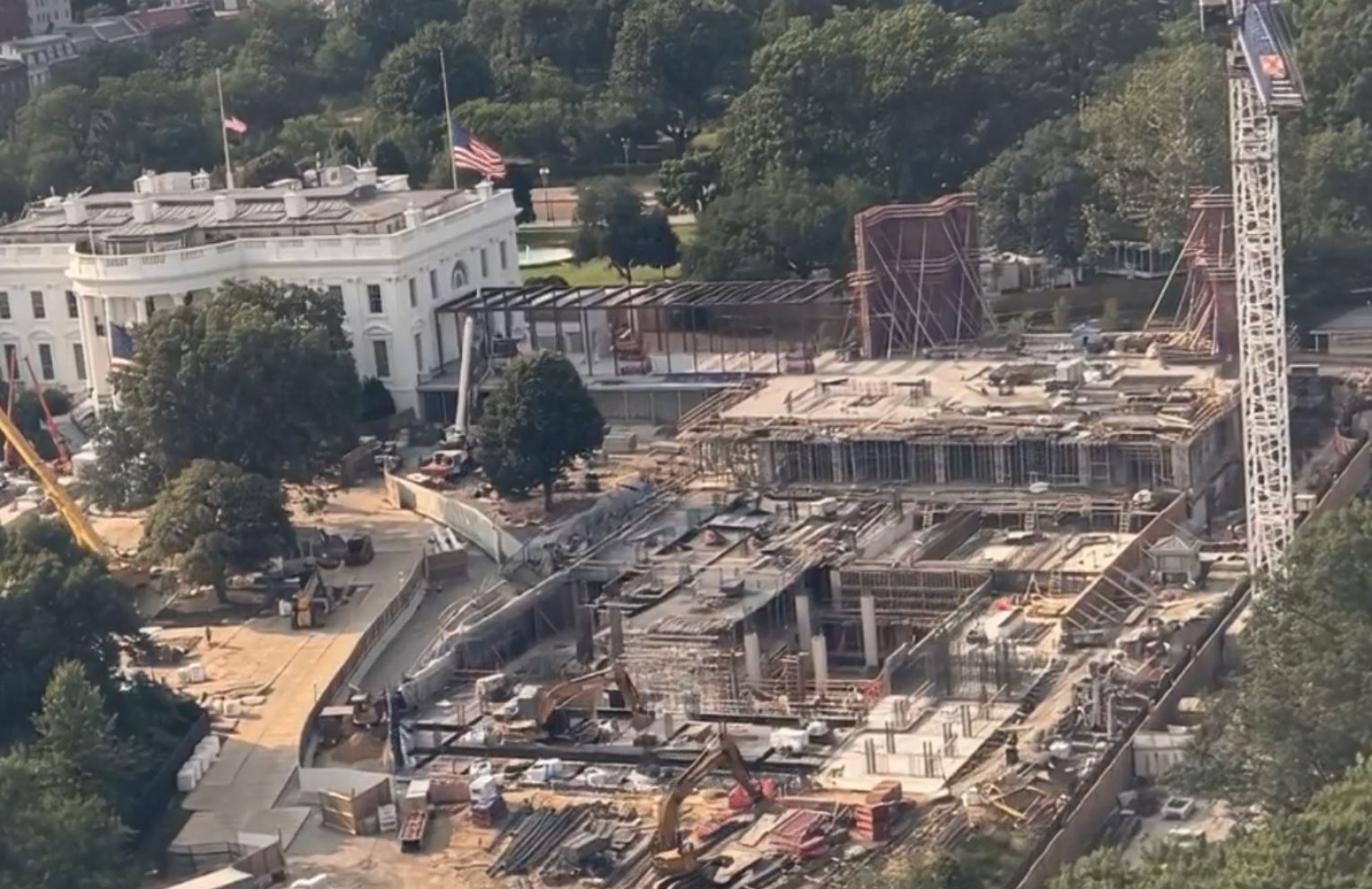
The ruling clears the way for work to continue on the 90,000-square-foot addition replacing the former East Wing of the White House, where construction crews have been working at a breakneck pace.
The Court’s conservative majority granted the Trump administration’s emergency request to put lower-court rulings blocking above-ground construction on hold.
At the center of the decision was not whether Trump ultimately has the constitutional or statutory authority to build the project without explicit congressional approval, but whether the group challenging it has the legal standing to sue.
The National Trust for Historic Preservation argued that the administration unlawfully moved forward with the project without congressional authorization.
The Supreme Court disagreed, at least when it came to the group’s ability to bring the case.
“Today, we do not pass upon the legality of the Government’s East Wing project,” the majority wrote.
Instead, the justices concluded that the Trump administration is likely to succeed in demonstrating that the National Trust lacks Article III standing to challenge the development in federal court.
That distinction could prove important as the broader legal fight continues.
Roberts Breaks With Conservative Justices
Perhaps the most striking aspect of Monday’s decision was the lineup.
Chief Justice John Roberts broke with the Court’s other conservatives and joined Justices Sonia Sotomayor, Elena Kagan and Ketanji Brown Jackson in dissent.
Roberts did not mince words.
“That construction is likely unlawful,” Roberts wrote.
The chief justice pointed to federal law prohibiting construction of a building or structure on federal park grounds in Washington without the “express authority of Congress.”
Congress, Roberts argued, has not provided that explicit authorization for Trump’s ballroom.
The disagreement places the dispute squarely within a much larger constitutional debate over presidential power and Congress’ authority over federal property.
Much More Than a Ballroom
Although Trump’s project initially drew attention primarily because of its enormous state ballroom, administration lawyers have increasingly emphasized that the development is part of a much broader overhaul of the White House’s military, medical and national-security infrastructure.
The project includes a massive concrete-and-steel superstructure extending five stories underground and reaching roughly 70 feet above ground.
According to the administration’s filing with the Supreme Court, the development incorporates military facilities and security infrastructure in addition to the ballroom.
Administration officials have argued that stopping construction at this stage would create significant operational and security problems at one of the most sensitive locations in the world.
The Trump administration told the Court that approximately 250 construction workers have been working 20 hours per day, seven days a week.
Officials also claimed that the project is approximately 65 percent complete.
That figure, however, has been challenged. The Washington Post reported that project documents suggest the development may be considerably less advanced when measured against its overall construction schedule.
The administration nevertheless maintains that the structure has reached a point where significant design changes would be difficult and potentially dangerous.
Construction began in October 2025, and the project is currently scheduled for completion in August 2028.
$400 Million Project Largely Privately Funded
The estimated price tag has climbed to approximately $400 million, making the project one of the most significant alterations to the White House complex in generations.
The administration has relied heavily on private donations rather than traditional congressional appropriations to pay for construction.
The White House has said hundreds of millions of dollars have already been raised from private donors.
Supporters argue that the project will finally provide the White House with a permanent venue capable of hosting large state dinners and official events while simultaneously modernizing aging security infrastructure.
Critics see something very different: an enormous transformation of one of America’s most historically significant buildings undertaken without sufficient congressional oversight.
Monday’s Supreme Court ruling does not resolve that argument.
But it does resolve one immediate question.
The cranes aren’t stopping.
For Trump, who has taken a personal interest in reshaping the White House complex and has repeatedly defended the ballroom as both necessary and long overdue, the 5-4 decision means construction can continue while opponents search for another legal avenue to stop it.
And with crews working around the clock, every additional day in court means considerably more concrete and steel going into the ground, and into the Washington skyline.