
The Maine Wire
  • News
  • Commentary
  • The Blog
  • About
  • Investigations
  • Support the Maine Wire
  • Store
Facebook Twitter Instagram
Trending News
  • Vance to Lead Saturday Morning Iran Peace Talks in Pakistan
  • Wiscasset Men Found with Huge Variety of Drugs and 24 Firearms
  • Maine to Receive $65 Million in Federal Funding for Rural Infrastructure Upgrades
  • NH Woman Killed by Police After Rampage with Fire Extinguisher and Knife
  • Supplemental Budget Includes $5M for “Reproductive Health Care” and “Family Planning” Providers
  • Inland Fisheries and Wildlife Commissioner Who Led DEI Push Resigning at the End of April
  • Elected Maine Official Calls Tax Complainers Lazy Couch-Keyboard Addicts, Then Tries To Pull It Back
  • Ohio Perv First Convicted Under New Trump Law Criminalizing ā€˜Intimate Deepfakes’
Facebook Twitter Instagram
The Maine Wire
Thursday, April 9
  • News
  • Commentary
  • The Blog
  • About
  • Investigations
  • Support the Maine Wire
  • Store
The Maine Wire
Home Ā» News Ā» News Ā» Mills’ veto stops new graduated real estate transfer tax
News

Mills’ veto stops new graduated real estate transfer tax

Nick LinderBy Nick LinderJune 30, 2021Updated:June 30, 2021No Comments3 Mins Read
Facebook Twitter Email LinkedIn Reddit
Share
Facebook Twitter LinkedIn Email

Should Mainers have to pay more in taxes for buying a new piece of real estate? The Legislature says yes, but thankfully, Gov. Janet Mills says no.

In one of seven vetoes issued last week, Mills prevented the state from raising the real estate transfer tax (RETT) rate.

The tax is levied on every transaction in which real property is exchanged. The seller of the home or building is the one who foots the bill. 

The bill the governor stopped was LD 418, sponsored by Rep. Lynne Williams (D-Bar Harbor), which originally would have lowered the existing RETT for the first $150,000 of a home’s value while establishing a new graduated rate on values over $1 million. The bill was amended, though, to remove the RETT decrease on those lower values, keep the existing RETT and retain the new tax increase.

The existing RETT rate is $2.20 for every $500 of a home’s value. The proposed change would have brought that up to $2.70 for every $500 in excess of $1 million. Mills vetoed this amended version of the bill.

The Senate adopted the amended bill by a 22-13 vote along party lines.

Every House Republican then voted against the amended measure, with eight absent, along with three House Democrats, with two absent, thus resulting in its passage by a 79-62 vote.

A measure to indefinitely postpone the bill then failed in the Senate 15-19, sending it to Gov Mills’ desk.

In her veto notice, Mills reiterated her commitment to not raising taxes on Mainers, especially as the state and its businesses are still recovering from the fallout of the pandemic. ā€œAvoiding tax increases is important for positioning the State’s economy to rebound quickly and strongly,ā€ Mills said in her veto message. 

She also raised the point that the additional revenues taken by the tax would be used for the Housing Opportunities for Maine (HOME) fund, which aims to serve low-income Mainers with affordable housing, which is already ā€œfinancially soundā€ and ā€œnot in needā€ of the money LD 418 would generate.

According to Mills, ā€œIn FY21 the Real Estate Transfer Tax is projected to generate $4.5 million more for the HOME Fund than in FY20,ā€ and L.D. 418 would only raise an additional $749,000 for the HOME Fund over its first full fiscal year in effect.

ā€œIt is more effective,ā€ she writes, ā€œand less detrimental to the broader economy, to manage the State budget responsibly as well as using new federal funds for housing needs, rather than raising taxes.ā€

A 2003 National Association of Realtors study found that RETTs ā€œplace an unfair burden on lower income homebuyers and those who move frequently.ā€ By increasing Maine’s RETT under the guise of helping low-income Mainers, the Legislature likely would have actually hurt the exact group it set out to aid.
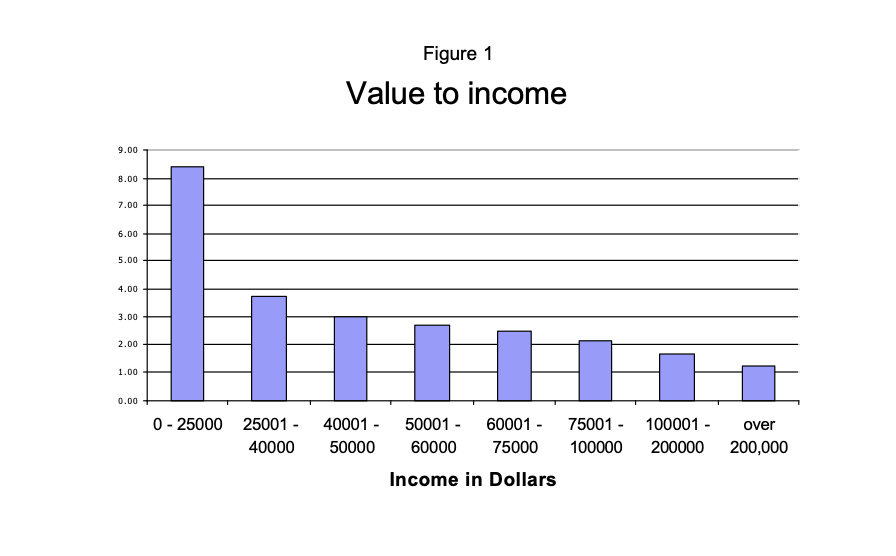
The above graph from the study outlines the share of income spent on housing by income bracket.Ā 

The study also cites the regressive nature of RETTs and volatility of the revenue stream of real estate as reasons municipalities and other governments should not adopt them as part of their tax codes.

By vetoing LD 418, Governor Mills stood up to her own party and prevented the legislature from passing a new tax that would surely disadvantage the poor and hamper economic growth at a time when we desperately need it.

Lawmakers would be wise to sustain her veto. 

Commentary economic recovery economy Featured governor janet mills HOME fund Janet Mills LD 418 lynne williams Opinion party lines real estate transfer tax Representative Lynne Williams RETT tax increases tax policy Taxes veto veto message vetoes
Previous ArticleBudget agreement suggests lawmakers may have learned lessons from the pandemic
Next Article Appropriations Committee removes flavored tobacco ban from final budget agreement
Nick Linder

Nicholas Linder, of Cincinnati, is a communications Intern for Maine Policy Institute. He is going into his second year of studying finance and public policy analysis at The Ohio State University. On campus, he is involved with Students Consulting for Nonprofit Organizations and Business for Good.

Latest News

Vance to Lead Saturday Morning Iran Peace Talks in Pakistan

April 9, 2026

Wiscasset Men Found with Huge Variety of Drugs and 24 Firearms

April 9, 2026

Maine to Receive $65 Million in Federal Funding for Rural Infrastructure Upgrades

April 9, 2026

Comments are closed.

Recent News

Vance to Lead Saturday Morning Iran Peace Talks in Pakistan

April 9, 2026

Wiscasset Men Found with Huge Variety of Drugs and 24 Firearms

April 9, 2026

Maine to Receive $65 Million in Federal Funding for Rural Infrastructure Upgrades

April 9, 2026

NH Woman Killed by Police After Rampage with Fire Extinguisher and Knife

April 8, 2026

Supplemental Budget Includes $5M for “Reproductive Health Care” and “Family Planning” Providers

April 8, 2026
Newsletter

News

  • News
  • Campaigns & Elections
  • Opinion & Commentary
  • Media Watch
  • Education
  • Media

Maine Wire

  • About the Maine Wire
  • Advertising
  • Contact Us
  • Submit Commentary
  • Complaints
  • Maine Policy Institute

Resources

  • Maine Legislature
  • Legislation Finder
  • Get the Newsletter
  • Maine Wire TV

Facebook Twitter Instagram Steam RSS
  • Post Office Box 7829, Portland, Maine 04112

Type above and press Enter to search. Press Esc to cancel.