


Independent-research data shows Maine’s resettlement of hundreds of refugees and other humanitarian-related arrivals in recent years, aligning with nonprofits and their affiliate organizations receiving millions in federal grants administering resettlement benefit services.
The U.S. Refugee Admission Program (USRAP) provides refugees with full-ride packages including cash funds, medical and service support funded by taxpayers, while Special Immigrant Visa holders and Unaccompanied Children are entitled to benefits as well.
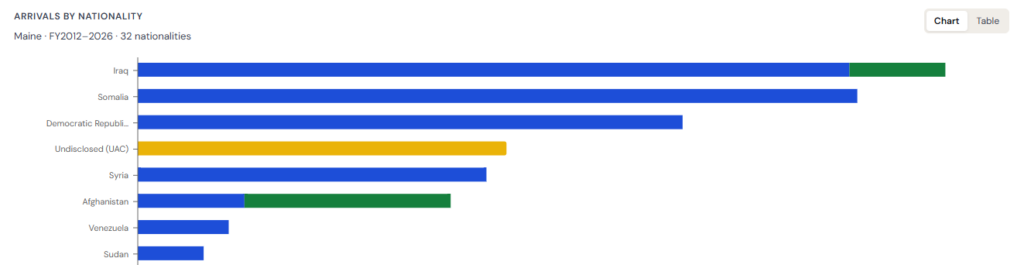
According to data, the state oversaw 218 refugees arriving in 2022, rising to 547 in 2023, and totaling 906 by 2024 prior Trump’s election. The humanitarian arrivals, including refugee and asylum seekers, accounted for 71% of individuals with full USRAP benefits with top arrivals from Iraq, Somalia, and the Democratic Republic Of Congo. Observably, once President Trump took office, the refugee industrial complex in small town America lost momentum following federal funding cuts in targeted moves.
Not too long ago, the Biden administration found itself in hot water after an indictment revealed over 4,000 Iraqi individuals exploited the direct access refugee program, with three foreign nationals charged for fraud and money laundering.
Today, we can observe data trends provided by Morse Research, tracking USRAP arrivals and federal spending obligations nationwide dating back to 2012. Nationally, the platform shows nearly one million tracked arrivals and over $64 billion dollars committed to prime awards and subawards benefitting resettlement organizations.
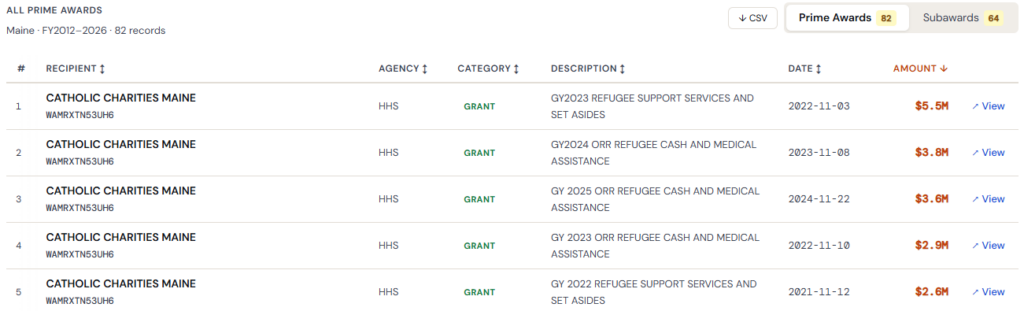
Notably, Maine’s share of arrivals tracks the same pattern seen in federal grants tied to headcounts, where affiliate agencies like Catholic Charities step in to receive formula-based funding scaled in amount of individuals served.
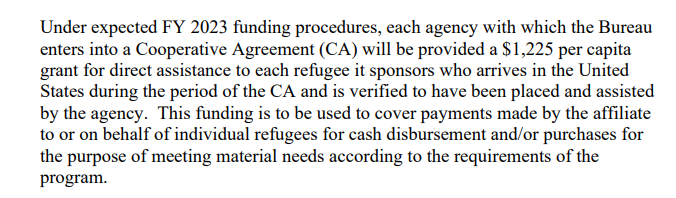
These refugees receive extraordinary benefits used to incentivize initial resettlement, with affiliated agencies receiving a “Reception and Replacement Grant” typically around $2,500 per refugee admitted, intended to cover 90 days of basic needs like housing, food, and administrative costs.
Those eligible also qualify for Refugee Cash Assistance and Refugee Medical Assistance for up to 12 months, or until “self sufficiency” is achieved economically mentioning cash disbursements which matches state welfare program trends in Medicaid.
In data, federal grants rise in volume with resettlement spikes, painting the financial link between headcounts and organizational funding. As for Maine, this model has connected substantial funds directed to organizations associated with the Office of Maine Refugee Services. The Maine Wire also documented similar cash grants flowing to familiar faces in Lewiston and Portland, like Gateway Community Services.
Maine’s small population, housing shortage, and shotgun-tax increases amplify per-arrival costs, with the General Assistance Fund exploding in recent years to address needs of “New Mainers.”
While federal funds cover initial resettlement, longer-term costs are covered by state and local economies, providing cash and medical assistance to refugees while Democrats propagate Medicaid expansion. Remarkably, state economies remain accountable for minors, as policy states foster care and other programs mandatory until the child reaches adult age, or the “self-sufficiency” is achieved economically.
[Related: Catholic Charities Maine Failed Two Audits And Were Ordered To Repay Thousands Billed To MaineCare]
The patterns emerge and shed new light, as fiscal allocation data shows a significant drop with only 50 refugees resettled in Maine last year – declining 90% since President Trump took office. The decrease directly aligns with broader federal initiatives targeting refugee admission programs, including indefinite suspension of new USRAP processing enacted under executive order.
The national statistics also took an elevator ride down to a record-low 7,500 refugees in 2026, declining 94%, from 125,000 – a new Trump record in modern USRAP history. While data available aligns resettlement data and formula-based grants, it seems the story unfolds further in Maine, where a blue-curtain appears meticulously sewn by nonprofits considered friends of the Democratic party.



Shut down all the NGO scams.
Great news, keep it up.
I applaud the MW’s efforts at exposing this corruption, BUT IT’S VERY OLD NEWS. Until CC is shut down and it’s leadership is in orange jumpsuits, what’s the f’ing point ?!
The fraud will continue as long as lemmings blindly vote for Communist Democrats !