

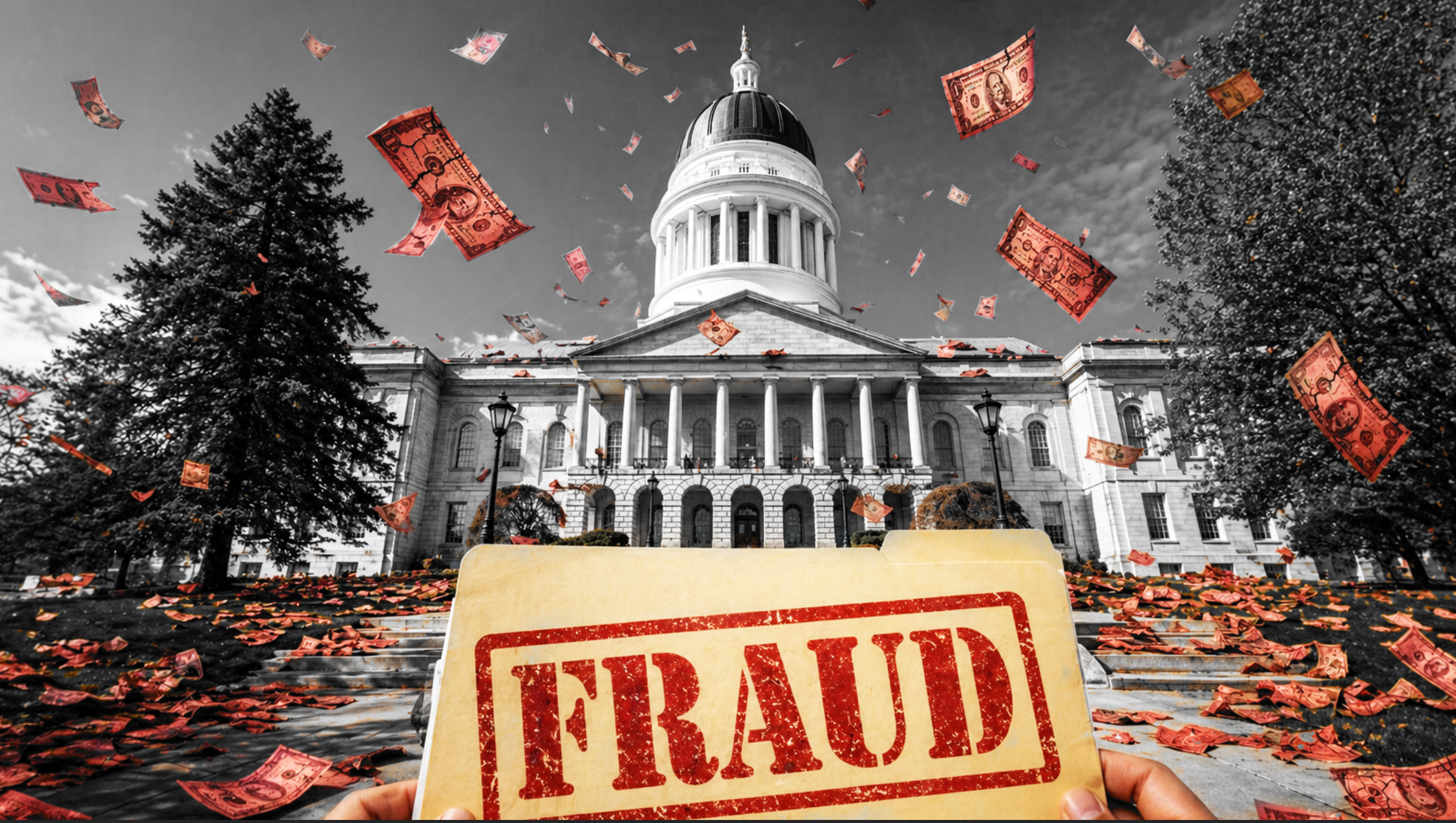
For months, Mainers were told not to believe what they were seeing.
Vacant offices. Questionable billing. Nonprofits refusing to fully answer where money went. Politically connected organizations receiving taxpayer dollars. Elected officials staying quiet. Journalists being threatened for asking questions.
Then Homeland Security visited Lewiston.
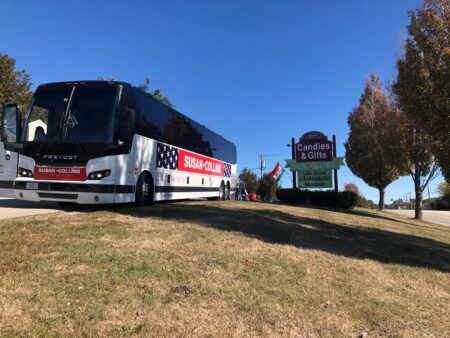
Now, after Vice President JD Vance traveled to Bangor to speak directly about fraud, waste, and abuse in government programs, Maine has been pushed into the center of a national anti-fraud crackdown.
For many residents, whistleblowers, and reporters who have been sounding the alarm, Vance’s visit did not create the controversy.
It validated it.
At the center of the storm is Gateway Community Services, the Portland – Lewiston-based organization that became one of the most closely watched MaineCare scandals in the state.
The Maine Wire repeatedly raised questions about Gateway, its billing practices, its operations, and the broader taxpayer-funded network connected to it.
Maine Wire reporter Jon Fetherston repeatedly went directly to Gov. Janet Mills’ office asking questions about Gateway Community Services, its billing practices, and the broader fraud concerns surrounding MaineCare-funded providers.
He did not receive answers.
No direct response. No clear explanation. No public accounting.
Yet after months of pressure, and after it became clear that Fetherston and The Maine Wire were not going to stop asking questions, the Mills administration quietly reacted by cutting off MaineCare funding to Gateway, citing a credible allegation of fraud.
That silence matters.
If the problem was not serious, why did the state cut off funding?
And if the state had enough information to cut off funding, why did it take repeated public pressure from The Maine Wire before Mainers received even that much action?
Federal Homeland Security investigators later visited Gateway-linked offices in Lewiston as scrutiny surrounding the organization expanded beyond Maine.
That visit changed everything.
This was no longer simply a political argument in Augusta or a local controversy in Lewiston.
It had become a federal matter.
Gateway is only one part of the larger story.
The Maine Wire has also reported on Paradise Residential Services, which was shut down after fraud-related concerns; improper MaineCare payments tied to autism-related services; Five Star Homecare; Adam Healthcare Services; Legit Home Health Care; Luna Home Care; and other providers and billing operations that have raised serious questions about MaineCare oversight.
Then came the “zombie offices.”
The Maine Wire has documented clusters of home health care agencies and social service offices that appeared vacant, inactive, or incapable of supporting the volume of taxpayer-funded services allegedly tied to them.
One investigation in Westbrook showed multiple home health care offices operating in close proximity, raising obvious questions about who was working there, who was receiving services, and how much taxpayer money was flowing through the system.
The pattern did not stop there.
Fetherston also identified Zahraa Home Care operating from a mobile home trailer in Windham, raising further questions about how some MaineCare-linked healthcare providers are being approved, monitored, and allowed to operate while receiving taxpayer-funded reimbursements.
The Maine Wire has also found more than 140 home health agencies in Maine with Minnesota phone numbers, raising serious questions about how many out-of-state-linked providers are operating inside Maine’s taxpayer-funded healthcare system, who controls them, and whether state oversight agencies fully understand the scope of the network.
For taxpayers, the question is simple: how many millions of dollars went out before anyone in state government started asking basic questions?
The answer remains unclear.
But what is clear is that President Donald Trump’s administration has made fraud a national priority.
Vice President Vance has been placed at the center of that effort, leading the charge against waste, abuse, and improper payments in taxpayer-funded programs.
In Bangor, Vance pointed directly to Maine as an example of what happens when state leaders fail to protect public dollars.
He also referenced the case of an interpreter in Maine accused of stealing roughly $15 million while allegedly providing no real services, a case that has become a symbol of the larger concern that Maine’s oversight systems were asleep while fraudsters got rich.
Dr. Mehmet Oz has also put Maine on notice as federal healthcare officials increase scrutiny of Medicaid and Medicare fraud nationwide.
For the crowd in Bangor, the issue was not abstract.
At one point, News Center Maine reporter Phil Hirschkorn asked Vance what else he had to offer on fraud. The question was met with loud boos from the audience, a clear sign that many Mainers believe the issue has been ignored, minimized, or dismissed for far too long.
Vance also went out of his way to mention Jon Fetherston and Steve Robinson of The Maine Wire for their work exposing fraud in Maine, a remarkable moment, given the response from Maine’s liberal legacy media.
The fraud stories in Maine have now drawn national attention from outlets including Fox News, NewsNation, and Newsmax. Yet much of Maine’s local legacy media continues to frame major parts of the scandal as merely “alleged,” even after state action, federal attention, Homeland Security visits, congressional oversight scrutiny, and direct comments from the Vice President of the United States.
Rather than treat Vance’s visit as confirmation that fraud is a serious and growing issue, much of the local legacy media response has been skepticism, denial, or an attempt to downplay the scope of the problem.
No Democratic candidate for governor has been pressed in debates to answer directly for Maine’s fraud crisis.
Not one.
Yet the Vice President of the United States came to Maine and publicly acknowledged the work of the reporters who have been asking the questions Augusta would not answer.
That should tell Mainers everything.
The frustration is not limited to healthcare.
In Lewiston, nonprofit accountability remains a major unresolved issue following the October 2023 mass shooting.
Millions of dollars poured into relief efforts after the tragedy. Yet many survivors, residents, and advocates continue to ask where the money went, who received it, and why some organizations have not provided clearer answers.
Former Lewiston City Councilor Iman Osman, who has faced gun-related charges, has been among the figures tied to broader questions about nonprofit influence and accountability in the city.
The same political and nonprofit circles have also drawn scrutiny because of their relationships with candidates, activists, and organizations that hold influence in Maine politics.
Graham Platner has faced criticism over appearances and associations involving figures connected to Gateway and Lewiston-area nonprofit networks.
Platner had State Rep. Deqa Dhalac seated in the front row at his campaign rally with Sen. Elizabeth Warren, even as Dhalac has drawn scrutiny connected to the Congressional House Oversight Committee’s examination of Maine fraud concerns.
Platner has also walked shoulder to shoulder at events with Iman Osman.
Dhalac and Osman are two figures repeatedly mentioned by critics in connection with Maine’s broader fraud and nonprofit accountability scandals.
Yet Platner has stayed silent on the issue.
That silence is not a small political footnote. It goes directly to the center of Platner’s campaign message.
How can Platner claim he is going to fight oligarchs and amass the power of the people if he refuses to directly address the fraud concerns now consuming Maine — or if he continues running in political circles connected to figures and organizations attached to those controversies?
If Platner wants to run as a fighter for working Mainers, he should be able to answer a simple question: will he stand with taxpayers and vulnerable Mainers harmed by fraud, or with the political networks that refuse to talk about it?
Former Lewiston City Councilor Safiya Khalid has also been mentioned by critics as part of the broader political ecosystem surrounding these organizations.
TheMaine People’s Alliance, one of the most powerful progressive activist organizations in the state, has helped empower many of the same political networks now facing public scrutiny.
Meanwhile, local and state leaders have largely stayed quiet.
That silence has become one of the most explosive parts of the story.
Gov. Mills, State Auditor Matt Dunlap, Senate President Mattie Daughtry, House Speaker Ryan Fecteau, and lawmakers including Deqa Dhalac and Yusuf Yusuf have all had opportunities to publicly and forcefully address the growing fraud concerns, nonprofit accountability questions, and MaineCare oversight failures.
Critics say they have not.
Why?
When elected officials know that questionable providers, suspicious offices, and politically connected nonprofits are operating in their communities, residents expect answers.
Instead, many Mainers have seen silence, deflection, or attacks on the people asking questions.
In Lewiston, the tension has become impossible to ignore.
At one city council meeting, a man identified as Mohammad warned councilors that if they failed to do what the Somali community wanted, they would be voted out.
The comment quickly spread online and added to growing concerns about political pressure inside city government.
At the same time, Maine Wire staff, including Jon Fetherston, have been physically threatened, stalked, and subjected to handgun gestures during live broadcasts of Maine Wire TV.
That raises another question: why are journalists being threatened for asking where taxpayer money went?
Federal immigration enforcement has added another layer to the controversy.
Homeland Security and ICE officials have made clear that fraud, identity theft, illegal benefit schemes, and organized abuse of government-funded programs are major enforcement priorities.
In Maine, those issues now overlap with concerns about healthcare billing, nonprofit accountability, immigration enforcement, and state-level oversight failures.
That is why Vance’s visit mattered.
It sent a message that Maine’s fraud problem is no longer being handled quietly behind closed doors in Augusta.
It is now being watched by Washington.
The question facing Maine is no longer whether there is a problem.
Gateway had its payments suspended. Paradise Residential was shut down. Homeland Security visited Lewiston. The Maine Wire documented clusters of suspicious home health agencies. More than 140 agencies in Maine were found with Minnesota phone numbers. Zahraa Home Care was identified operating from a mobile home trailer in Windham. Federal officials are talking about Maine. Dr. Oz has put the state on notice. JD Vance came to Bangor and named the issue directly. Maine Wire journalists have been threatened while reporting on it.
So the real question is this:
How did so many elected leaders stay silent for so long?
And how long will Maine’s legacy media continue treating a national fraud scandal as something to be minimized, explained away, or buried under the word “alleged”?
For many Mainers, this no longer looks like a handful of isolated cases.
It looks like a system that was ignored until The Maine Wire exposed it, taxpayers got angry, and the federal government finally showed up.

Great article…thanks for persevering.
Democrats are determined to bury this story and all their tv bedmates will help them. The PPH is a farce.
The Democrat Clown Operatives in state government should be prosecuted just like the Somali Thieves who stole OUR money . The Somalis stole it because The Clowns in Augusta let them do it .
They as much as invited them to steal it .
Mills, Bellows, Frey , Pingree , Daugherty , AND A LAUNDRY LIST MORE of Democrat operatives , all need to be held accountable for their blatant neglect of oversight as to how OUR money has been wasted .
The Somalis will all just sneak away and slither off to hide under another wet rock somewhere , but these Augusta criminals will remain here in plain site .
The people of Maine DESERVE and DEMAND retribution .
What a disgrace for our state.
Maine needs to be promoted for its beauty and wonderful people. Instead, democrats have tainted the entire region with corruption and woke nonsense.
It’s a travesty.
Medicaid fraud, welfare fraud, PPP fraud. The Maine Mafia has stolen $millions without using gun. Kickbacks worked well for the mob so Maine politicians adopted their playbook.
The next hair raising event will be when people learn that hospitals were financially incentivized to poison/murder/euthanize over 3,000 innocent Maine people using the CDC’s hospital protocols. At the forefront was Nimrod Shah who is now the leading Democratic candidate for governor…of course.
If a trust fund recipient was notified that the firm entrusted to distributing “their” money was writing checks to drug dealers they didn’t use; they would put a stop to it immediately.The fake service groups are money laundering operations. The Dems are addicted to the money that funds spoiler candidates for rigged choice voting and media ad spending. Ever wonder why the “news” outlets avoid this story?…..
Excellent article! Thank you, Jon, and Maine Wire!
Thank you Maine Wire. There would be no hope for this state without it.