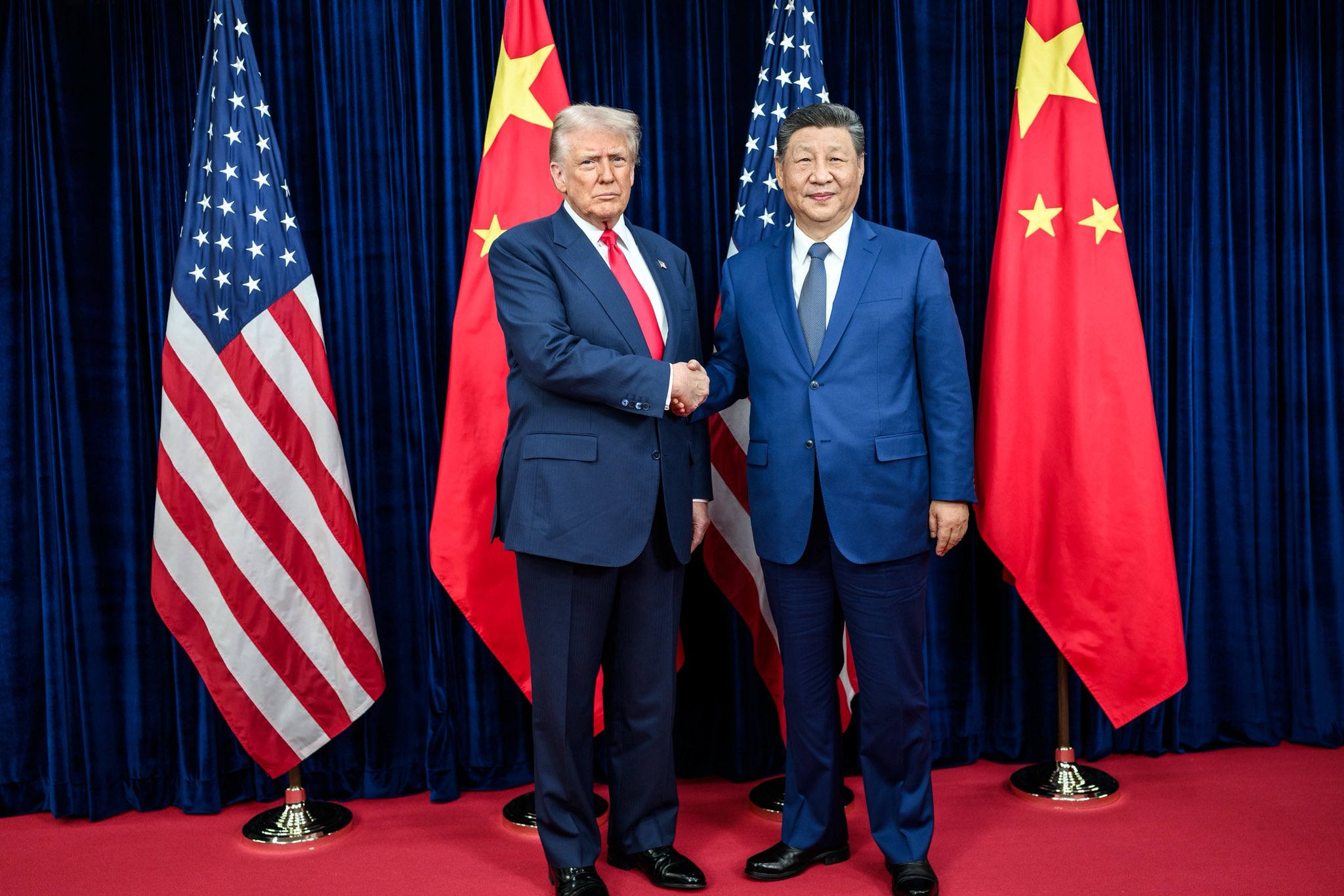
WASHINGTON – President Donald Trump is scheduled to arrive in Beijing Wednesday evening for a high-stakes three-day state visit with Chinese President Xi Jinping, a trip that comes as the war in Iran threatens to overtake nearly every other item on the diplomatic agenda.
The visit, set for May 13 through May 15, marks the first time a U.S. president has traveled to China in nearly a decade. Trump last visited Beijing during his first term in 2017.
The summit was originally planned for April but was delayed as the war in Iran escalated and the administration struggled to keep a fragile ceasefire alive.
Trump has now described that ceasefire as being on “life support,” after rejecting Iran’s latest response to a U.S.-backed peace proposal. According to reports, Trump called Tehran’s counteroffer unacceptable, as Iran continued pressing demands that included relief from sanctions, compensation for war damages, an end to the U.S. naval blockade, and broader regional concessions.
For Trump, the China trip is no longer simply about trade, tariffs, technology, or Taiwan. It is now also about whether Beijing can be pressured into helping end a war that has rattled energy markets and raised new concerns about global shipping through the Strait of Hormuz.
China remains a major buyer of Iranian oil, giving Xi potential leverage over Tehran at a moment when the Trump administration is trying to force Iran back to the table. Trump is expected to press China to use that leverage to help secure a ceasefire and prevent the conflict from widening further.
The president is scheduled to arrive in Beijing Wednesday evening. On Thursday, Trump and Xi are expected to take part in a formal welcome ceremony before holding bilateral talks. The two leaders are also scheduled to tour the historic Temple of Heaven in central Beijing before attending a state banquet. On Friday, Trump is expected to join Xi for tea and a working lunch before leaving China.
Trade will also be central to the talks. The two countries are operating under a fragile trade truce reached in October 2025 after months of tariff escalation. Discussions are expected to include possible “Boards of Trade and Investment,” export controls, rare earth minerals, artificial intelligence, and the future of U.S.-China commercial relations.
The White House has also invited a large executive delegation to join the president, underscoring the economic stakes of the visit. Reported attendees include Tesla and SpaceX CEO Elon Musk, Apple CEO Tim Cook, Boeing CEO Kelly Ortberg, BlackRock CEO Larry Fink, Meta executive Dina Powell McCormick, Citi CEO Jane Fraser, and Goldman Sachs CEO David Solomon.
Boeing could play a major role in the trip, with reports indicating that a major Chinese purchase of commercial aircraft may be part of the discussions. Agriculture and manufacturing are also expected to be major areas of focus.
The summit also comes as the U.S. and China remain locked in broader strategic competition over Taiwan, artificial intelligence, semiconductors, export restrictions, and military influence in the Pacific.
But for now, the Iran war may be the most immediate test.
If Trump can convince Xi to help pressure Tehran, the China trip could become a turning point in the administration’s effort to contain the conflict. If not, the president will return to Washington with the ceasefire still on life support, and with oil markets, global shipping lanes, and U.S. foreign policy all facing a deeper crisis.