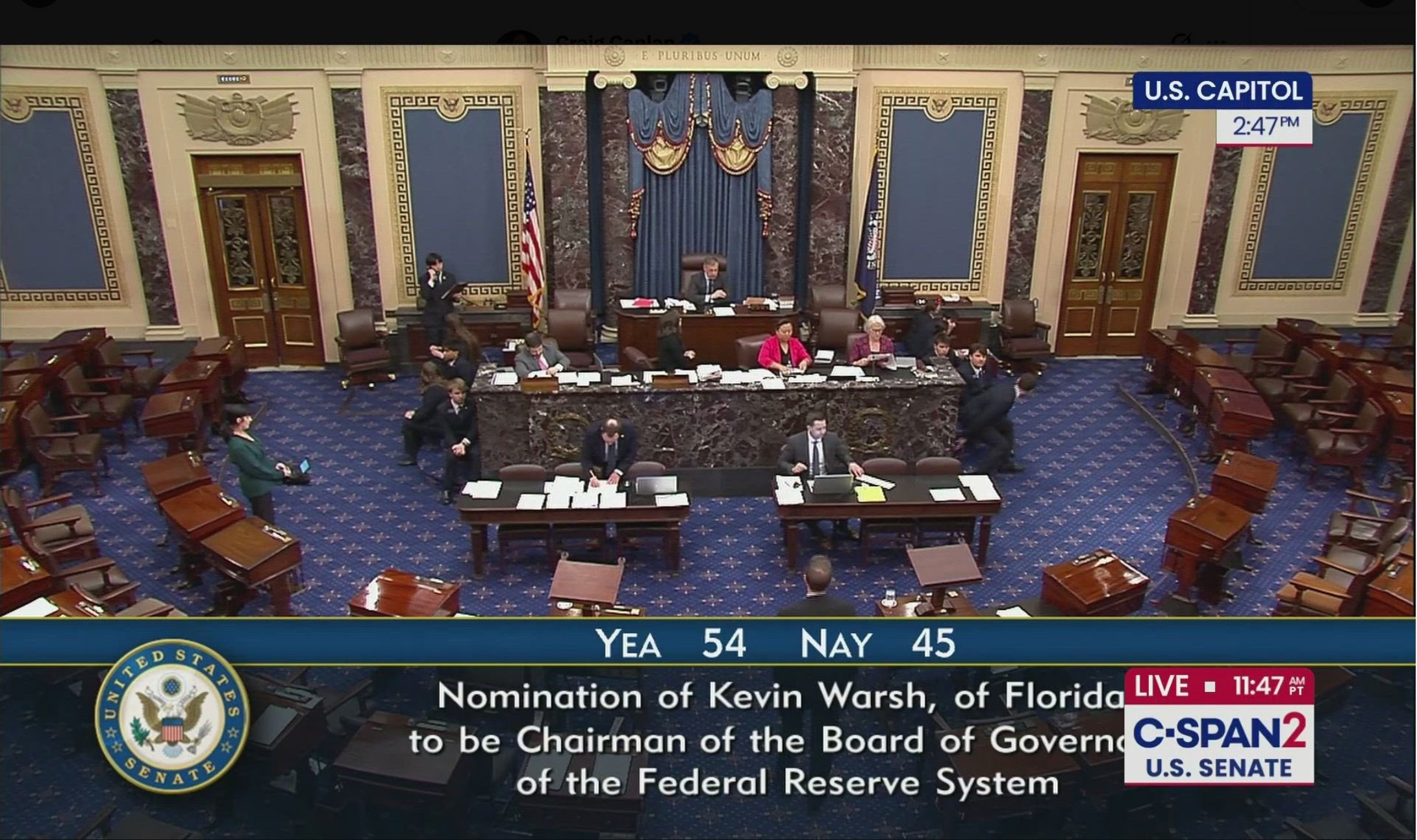
WASHINGTON – The U.S. Senate on Wednesday confirmed Kevin Warsh as the 17th chair of the Federal Reserve, approving President Donald Trump’s nominee in a 54–45 vote that marked the most divisive confirmation for a Fed chair in Senate history.
Warsh is set to officially take over the central bank’s top post on Friday, May 15, when Jerome Powell’s term as chair expires.
The final vote broke sharply along partisan lines, with Sen. John Fetterman of Pennsylvania the only Democrat to join Republicans in backing Warsh’s confirmation.
Wednesday’s vote followed a separate 51–45 vote on Tuesday confirming Warsh to a 14-year term on the Federal Reserve Board of Governors, clearing the way for him to assume the chairmanship.
The confirmation process had been delayed amid a Justice Department criminal probe into Powell over Federal Reserve headquarters renovation costs. That obstacle was removed in April after U.S. Attorney Jeanine Pirro dropped the investigation.
Warsh now takes over the Federal Reserve at a volatile moment for the U.S. economy and the central bank itself.
He has repeatedly called for what amounts to a “regime change” agenda at the Fed, advocating for a structural overhaul of the institution, a smaller central bank balance sheet, and closer coordination with the Treasury Department.
But the economic environment awaiting Warsh may complicate the expectations surrounding his nomination.
Although Trump selected Warsh with the expectation that he would move aggressively to cut interest rates, inflation has climbed to a three-year high. Spiking energy costs tied to the ongoing U.S.–Israel conflict with Iran are expected to make any immediate rate cuts more difficult.
Powell, meanwhile, is not leaving the Federal Reserve entirely.
In a break from traditional precedent, the outgoing chair intends to remain a rank-and-file member of the Fed Board of Governors until his term expires in January 2028, a move aimed at safeguarding the central bank’s political independence.
Warsh’s confirmation sets up a major shift at the nation’s central bank, with the new chair expected to pursue significant changes in both policy direction and institutional structure as the Fed faces renewed pressure over inflation, interest rates, and its role in the broader economy.