

The Democratic Socialists of America (DSA) has spent more than four decades building what was once considered a fringe political movement into one that now influences elections from city halls to Congress—and increasingly, statewide campaigns.
Founded in 1982 through the merger of several socialist organizations led by democratic socialist activist Michael Harrington, the DSA has become the nation’s largest socialist organization. Rather than operating as a traditional third party, the organization has focused on electing candidates through Democratic primaries, allowing its ideas to gain influence within the Democratic Party itself.
Today, the movement’s platform has become increasingly visible in national politics and is beginning to shape conversations in Maine.
The growing influence of democratic socialism has also revived political debates that date back decades. During the Cold War, President Ronald Reagan frequently warned Americans about protecting individual liberty and limiting the expansion of government power. In one of his most enduring speeches, Reagan said, “Freedom is never more than one generation away from extinction. We didn’t pass it to our children in the bloodstream. It must be fought for, protected, and handed on.” While Reagan’s remarks were directed at Soviet communism rather than today’s democratic socialist movement, conservatives continue to cite the quote during debates over the role of government in American life.
What Democratic Socialists Believe
Unlike mainstream Democrats, who generally support a regulated capitalist economy, Democratic Socialists argue that capitalism is the root cause of growing inequality, unaffordable housing, rising health care costs and declining economic opportunity.
According to the DSA’s official platform, the organization seeks to fundamentally restructure the American economy by shifting more control from private businesses and corporations to government, workers and public institutions.
Among its major policy goals are:
- Medicare for All, replacing much of the private health insurance system with a universal government-funded program.
- Tuition-free public colleges and universities.
- Stronger labor unions and expanded collective bargaining rights.
- Rent control and significant expansion of publicly funded housing.
- Higher taxes on corporations, billionaires and high-income earners.
- Expanded public ownership of certain industries and utilities.
- Large-scale climate spending through a Green New Deal.
- Criminal justice reforms, including reducing incarceration.
- Immigration reforms and expanded protections for undocumented immigrants.
- Reductions in U.S. military spending and a less interventionist foreign policy.
Supporters argue these policies would reduce inequality and make housing, health care and education more affordable.
Critics contend they would dramatically increase the size and cost of government, discourage private investment, weaken economic growth and move the country toward a more state-controlled economy.
From the Political Fringe to National Influence
The movement remained relatively small for decades before rapidly expanding following Sen. Bernie Sanders’ presidential campaigns in 2016 and 2020.
Membership surged into the tens of thousands, and democratic socialist candidates began winning elections across the country.
Among the movement’s most recognizable national figures are Bernie Sanders, Rep. Alexandria Ocasio-Cortez, Rep. Rashida Tlaib and New York City Mayor Zohran Mamdani.
Mamdani’s election as mayor of New York City represents one of the movement’s most significant political victories to date. His campaign centered on affordability, proposing fare-free buses, rent freezes for many tenants, city-owned grocery stores, universal childcare and higher taxes on wealthy individuals and large corporations.
His victory demonstrated that democratic socialist candidates can compete successfully in executive offices, not just legislative races.
Maine Enters the Conversation
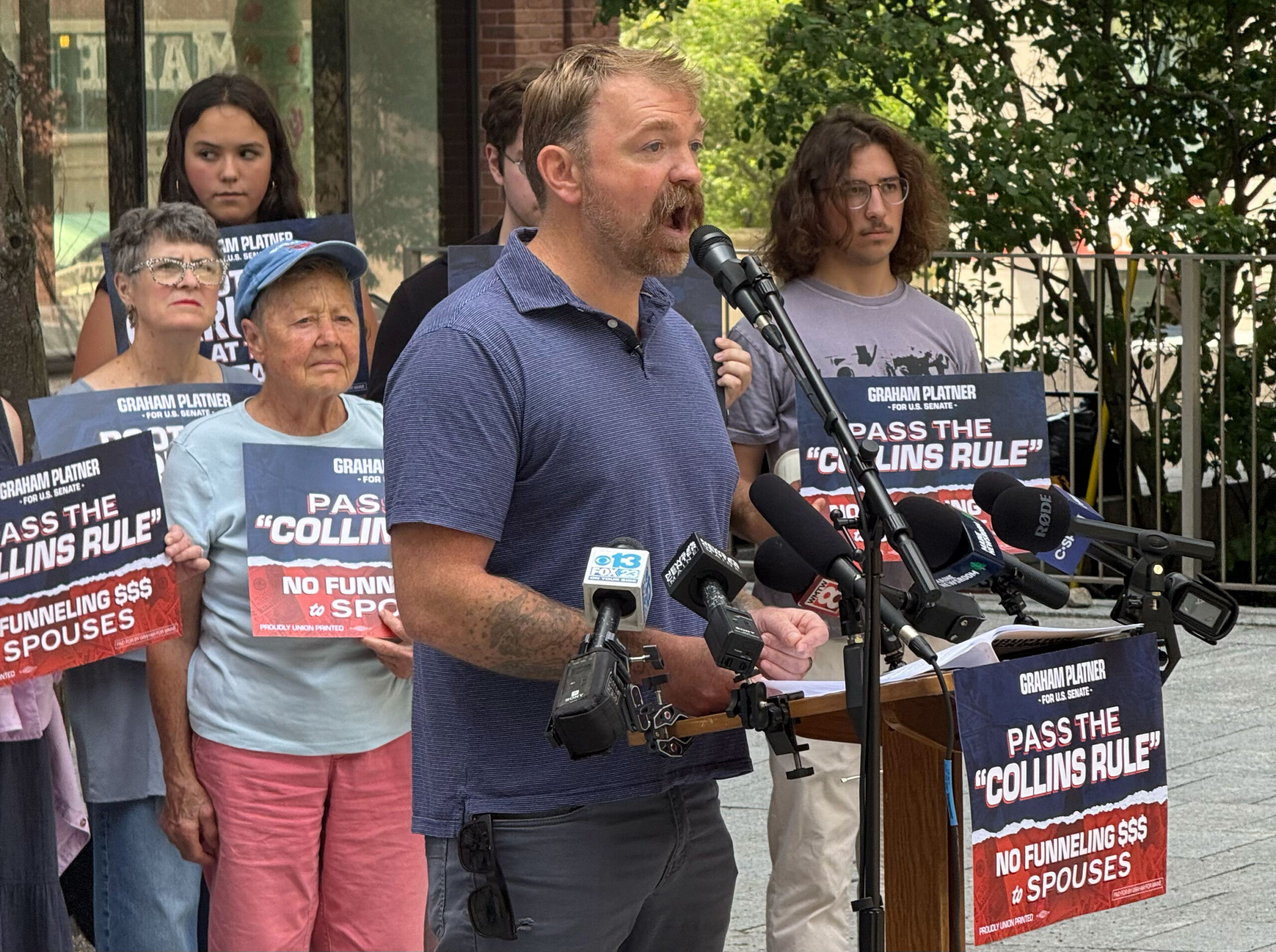
The movement has also entered Maine’s political landscape through Democratic U.S. Senate nominee Graham Platner.
Platner has campaigned on many issues that overlap with priorities championed by democratic socialists, including Medicare for All, expanded labor protections, greater government involvement in addressing housing affordability, higher taxes on wealthy Americans and reduced U.S. military intervention overseas.
Although Platner has generally described himself during the campaign as a progressive or New Deal Democrat rather than a democratic socialist, Republicans and conservative organizations have argued that many of his policy positions closely align with the Democratic Socialists of America. Past online posts and comments have also been cited by critics as evidence of sympathy toward democratic socialist ideas.
Whether voters accept that characterization is likely to become a major issue in Maine’s U.S. Senate race.
Growing Influence Inside the Democratic Party
The Democratic Socialist movement has steadily shifted policy debates within the Democratic Party.
Ideas that were once viewed as politically unrealistic, including Medicare for All, tuition-free college, rent control, expanded public housing and wealth taxes—are now regularly debated during Democratic primaries.
Supporters argue those proposals are necessary to address rising housing costs, growing income inequality and declining affordability.
Opponents say the movement promotes policies that would expand government authority, increase taxes, reduce private-sector investment and ultimately weaken the free-market system that has historically driven American economic growth.
An Ideological Divide
The growing influence of democratic socialism has created an increasingly visible divide within the Democratic Party.
Moderate Democrats continue to advocate a market-based economy combined with targeted government regulation and social programs.
Democratic Socialists argue that those reforms do not go far enough, calling instead for a far greater role for government in health care, housing, education, labor markets and portions of the broader economy.
That debate is now extending beyond Washington into gubernatorial races, mayoral contests and U.S. Senate campaigns, including Maine’s.
For many voters, the question in 2026 is no longer whether democratic socialism exists as a political movement. Instead, it is whether its vision for government and the economy represents the future direction of the Democratic Party. As that debate unfolds nationally, Maine voters will have the opportunity to decide whether those ideas resonate in one of the state’s most closely watched elections.




Communism is what they believe, a bunch of upper class kids playing with fire. Ask them which country this has ever worked, there are none.
Socialist Democrats provide cover for the Islamist’s who will kick them to the curb when they become strong enough.
James Howard Kunstler … “You can see how this summer, and the nauseating slide down to the midterm elections, are shaping up. The party of “Our Democracy” is desperate to an extreme now, all disfigured by a communist leprosy eating away at its public face (and a cancer of fraud metastasizing through its innards). It has become such an obvious monster, raging with its hair lit-up, that anyone with half a functioning brain is shying away, stealing off into the gloaming. The party has nothing left but chaos and, in the weeks ahead, anything that might be disrupted probably will be.”
last week a reporter ask a prospective socialist candidate to point out an example of where socialism has worked, she said “Ill have to get back to you on that”. So its pretty oblivious that the majority or maybe all of these fools are willing to say anything to get elected. You know like the lady who was protesting fascism but didn’t know what it meant and had to look it up. Useful idiot.
Useful idiots. Make that Useful f’ing idiots!