

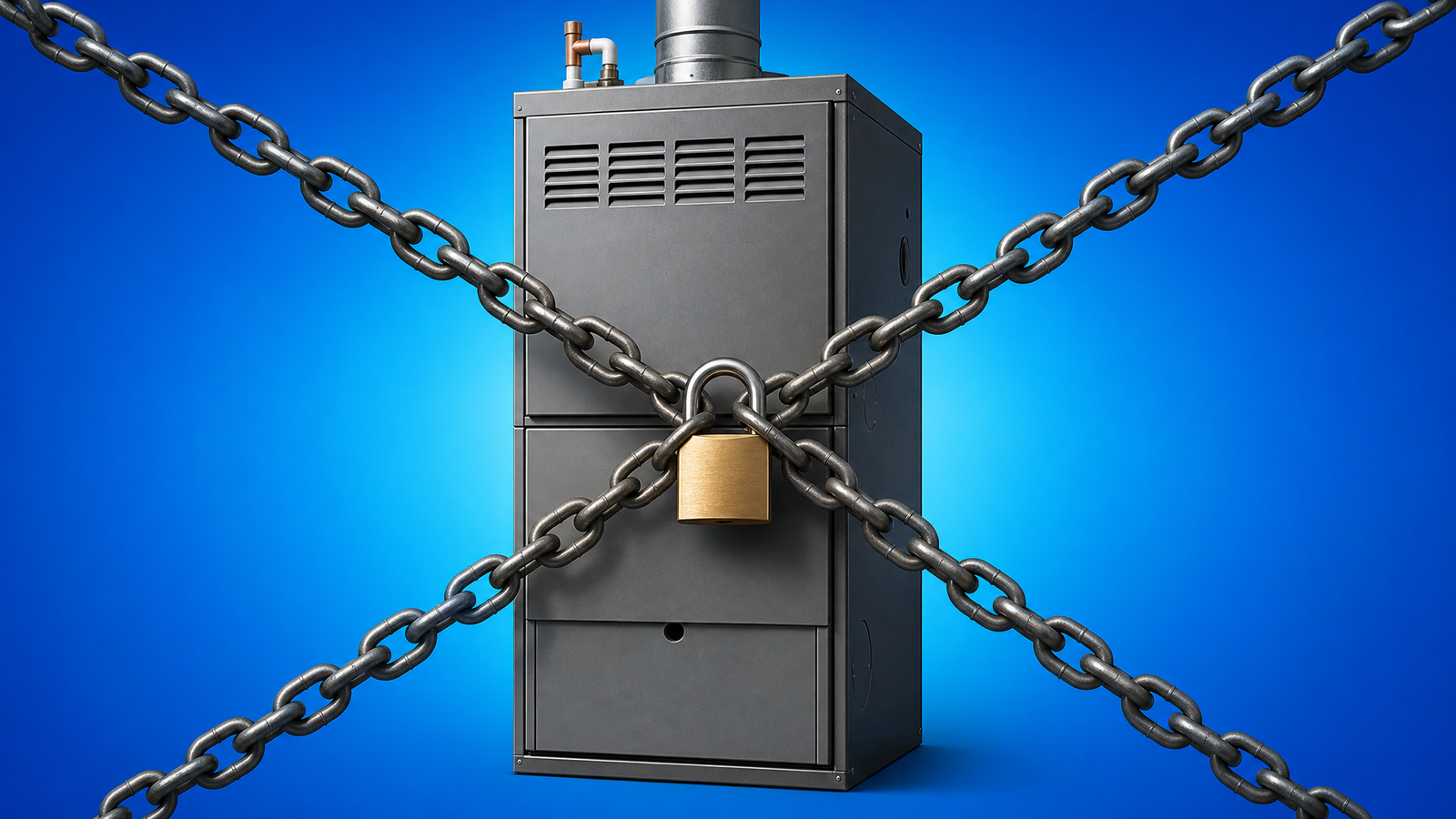
The United States Supreme Court has revived a case challenging Biden-era regulations on certain appliances in a decision that has been seen as a win for those opposed to the policies.
Under the rule in question, it would become illegal to manufacture non-condensing furnaces beginning in 2028.
In a brief order shared last week, the Justices tossed out a lower court ruling and sent it back down for further consideration, a procedural move known as GVR, or grant, vacate, remand.
Challenged in this case are efficiency regulations on commercial water heaters and consumer furnaces that were enacted in 2021 under the Biden Administration.
The Court’s order comes after the Solicitor General D. John Sauer said in an April brief that the Department of Energy (DOE) is now of the opinion that the rules at issue “rest on a legal error.”
Consequently, the federal government urged the Supreme Court to GVR the case.
“The Court has ‘broad power’ to vacate ‘‘any judgment, decree, or order’’ and remand for such proceedings ‘‘as may be just under the circumstances,”” Sauer explained in his brief. “This Court has accordingly ‘GVR’d in light of a wide range of developments,’ including agency ‘reinterpretations of federal statutes’ and ‘confessions of error or other
positions newly taken by the Solicitor General.'”
Sauer went on to say that under the Trump Administration, the DOE is “committed to protecting consumers’ ‘freedom to choose from a variety of goods and appliances.'”
Therefore, the DOE is working to determine whether existing rules, including the one at issue in this case, pose “‘an undue burden on the use of domestic energy resources’ or otherwise conflict with the Administration’s policy priorities.”
The Supreme Court’s ruling last week is understood as a win for those who are opposed to the Biden-era regulations.
“We welcome the Supreme Court’s decision to protect the American people from this unlawful regulation that would increase costs for families and businesses and ban an entire class of appliances,” said Karen Harbert, president and CEO of the American Gas Association, in a statement.
[RELATED: RIP Chevron (1984-2024) — SCOTUS Kills Decision That Gave Unbridled Powers to Unelected Bureaucrats]
Those challenging the regulations contend that they violate the Energy Policy and Conservation Act and go against the Supreme Court’s 2024 ruling in the case of Loper v. Raimondo, which curtailed the power of government agencies to adopt sweeping regulatory powers based on nebulous direction from Congress.
Defenders of the regulations, on the other hand, have argued that they do not conflict with the Loper decision, noting that it is a “fact-bound” dispute that does not require intervention from the Supreme Court to reach a resolution.
This case will now be reconsidered by the lower court in light of the Justices’ ruling.


Normal gas appliances are naturally vented, the exhaust gas has some heat in it and rises up a chimney, steam and all.
What the condensing ones do is squeeze the last amount of heat out of the exhaust gas, so it will no longer rise. Furthermore, the steam in the exhaust gas is cooled down to the point where the steam becomes water that has to have a drain.
These appliances also have to have a fan blowing the exhaust out because otherwise wouldn’t leave the building. This fan takes electricity and no one is figuring either that or the heated home air that’s being blown out of the home by the fan in their efficient figures.
The nice thing about these fan vented heaters is that you can vent them sideways through a whole hole in the wall, and use CVC white plastic pipe as your exhaust. But if you have an existing furnace, boiler, or hot water heater that’s located in the center of the house, so as tie onto the existing chimney, you have to do an awful lot of work to vent the new one sideways through the wall.