

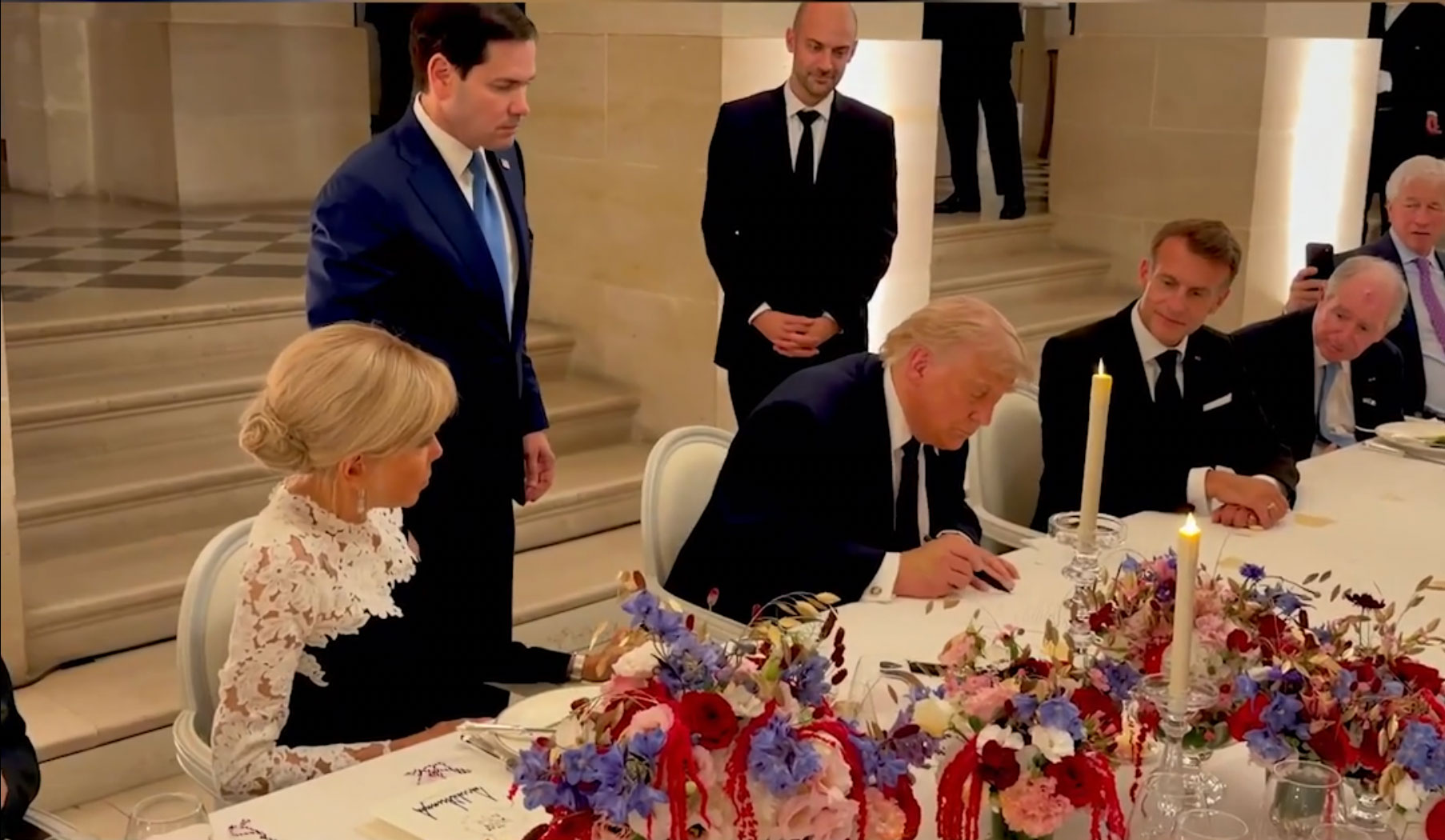
President Donald Trump and Iranian President Masoud Pezeshkian have signed an interim ceasefire agreement to end the war that began in February 2026.
The 14-point memorandum of understanding was signed electronically ahead of schedule on June 17, 2026. The agreement is now officially in effect, replacing a physical signing ceremony that had originally been scheduled to take place Friday in Geneva, Switzerland.
The text of the agreement establishes an immediate pause in fighting and creates a 60-day window for both sides to negotiate a permanent peace treaty.
Under the agreement, military operations are to halt immediately and permanently on all fronts.
The truce also explicitly covers Lebanon, requiring Iran to restrain Hezbollah. While Trump has criticized Israel’s actions in Lebanon, Israel is not a direct party to the memorandum and retains the right to strike back if attacked.
The agreement also calls for the United States to immediately begin lifting its naval blockade of the Strait of Hormuz, allowing toll-free commercial shipping through the critical corridor within 30 days.
Iran has agreed to down-blend, or dilute, its stockpile of highly enriched uranium on its own soil. That process will be monitored by the International Atomic Energy Agency.
The U.S. Treasury will immediately issue waivers for Iranian crude oil exports and associated banking. However, broader and permanent sanctions relief remains tied to Iran’s performance on nuclear concessions during the upcoming talks.
The agreement also establishes a $300 billion regional reconstruction fund, financed by Iran’s neighbors rather than the United States, to rebuild Iranian infrastructure.
The diplomatic breakthrough has drawn praise, caution, and fierce domestic criticism.
With the electronic signing complete, attention now turns to Geneva, where negotiating teams are expected to begin work on a comprehensive and binding United Nations Security Council resolution. The talks are expected to take place during the 60-day negotiating window created by the interim agreement.
While touting the agreement at the G7 summit in France, Trump emphasized that the ceasefire is not a final peace deal. He warned that the United States will “go right back to dropping bombs” if Iran fails to comply.
Congressional Democrats and some Republicans have heavily criticized the deal. Senate Minority Leader Chuck Schumer called the rollout dangerous, while other critics argued that the oil waivers give up vital American leverage before the nuclear details are finalized.
The agreement has already affected global energy markets, sending oil prices to a three-month low.




I have questions! 1. Will we defend Isreal if they are attacked? 2. Why are we allowing Iran to dilute their uranium when that’s the reason we went in to start with. This doesn’t make sense. I also wonder if the electronic signature will be valid in the long run or if Iran will say they never signed anything. I just don’t feel like this is over. I hope I’m wrong.