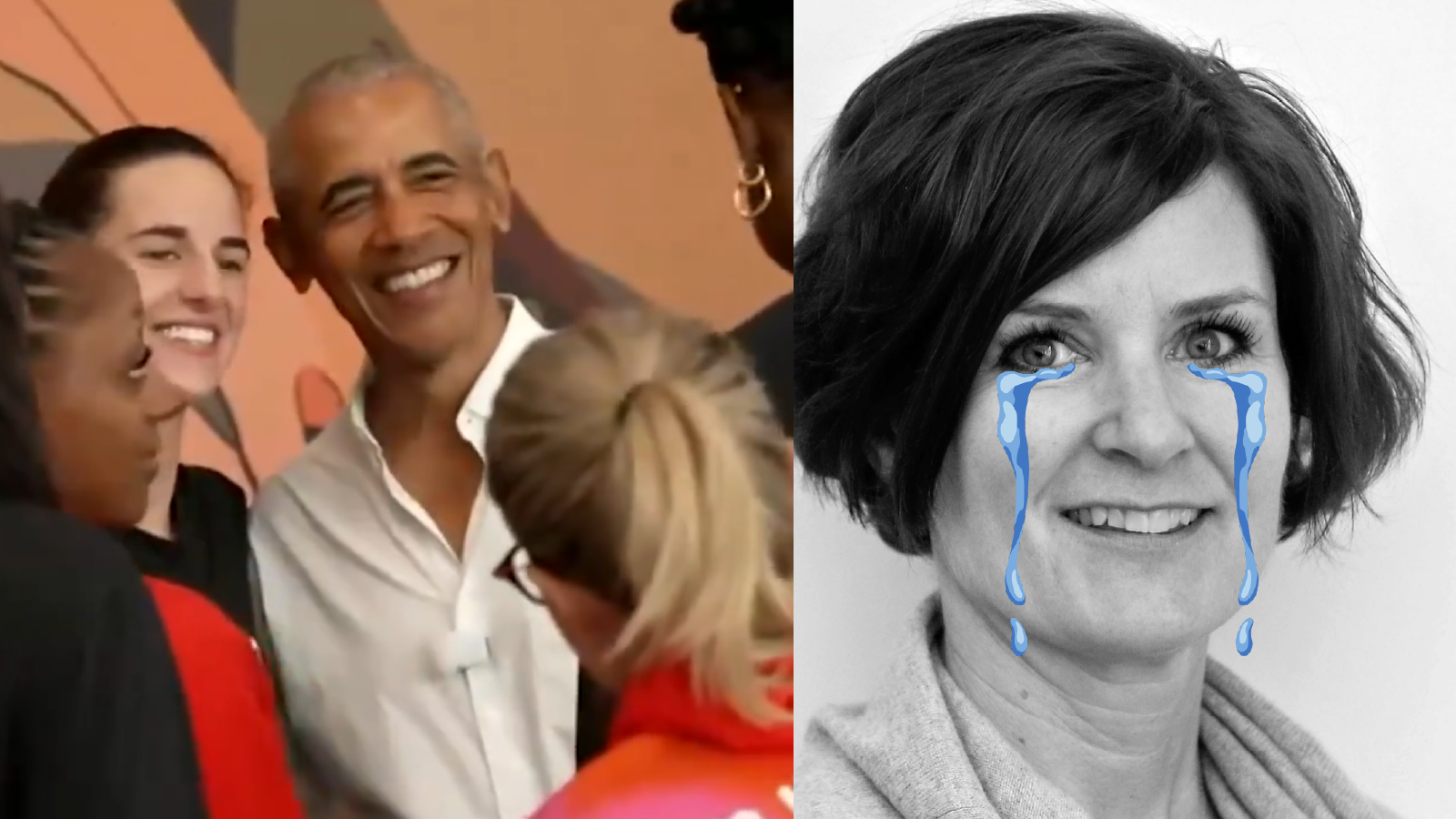
President Obama rewrote the woke liberal playbook Friday, offering heartfelt words of encouragement to embattled white basketball star Caitlin Clark during WNBA’s All-Star practice.
Clark has been the center of a national firestorm for allegedly fomenting white-on-black violence via her complaints of being unfairly fouled during ballgames.
“Hey how are you – really nice to meet you, you are great,” the nation’s first black president told Clark as he approached her with a hearty warm handshake at his presidential library in Chicago.
“Don’t let all this nonsense get you down,” he added. “Don’t lose that joy. You’re a hooper!”
Obama, a big smile on his face, then posed with Clark. “Let’s do a picture,” he said, standing beside her.
Clark later noted that her hands were shaking and she was starstruck during the chat.
“It was obviously super cool. He just complimented me for the way that I handle everything, obviously with everything that’s been going on,” the Indiana Fever star said after meeting Obama. “He’s somebody that has been in front of the media quite a bit and he reminded me, ‘When I got famous in my 40s, I didn’t have to do it in my 20s.’”
The interaction came in the wake of an incendiary USA Today column essentially accusing Clark of racism – even invoking the 1950s lynching of a black teenager.
Columnist Nancy Armour triggered such a reader backlash editors forced her to retract the ridiculous claims, all the while defending her freedom of expression.
Clark, an All-Star for the third time, has been at the center of media and social media debates and commentaries since she entered the WNBA in 2024 as the No. 1 pick.
Armour suggested that Clark’s feisty passion on the court is stirring up the same kind of white-vs.-black rhetoric that helped trigger racial tensions in 1955 leading to the murder of Emmet Till.
The brutality of Till’s murder and the acquittal of his killers drew attention to the long history of violent persecution of African Americans in the U.S.
Till posthumously became an icon of the civil rights movement.