After the U.S. Supreme Court struck down President Donald Trump’s executive order ending automatic citizenship for those born on American soil, the White House issued two new orders seeking to narrow the scope of birthright citizenship.
Rather than broadly denying citizenship to children whose “mother was unlawfully present in the United States and [whose] father was not a United States citizen or lawful permanent resident at the time of said person’s birth,” the new orders take a more targeted approach.
The president’s latest executive order, issued earlier this month, denies automatic citizenship to children of an “alien enemy,” someone who works for a foreign government, or someone engaged in a “commercial transaction” or other fraudulent activity to obtain citizenship.
A separate order targets a practice referred to as “birth tourism”, which the White House describes as coming to the United States on a non-immigrant visa to give birth on American soil.
[RELATED: Trump Signs New Executive Orders Targeting Birthright Citizenship After Supreme Court Defeat]
The issue of birthright citizenship is rooted in questions surrounding the proper interpretation of the Fourteenth Amendment.
Ratified in 1868, the Fourteenth Amendment states: All persons born or naturalized in the United States, and subject to the jurisdiction thereof, are citizens of the United States and of the State wherein they reside.
Currently, the United States grants full citizenship to anyone born on U.S. soil, regardless of whether their parents are in the country legally or illegally.
Incorporated into the Constitution in the wake of the Civil War, the Citizenship Clause of the Fourteenth Amendment was designed to ensure that all formerly enslaved people would be granted citizenship.
By ratifying this amendment, the nation overturned the infamous 1857 Supreme Court ruling in Dred Scott v. Sandford, in which the justices decided that enslaved people were not United States citizens.
Setting up the modern interpretation of this clause was the Supreme Court’s ruling in the case of United States v. Wong Kim Ark, wherein the citizenship status of Wong Kim Ark — who was born in San Francisco to parents who were Chinese citizens “living and working, permanently domiciled” in America — was called into question.
Under the Naturalization Act of 1802, Ark’s parents were ineligible to become naturalized citizens, as Congress limited eligibility for naturalization to “free white persons
.”
The 6-2 majority opinion in the Wong Kim Ark case, authored by Justice Horace Gray, declared that, under the Fourteenth Amendment, Ark was a United States citizen.
[RELATED: Supreme Court Upholds Birthright Citizenship, Blocks President Trump’s Executive Order]
On the final day of its term this year, the Supreme Court issued a 5-4 ruling rejecting the president’s prior executive order ending the practice of automatic birthright citizenship, citing the Fourteenth Amendment.
“Children born in the United States to parents unlawfully or temporarily present are ‘subject to the jurisdiction’ of the United States and are citizens at birth under the Fourteenth Amendment’s Citizenship Clause,” Chief Justice John Roberts wrote for the majority.
“Citizenship, then and now, was the right to have rights — to freely participate in our political community,” the Chief Justice said. “The Framers of the Fourteenth Amendment extended that promise to ‘every free-born person in this land.’”
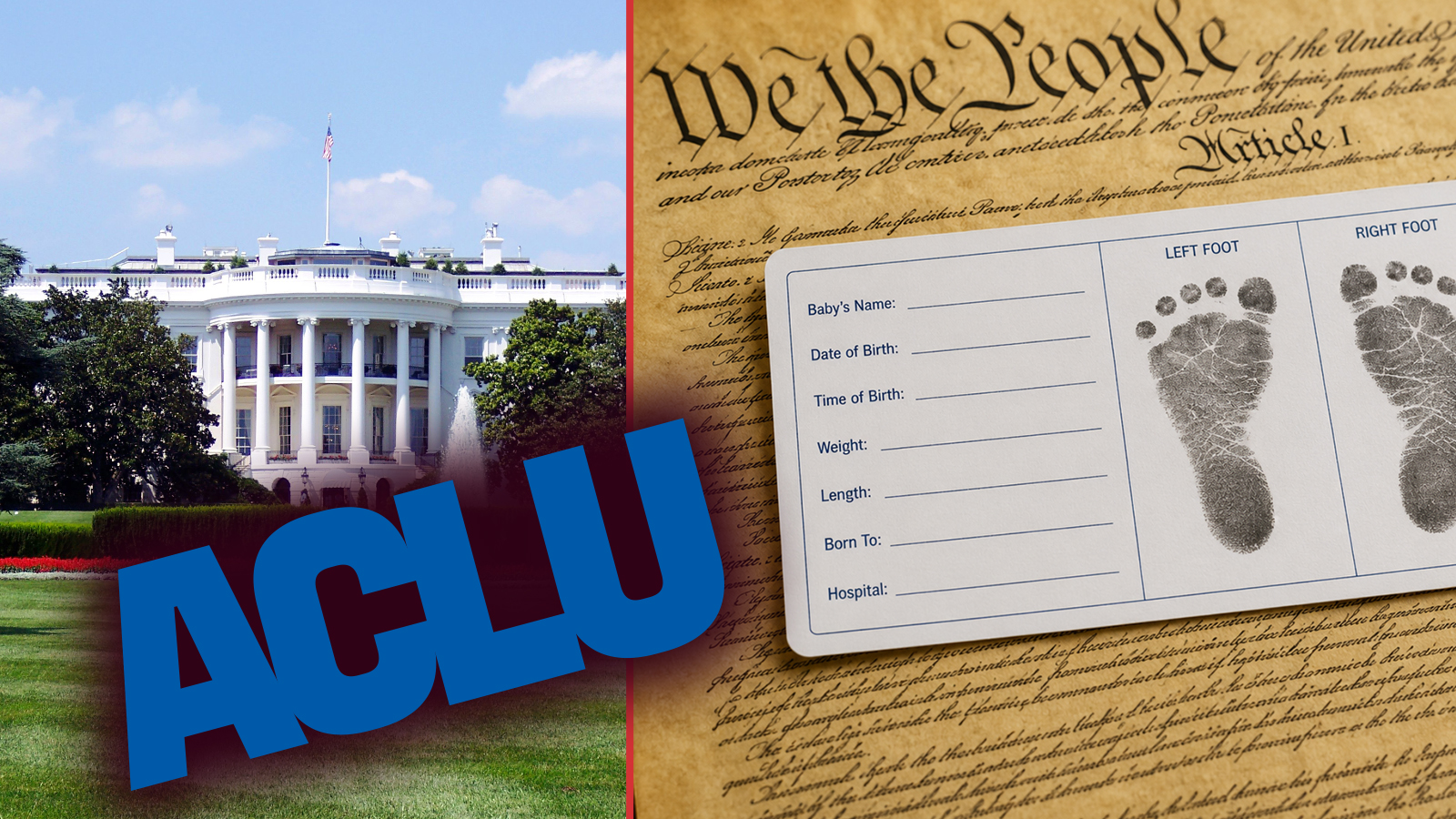
A group of advocacy organizations, including the American Civil Liberties Union (ACLU) of Maine, has now taken legal action in response to Trump’s newest executive order.
In a motion to clarify filed Tuesday in a New Hampshire court, the coalition contends that the president’s recent order “violates the Court’s existing preliminary injunction, as it purports to strip birthright citizenship from members of the provisionally certified class despite the Supreme Court’s recent decision.”
“To avoid any doubt in this regard, the Court should underscore that the government may not strip away class members’ citizenship through any executive orders or other similarly flawed assertions of Executive power over birthright citizenship,” the groups said in the filing.
“If the President issues 100 orders seeking to create new exceptions to the sacred guarantee of the Citizenship Clause, all 100 will be equally illegal,” they argued. “And nothing requires this Court to countenance the continued assault on this foundational constitutional principle or issue an endless string of [executive order]-specific injunctions.”
Among the many representatives to comment on the filing in a press release announcing this latest legal action was ACLU of Maine Executive Director Molly Curren Rowles.
“The Supreme Court reaffirmed the plain language of the Constitution in June, making it clear that neither the president nor Congress can end birthright citizenship,” said Rowles. “We’ll continue defending the Constitution and the core principles reflected in the 14th Amendment: that with few exceptions, every baby born on U.S. soil is a U.S. citizen.”