WASHINGTON, D.C. — President Donald Trump said Thursday that he is close to deciding whether to launch a major new attack against Iran, signaling that the United States could soon expand a military campaign that has already entered its sixth month and disrupted two of the world’s most important shipping corridors.
In an interview with Axios, Trump said the potential operation would be “bigger than ever before” and suggested that Iran had not yet suffered enough damage to force its leaders to end their attacks on commercial shipping or accept an agreement with the United States.
“They have not received enough pain,” Trump told the outlet.
Trump said preparations for a larger attack are already in place, although he insisted that he has not made a final decision. The president also acknowledged that Iranian officials have shown some interest in negotiations but said Tehran does not appear ready to accept a deal.
The threat marks the latest escalation following the collapse of a short-lived ceasefire reached in June.
Trump later declared that ceasefire “over” after Iran resumed attacks connected to commercial shipping in and around the Strait of Hormuz, the narrow waterway through which a significant portion of the world’s oil supply traditionally passes.
Thirteenth Consecutive Night of U.S. Strikes
U.S. forces have continued striking Iranian military targets as Trump considers whether to authorize a broader operation.
U.S. Central Command carried out its 13th consecutive night of attacks inside Iran, targeting military infrastructure, drone facilities, surveillance systems and coastal positions connected to Iranian operations against commercial shipping.
CENTCOM has said the strikes are intended to reduce Iran’s ability to threaten vessels moving through the Strait of Hormuz.
Recent operations have included targets in and around Ahvaz, Bandar Abbas, Bushehr, Qeshm and other strategically important areas along Iran’s southern coast.
The administration has framed the strikes as defensive actions intended to protect American forces and restore freedom of navigation. Critics contend that the continuing air campaign amounts to an expanding war that Congress never formally authorized.
Trump has also threatened to destroy Iranian civilian and transportation infrastructure in retaliation for future attacks on ships.
The president said the United States could strike one Iranian bridge or power plant for every commercial vessel targeted in the Strait of Hormuz.
Trump’s threat reflects his effort to establish a direct and predictable cost for each Iranian attack, but it has also raised questions about the possible effect on Iranian civilians and the risk of further escalation.
Houthis Open Potential Second Shipping Front
The war expanded further this week when Iran-backed Houthi militants attacked two Saudi-flagged oil tankers in the Red Sea.
The Houthis claimed responsibility for missile and drone attacks against the Encelia and Layla, saying the vessels had violated a blockade the group declared against Saudi shipping.
One of the tankers reportedly caught fire, although no deaths or major environmental damage were immediately reported.
The attacks threaten traffic through the Bab el-Mandeb Strait, a critical maritime passage connecting the Red Sea with the Gulf of Aden.
Approximately 12 percent of global trade ordinarily passes through the waterway, according to estimates cited by the Associated Press.
A prolonged disruption at Bab el-Mandeb would create a second major maritime bottleneck alongside the Strait of Hormuz. Ships unable to safely use the Red Sea route could be forced to travel around the southern coast of Africa, adding considerable time and expense to deliveries.
Trump said the United States would hold Iran directly responsible for future Houthi attacks, describing the group as an Iranian proxy rather than an independent actor.
The president warned that additional attacks could bring “major military punishment” against both the Houthis and their supporters in Tehran.
B-1 Bombers Return to the Campaign
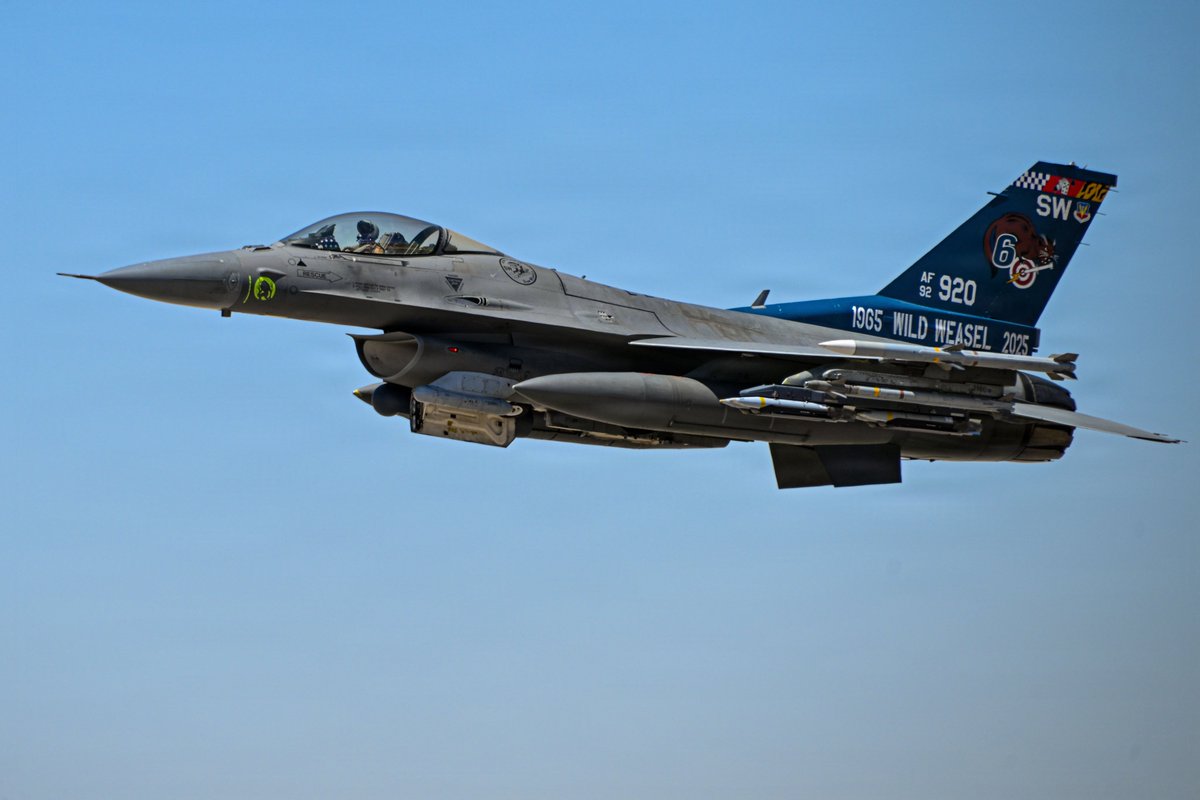
The United States has also returned B-1B Lancer bombers to operations connected to the Iran conflict.
The long-range bombers can carry large quantities of conventional weapons, including 2,000-pound bombs and cruise missiles. Their use gives the United States the ability to strike multiple targets during a single mission and signals a potentially significant expansion of the air campaign.
Reports indicated that B-1 bombers departed from a base in the United Kingdom as Trump renewed threats against Iran’s deeply buried Pickaxe Mountain nuclear facility.
The B-1B, however, is not capable of carrying the approximately 30,000-pound GBU-57 Massive Ordnance Penetrator, the United States’ heaviest bunker-busting bomb.
That weapon is carried by the B-2 Spirit stealth bomber.
The B-1 deployment nevertheless provides the Pentagon with a substantial conventional strike platform capable of delivering large numbers of bombs or air-launched cruise missiles against Iranian military sites.
Trump Threatens Iranian Assets
Trump has also threatened to seize frozen Iranian assets and use the money to compensate shipping companies, governments and other parties for damages connected to Tehran’s military operations.
The administration has not fully explained how the assets would be seized, which funds would be targeted or whether congressional approval would be required.
Such a move would almost certainly face legal challenges, particularly from parties disputing whether the executive branch has the authority to permanently confiscate foreign sovereign assets and distribute the proceeds.
Trump has nevertheless framed the proposal as another way to force Iran to bear the cost of attacks that have damaged ships, increased insurance rates and interrupted global commerce.
House Votes to Restrain Trump
The escalating campaign has widened a constitutional dispute between the White House and Congress over who has the authority to continue the war.
The House of Representatives voted 214-208 Thursday to approve a war powers resolution directing Trump to end unauthorized military action against Iran.
Four Republicans joined House Democrats in supporting the measure, reflecting growing concern within Trump’s own party over the length, expense and objectives of the conflict.
A similar resolution failed in the Senate by a 49-47 vote, allowing the president to continue military operations without a newly approved authorization for the use of military force.
The conflicting votes leave Trump’s authority effectively unrestrained for now, although the House vote delivered a significant political warning to the administration.
Supporters of the resolution argued that the Constitution gives Congress—not the president—the power to declare war and authorize sustained military operations.
The administration has maintained that Trump possesses sufficient authority as commander in chief to protect American forces, respond to Iranian attacks and defend international shipping.
The House vote marked the second time lawmakers have passed a resolution seeking to limit Trump’s military actions against Iran.
The president and his allies have questioned whether Congress can use the 1973 War Powers Resolution to force the removal of American forces over the commander in chief’s objections.
Pentagon Seeks Billions More
The growing military campaign is also placing pressure on the Pentagon’s finances and weapons stockpiles.
Defense Secretary Pete Hegseth told lawmakers that the Iran war has cost approximately $37.5 billion and pressed Congress to approve an additional $67 billion for military operations and weapons replacement.
The requested money would be used in part to replace munitions consumed during months of strikes and missile-defense operations.
The Pentagon has relied heavily on Tomahawk cruise missiles, Patriot interceptors and other expensive weapons during the conflict.
Military officials have warned that continued operations could place additional strain on stockpiles intended for other potential conflicts and emergencies.
The war-funding request comes as the administration seeks an overall defense budget of approximately $1.5 trillion for the coming fiscal year.
Lawmakers from both parties have questioned why the Pentagon requires additional emergency money while billions of dollars previously approved for defense remain unobligated.
Hegseth has argued that the money is urgently needed to maintain the current campaign and rebuild American military readiness.
Oil Tops $100 as Shipping Risks Grow
The conflict is also beginning to impose more visible costs on American consumers.
Brent crude oil closed above $100 per barrel Thursday as attacks on Saudi tankers raised fears that shipping disruptions could spread from the Strait of Hormuz to the Red Sea.
Brent rose approximately 7 percent to settle at $100.69 per barrel, while U.S. West Texas Intermediate crude climbed more than 6 percent to $92.19.
Oil prices are now substantially higher than they were before the war began.
Market analysts have warned that Brent crude could climb above $120 per barrel if shipping disruptions intensify or continue for an extended period.
Higher crude prices can affect gasoline, diesel, heating oil, airline tickets, shipping expenses and the cost of goods transported by truck or ship.
The economic consequences have created a political problem for Trump, who campaigned on reducing energy prices and the cost of living.
The president has argued that defeating Iran’s ability to threaten shipping will eventually stabilize energy markets. His opponents contend that expanding the war is contributing directly to the price increases now facing consumers.
Public Support Continues to Fall
Polls show that public patience with the conflict is eroding.
A recent Washington Post-Ipsos survey found that only 29 percent of Americans approved of Trump’s handling of Iran, while more than two-thirds disapproved.
Only about one-quarter of respondents said the war had been worth its cost to the United States, while a majority said it had not.
The decline is not limited to Democrats or independents.
Some Republican voters, including members of the “America First” coalition that helped return Trump to the White House, have become increasingly skeptical of a prolonged overseas conflict.
Trump campaigned for years as an opponent of open-ended wars and criticized past presidents for spending American lives and money on military campaigns without clear objectives.
The Iran war has therefore created tension within the president’s political base between voters who support a forceful response to Tehran and those who believe the administration is drifting toward another extended Middle Eastern conflict.
Trump Faces Defining Decision
Trump is now approaching one of the most consequential decisions of his second term.
A larger attack could further damage Iran’s military, nuclear and energy infrastructure while increasing pressure on the regime to negotiate.
It could also provoke broader Iranian retaliation against American forces, Israel, Saudi Arabia, commercial shipping or other U.S. partners in the region.
The entry of the Houthis into the conflict has already demonstrated how quickly the war can spread beyond Iran’s borders.
With oil prices above $100, weapons stockpiles under pressure and Congress divided over the president’s authority, the political and economic risks are growing alongside the military campaign.
Trump has repeatedly argued that Iran will only negotiate after experiencing overwhelming force.
His latest comments suggest he is close to testing that theory on a far larger scale.