
Enrollment this fall at Maine’s community colleges is up three percent over last year, marking yet another historic high for the seven-college system.
Central Maine Community College and Southern Maine Committee College saw the most substantial increases in their enrollment numbers, going up by 7.9 percent and 10.1 percent respectively.
As of October 15, total enrollment for this fall across all seven schools was 15,833 students, a three percent increase from the 15,366 students enrolled as of the same date last year.

“This sustained enrollment growth is critical at a time when Maine’s economy needs more skilled employees in a range of industries that we specifically target for high-quality, low-cost instruction – from construction to computer science,” said David Daigler, president of the Maine Community College System (MCCS).
“This ongoing demand is a sign that we are executing on our mission of providing an education that works for Mainers looking to find meaningful work and a better life,” Daigler added.
In a press release shared earlier this month, MCCS explains that they have updated their methodology for reporting fall enrollment to exclude high school students taking courses through their school or on campus.
This change brings MCCS into alignment with the University of Maine System, which made this same update several years ago.
Under this model, enrollment at MCCS has increased 20 percent since 2019, the last fall cohort to enroll prior to the COVID-19 pandemic.
These year-over-year increases in enrollment are attributed by MCCS to a number of initiatives including transfer agreements and the free community college program available to students who graduated high school between 2020 and 2025.
Although lawmakers considered a bill earlier this year that would have made this program permanent, the proposal was unanimously struck down before making it to the chamber floor.
[RELATED: Maine Ends COVID-Era Free Community College Program for Future High School Graduates]
MCCS also pointed toward expanded instruction hours and new remote learning options, new certificate and degree programs, and academic initiatives that increase student success and improve the student experience as reasons for the System’s rising enrollment.
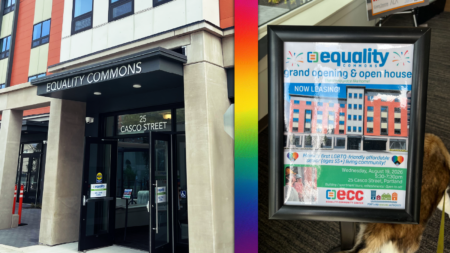
“Vibrant community centers with new housing options, new sports teams, and additional student events and activities” were also highlighted by MCCS.
Although only degree-seeking students are included in these numbers, MCCS has greatly expanded its workforce training programs, which typically take less than a year to complete and are often free-of-charge for students.
Since 2022, MCCS reports that over 45,000 students have enrolled in these programs, which are described as being “focus[ed] on quickly and efficiently acquiring a particular skill.”
By 2030, MCCS expects have trained over 100,000 students through these programs, a prospective feat to which the System credits a five-year grant from the Harold Alfond Foundation.
Graduates of these programs are eligible to receive scholarships toward a degree or certificate program.