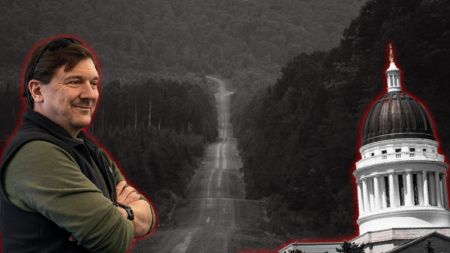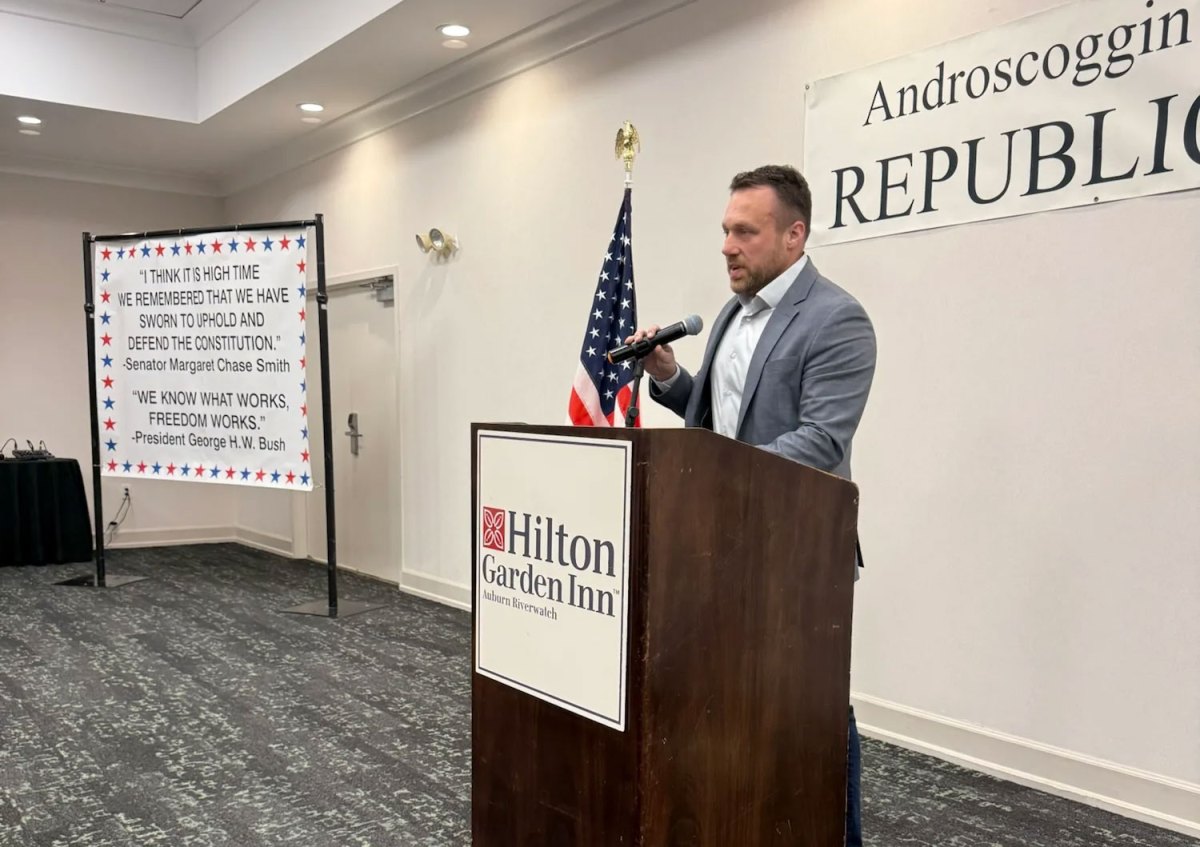
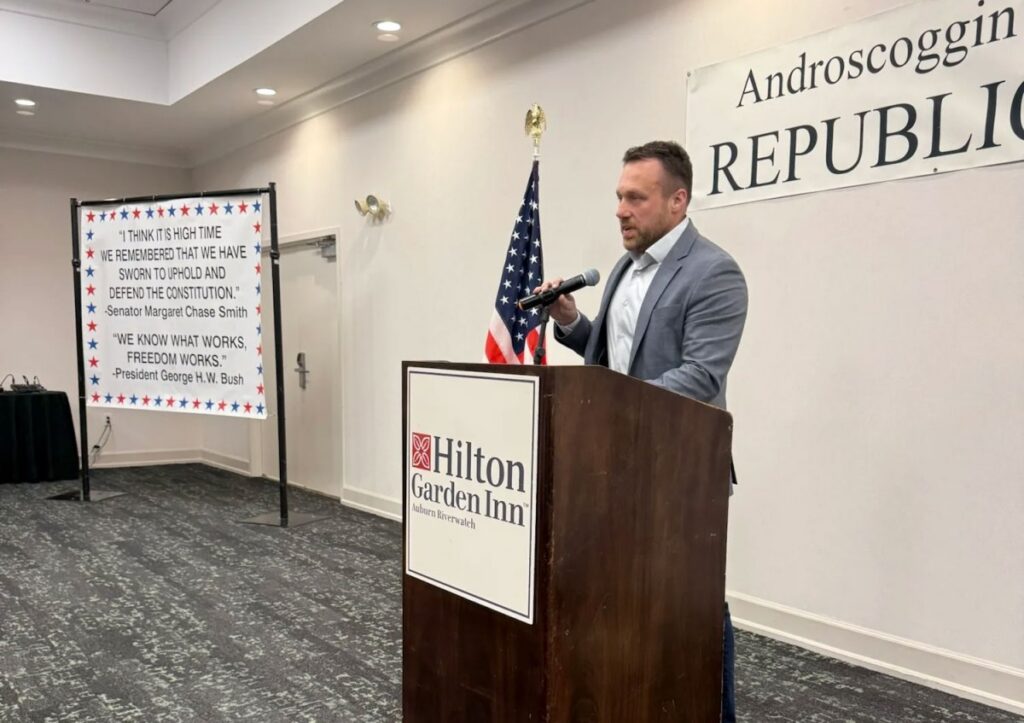
AUBURN, Maine — Republican gubernatorial candidate Garrett Mason used a Saturday evening speech at the Androscoggin County Republican Lincoln Dinner to introduce himself in personal terms, highlight his background in both business and government, and urge Republicans to unify ahead of the election.
Mason, a former Maine state senator who represented parts of Androscoggin County, began by speaking about his family and home life, describing the house he lives in as the one his father, Rick Mason, built. He said he and his wife later bought the home from his father and now live there with their young daughter, Piper.
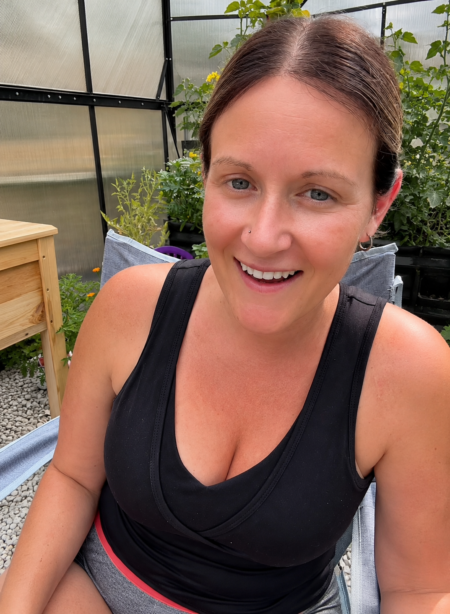
He also spoke about his wife’s background, saying she had moved to Maine from California and now happily calls the state home. Mason described their daughter as energetic and full of personality, drawing laughter as he said she “lives up to her name” and is “loud and in charge all the time.”
Mason used the speech to emphasize his private-sector experience, saying his work includes government affairs and media consulting. He said he and his wife also own another business, Maine Home Collective, which builds custom homes under 1,000 square feet. He credited much of that work to his wife, praising her talent and describing her as the driving force behind the company.
He also took time to honor longtime local Republican activist Georgia Chavez, who recently died. Mason said he was saddened by her passing and called her a steadfast supporter of Androscoggin County Republicans, saying she was one of the people who helped build the local party organization into what it is today.
Mason previously served in the Maine Legislature for eight years, representing Senate District 22. During his tenure, he rose to become Senate Majority Leader when Republicans held control of the chamber under then-Gov. Paul LePage. Before serving in the Senate, Mason also served in the Maine House of Representatives. His legislative career focused heavily on economic policy, regulatory reform, and business development.
After leaving the Legislature, Mason moved into the private sector, working in government affairs and communications consulting while remaining active in Republican politics and public policy discussions across the state.
Turning back to the campaign, Mason told the audience he believes Maine needs a governor who brings both business experience and a working knowledge of government. He argued that the state cannot afford a learning curve in the next administration and said the job requires someone who knows how to act quickly and effectively from the start.
“There’s times where you need a wrecking ball,” Mason said. “There’s times you need something else. There’s times you need finesse.”
Mason said that mix of experience is what sets him apart in the race. He argued that after eight years of Democratic leadership, Maine has lost ground and now needs a leader who knows “which levels of power to call and, honestly more importantly, which ones not to pull to get the job done as close to day one as we possibly can.”
He also pointed to crime as one of the state’s major challenges, saying Republicans have been too often dismissed when they raise public safety concerns. Mason said the impact of rising crime can be seen at the county level, particularly in the Lewiston-Auburn area.
Speaking from his experience as a county commissioner, Mason said the county once generated revenue by boarding prisoners from other jurisdictions but now loses roughly $1 million a year because of increased local jail demands. He called that trend a clear sign of worsening crime.
Mason also reflected on his political upbringing, recalling how his family canvassed door-to-door in Lisbon when a relative ran for the Legislature in 1998. He said those efforts helped lay the groundwork for Republican gains in a town once dominated by Democrats.
He used that story to make a broader point about local organizing, saying political change comes from sustained grassroots work, fundraising, and party-building over time.
Later in the speech, Mason answered lighter personal questions, including what makes him a “Mainer.” In response, he quoted from a favorite Christmas song and said its message about neighbors helping neighbors reflects what he believes is still at the heart of Maine.
He described Maine as “a very special place” where traditional values of giving, sharing, and community still matter. He said that spirit continues to shape how he tries to live his life.
When asked who has had the greatest impact on him, Mason said without hesitation that it was his wife. He credited her with bringing beauty to his life and said her greatest gift to him was making him a father.
He closed by returning to the stakes of the race, calling the coming election critical for the future of the state. Mason urged Republicans to stay united after the primary, saying that regardless of who wins the nomination, the party must come together to have a chance at winning the governorship.
“This is a very important election,” Mason said. “No matter who wins this primary, we must pull together. We have to be. And it’s the only way that we can win the governor.”