

Every state sends a signal about what it values. Through its laws, its taxes, and its priorities, a state quietly tells us what kind of people and opportunities it wants to attract. And like any signal, the results are predictable. A state attracts what it rewards.
Right now, Maine is at a crossroads. We can continue down a path that rewards government dependency and discourages economic growth, or we can choose policies that reward innovation, work, and investment. The truth is simple: when a state builds systems that reward dependency, it should not be surprised when dependency grows. When a state rewards hard work, it attracts enterprise and innovation.
Consider what happens when government policy centers on expanding benefits without expanding opportunity. Because Maine’s current message is that public assistance will grow while economic opportunity shrinks, we should not be surprised when 400,000 people, almost one-third of our population, receive state benefits rather than build businesses. People respond rationally to incentives. New Hampshire, with a similar population and demographic, but a different approach to government, only has 190,000 receiving benefits.
When states lower barriers to entrepreneurship, simplify and remove regulations, and make it easier for businesses to invest and hire, they attract people who want to create, build, and grow. They attract families seeking opportunities and workers eager to participate in a thriving economy.
Across the country, we see examples of this principle in action. States that have prioritized economic growth engines like competitive taxes, predictable regulation, investment in cheap and reliable energy, and a pro-business climate are attracting new companies and workers by the thousands. States that focus primarily on redistribution of wealth are watching their tax bases shrink as businesses, families, and young workers leave.
Maine has incredible potential. We have hardworking people, natural resources, beautiful communities, and a proud tradition of rugged independence. But our policies are working against our strengths. High energy costs, burdensome regulations, and an ever-increasing tax environment make it harder for small businesses to start and even harder for them to grow. Meanwhile, government programs expand faster than the economy that must sustain them.
This approach is not sustainable.
If we want Maine to grow, we must start implementing policies that make growth natural. That means reducing regulatory barriers that strangle small businesses and streamlining processes that shut them down before they even open their doors. It means making Maine a place where entrepreneurs believe they can succeed and where Maine families can thrive again. It means prioritizing job creation over bureaucratic expansion.
I envision a Maine where young people no longer have to leave the state to find opportunity. A Maine where small manufacturers expand, and fishermen, loggers, farmers, and entrepreneurs can invest confidently in their operations, and where new industries see Maine as a place to build their future.
This future is possible. But it requires a new approach to governing. It requires a smaller government that is less of a burden on its people. Because a state gets more of what it rewards; we need to cut bloated government bureaucracy, reduce governmental red tape, actively go after all fraud, and become a state of law and order again. We need to start actually putting the people and businesses of Maine first in all policies, including our failing energy policy, our failing Department of Health and Human Services, and our failed “restorative justice” approach to drugs and crime.
If Maine continues expanding policies that discourage work and investment, we will see more stagnation. If we build policies that encourage enterprise and reward hard work, we will get more growth.
Every state sends a signal about what it values. It is not too late for Maine; we can reverse course. The choice before us is not complicated. It is simply a matter of deciding what kind of Maine we want, and then building policies that bring more of it here. We gave “bloated government full of bureaucracy” a try, and it hasn’t worked. Let’s go the “small government with liberty” route in 2026.
The 2026 election is important, so choose intentionally and get active in helping your candidates win.
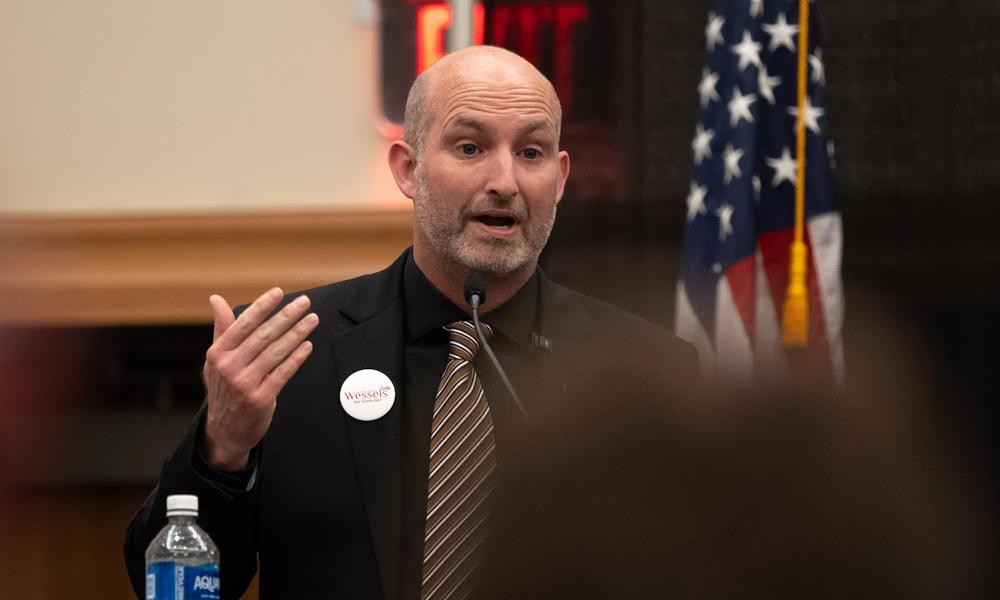
Robert Wessels is a candidate for governor.



“When a state rewards hard work, it attracts enterprise and innovation.”
Hey now, let’s drop back and punt me some grant money and free permit passes, tax breaks, cheap LP…sorority summer campground fun shacks and pottery shops, with a dab of “we’re a little rusty” trombone quartet on sunday brunch Tuesday night at the coin toss club.
Yes, no AI was used in this application.