


The Maine Supreme Court is set to consider a case challenging the state’s rules prohibiting most forms of fishing in certain bodies of water, arguing that the prohibitions allegedly violate the state’s constitutional provision protecting the right to food.
Earlier this month, Superior Court Justice Michaela Murphy dismissed the lawsuit, but the plaintiffs filed a notice of appeal this week.
This is the second time in recent years that Maine’s Right to Food Amendment has been the subject of a lawsuit where it has been pitted against the state’s Department of Inland Fisheries and Wildlife’s mandate to “preserve, protect, and enhance the inland fisheries and wildlife resources.”
In 2024, the Maine Supreme Court found that the state’s Sunday hunting ban is compatible with the Right to Food Amendment.
Despite finding that hunting for food is covered by the clause, the Court identified that it also prohibits procuring food by illicit means, including “poaching.”
[RELATED: Sunday Hunting Ban Upheld by Maine Supreme Court Despite Recently-Enacted Right to Food Amendment]
In 2021, lawmakers in Augusta asked Mainers to weigh in on a proposed amendment to the state’s constitution establishing a right to food that read:
“All individuals have a natural, inherent and unalienable right to food, including the right to save and exchange seeds and the right to grow, raise, harvest, produce and consume the food of their own choosing for their own nourishment, sustenance, bodily health and well-being, as long as an individual does not commit trespassing, theft, poaching or other abuses of private property rights, public lands or natural resources in the harvesting, production or acquisition of food.”
This bill was introduced by Rep. Billy Bob Faulkingham (R-Winter Harbor) and backed by a bipartisan coalition of elected officials.
In November of 2021, more than 60 percent of Maine voters supported amending the state’s constitution to include the first “right to food” amendment in the nation.
The lawsuit currently pending before the court focuses on an alleged conflict between this amendment and the state’s fly fishing only regulations, which require fishermen to use only unbaited artificial flies that are propelled using the weight of the fly line.
As reported by the Maine Morning Star, the family bringing this case has argued that the time and money necessary to purchase and become proficient with fly gear is an unfair barrier.
“If there is a sustainable take available at a waterway, it shouldn’t matter what kind of rod you use,” Jared Bornstein, a spokesperson for the plaintiffs, said Thursday, according to the Portland Press Herald.
Mark Latti, spokesperson for the Maine Department of Inland Fisheries and Wildlife told the outlet that the Department could not comment on active litigation.
“Just as the Maine Constitution’s Right to Food does not grant citizens the right to hunt moose with a bazooka, it likewise does not render the State’s fishing regulations optional,” the state argued in its motion to dismiss.
Court documents indicate that 225 of Maine’s roughly 6,000 recognized bodies of water are restricted to fly-fishing only.
Supporting the plaintiffs in this case is the International Order of Theodore Roosevelt, a Wisconsin-based organization described as a “proactive hunting and conservation foundation” that supported the right-to-food amendment and was also involved in the Sunday hunting ban lawsuit.


When hooks won’t work….”next “ ….they will need to let “ the insecure “ use nets .
Progressive Democrats say “ FISH have feelings too. “
The State of Maine has been invaded by idiots who are taking control of our lives .
Maine isn’t like it used to be.
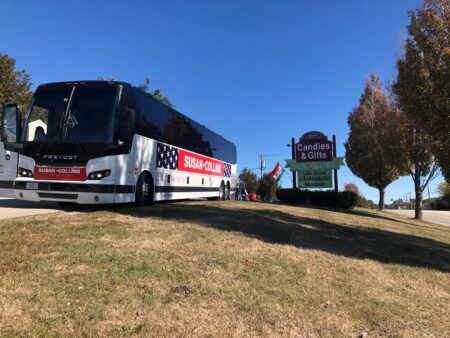
Karen and Ted are now driving the bus right straight for the edge of the cliff of no return .
Even without a crystal ball I told everyone that would listen the “Right to Food” was going to cause trouble and yet unseen consequences. Yet every Libtard I talked to laughed and said “Nothing like that will happen, and people have a right to food”. 🙁 Wait till they come after your cat.
Fly fishing makes zero sense in some of the places mandated as fly fishing only. Rules are rules but can we inject a bit of common sense into making them. Literally one side of a towns bridge is normal fishing the other is fly fishing only.
I guess my question would be, what are the 225 bodies of water restricted to fly fishing only ?
There are 5775 bodies of water that fish can be taken by other means than by fly fishing. Don’t think there’s a lack of resources for filling the rights to food.
“First they came to take your rights and I said nothing. Then they came for me and there was no-one to speak up for me…..”
Gov’t control at it’s best
If anyone doesn’t think fly fisherman are snobs, just imagine what they’d do if some prime trout river were set aside for bait fishing only—no fly fishing allowed.
Pretty sure if you work you can buy food / Everyone is hiring
I hope the court rules in favor of the Defense. As a hunter/fisher/farmer/conservationist this makes absolutely no sense. It’s merely an abuse of a law that was intended to solidify necessary activity for some to procure food in a certain way. Fish are widely procurable in each region of this state by many methods of taking. Just a poor use of the judicial system when there are many true injustices that need be addresssed.
.” state’s rules prohibiting most forms of fishing in certain bodies of water,.” …You moron, you fish bodies OUT of the water in Washington County.
Damn, guess I’ll find something else to do with those leftover M-80s from last year’s 4th of July blowin’ chucks out the hole bash. (Good thing we didn’t do it on that rich guys place, I hear he knows someone..)
“.the right to grow, raise, harvest, produce and consume the food of their own choosing for their own nourishment, sustenance, bodily health..”
OOOOHHH…thank you, thank you…..
for allowing me to grow an ear of corn you mid evil castle freak
Most game species were facing extinction by the early 1900’s because stupid trophy hunters and redneck jerks were taking more than could be replenished. We need to outlaw out of state hunters from coming to Maine and bagging their, third, fourth, fifth… turkey and deer with their high priced equipment and air b n b rental.
From A.I google
In the early 1900s, many game species in North America faced drastic declines due to overhunting and habitat loss, with populations of elk, pronghorn, bison, and waterfowl dropping to just a few thousand by the end of the century. This led to significant conservation efforts, including the establishment of hunting regulations to protect these rapidly disappearing wildlife populations. Many species went from countless numbers to j
That being said, hunting is a billion dollar a year industry in Maine. Think… fuel, rental units, gas station sushi, rifles, ammunition, orange vests, licenses, and fly fishing rods.
I’d like to read an article listing the businesses that are lobbying for fly fishing rods. I’d also like to know how much the lawsuit is costing the family that can’t afford a fly fishing rod.
Tervis is correct .
If people would just put down the beer and the pot pipe and got up off the couch and got a job , maybe they wouldn’t be so damn “ food insecure “ ….( I’ll bet it was democrats who coined THAT term “ )
Then when they get home from work they could clean up all that trash and shit piled out in their front yard that we all have to look at every time we drive by .
Why are there so many late model Subaru cars parked outside the food bank shack in the first place ?
Get a damn job and have some self respect . FISH SOMEWHERE ELSE . Get a life !
I supposed FFO makes it harder to fish out a water body. And they believe in some cased they are conserving genetically wild trout: if there is such a thing any more.
Trout/ salmon regs are so restrictive its hardly worth fishing for them for food. When i target trout/ salmon waters its for sport.
When i want fish to eat i target Pike, Pickrell, Perch, Sunfish, Crappy, and Hornpout. You can fill your freezer with them and many have no size or bag limits. Some are invasive and ” biologists” want them all killed.
Considering our guvnah increased hunting fishing registration TAXES for people to enjoy the right to eat, it makes sense to target these less financially favorable speices.
When i want fun. I fly fish. When i want food i use bait.
It appears the information is screwed up. 225 FFO waters and 5775 general law waters so that means that all waters in Maine can be fished with FFO equipment (6000 waters) but the general law folks come up short.