

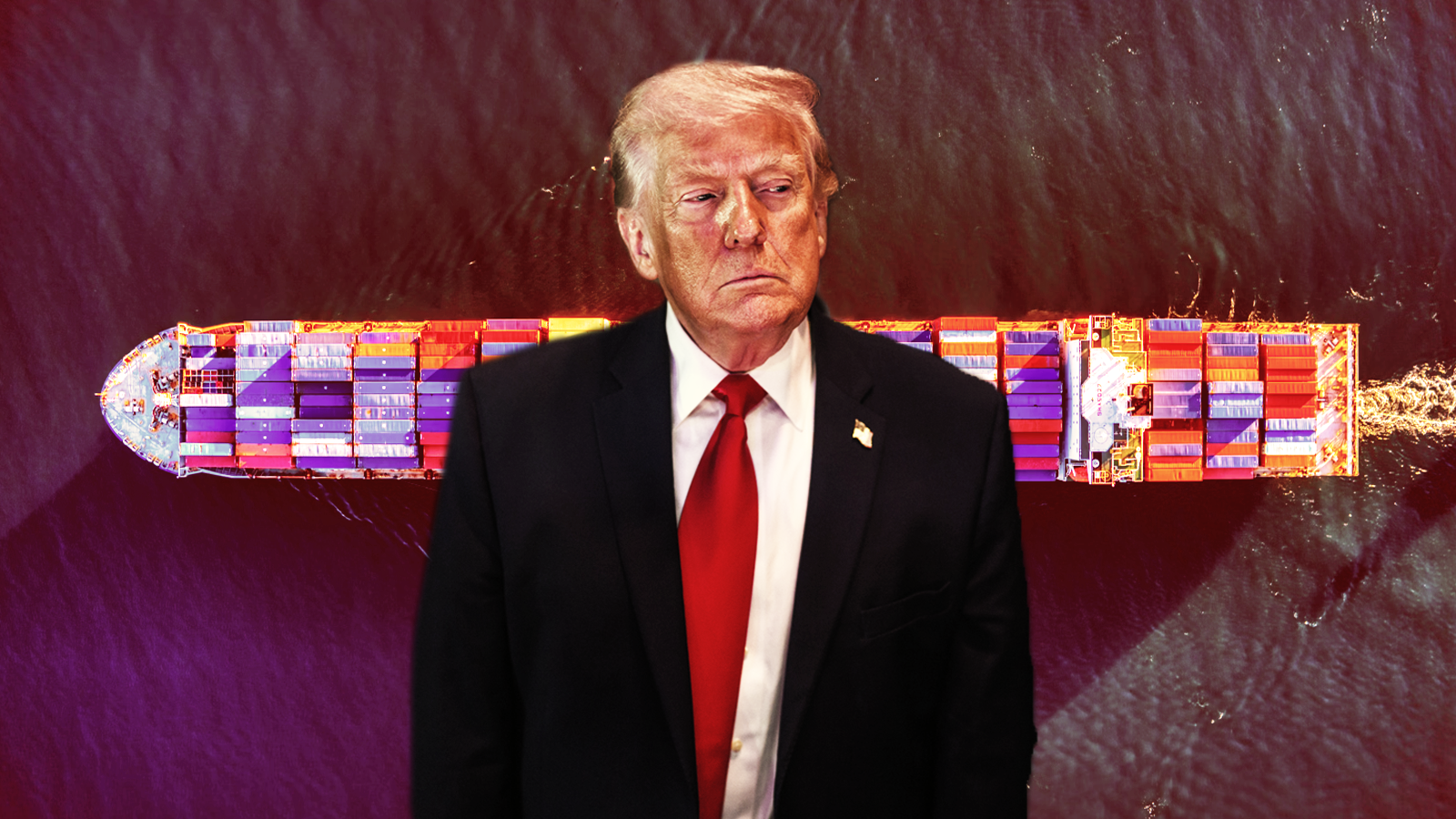
WASHINGTON – President Donald Trump on Tuesday extended the ceasefire between the United States and Iran indefinitely, buying more time for negotiations even as Tehran faces mounting financial strain and the Strait of Hormuz remains a flashpoint in the broader conflict.
The extension was announced as the White House awaited what Trump described as a “unified proposal” from Iranian leaders, a sign that the regime may still be struggling to settle on a single negotiating position after weeks of war, economic disruption, and internal pressure. CBS and other outlets reported that U.S. officials believe Iran’s leadership is fractured, helping explain why the administration chose to keep the ceasefire in place rather than let it expire on Tuesday night.
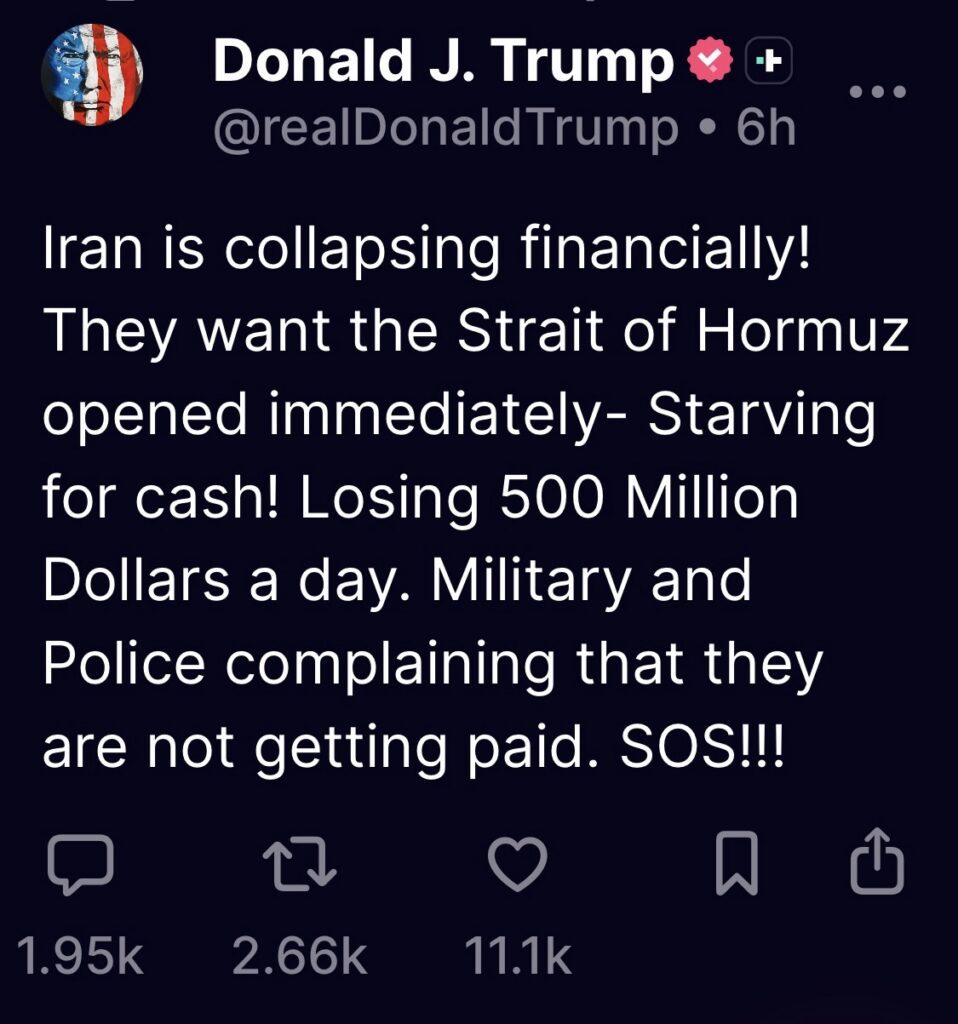
But while the ceasefire has paused aerial attacks for now, Trump has not backed away from the broader pressure campaign. The United States is continuing its naval blockade tied to the Strait of Hormuz, a move Iran has treated as an act of war and one that remains central to the regime’s worsening financial crisis. Trump said Iran wants the strait opened immediately, but he has insisted the blockade will remain in place while talks continue.
That matters because the Strait of Hormuz is not just another shipping lane. Roughly one-fifth of the world’s oil and liquefied natural gas moved through the waterway before the current war, making it one of the most strategically important maritime chokepoints on the planet. The U.S.-Iran war has turned that corridor into both a military pressure point and an economic weapon.
The war itself escalated after maritime confrontations and military exchanges in and around the strait spiraled into a wider U.S.-Iran conflict earlier this year. Trump’s original two-week ceasefire was meant to create space for diplomacy, including planned talks in Islamabad, Pakistan. But those talks have now stalled, with reporting indicating Vice President JD Vance’s expected trip was postponed and Iranian officials signaling they may not return to the table unless the blockade is lifted.
Even with the ceasefire extended, the region remains highly volatile. On Wednesday, multiple commercial vessels came under fire in the Strait of Hormuz, with Reuters reporting that at least three ships were hit by gunfire and rocket-propelled grenades, while the Associated Press separately reported attacks on two cargo ships that further complicated diplomatic efforts.
That violence underscores the larger reality: the ceasefire may be in place on paper, but the conflict is far from settled. Maritime attacks, ship seizures, and continuing blockade pressure have kept the Hormuz corridor unstable, while oil markets remain sensitive to every new development. Reuters reported that the war began on Feb. 28, 2026, and the fighting has already reshaped global shipping and energy flows.
Against that backdrop, reports of Iran’s worsening finances have taken on added significance. Trump wrote this week that Iran is desperate to reopen the strait, saying the regime is effectively starving for cash. The broader reporting around the ceasefire extension and Tehran’s fractured internal politics suggests the regime is under heavy pressure as negotiations drag on and the blockade chokes revenue.
If that pressure continues, Tehran could face an even narrower set of options: make concessions, endure prolonged economic pain, or risk renewed escalation once diplomacy fully breaks down. For now, Trump has extended the truce, but he has not eased the squeeze. And as ships are still being attacked in the Strait of Hormuz even under a ceasefire, the message is clear: this war may be paused, but it is not over.



Trump / WE ……should bomb the hell out of them .
They think to die a martyr is glory and goodness .
Give them their wish .
Money speaks louder than bombs. Keep the blockade going.
The hegemon continues it’s bullying according to the wishes of its Israeli masters.
Wait , so the war isnt over yet? Im pretty sure don has declared this war over atleast a half dozen times