

A registered dietitian nutritionist is doing our work for us with a breaking blueberry alert.
Before you grab a pint in the grocery store, make sure your pick doesn’t have obvious moisture on it.
“It’s all too easy to quickly grab a pack and be on my way while supermarket shopping without taking a closer look at what I’m buying,” says Christina Manian. “On more than one occasion, I open up the containers to find spoiled blueberries just days later.”
A New Englander at heart, Manian was accustomed to eating wild blueberries right off the bush while hiking.
But alas nowadays she’s resigned to do her picking in the grocery store.
“So, I decided to ask a food scientist how to shop for blueberries – and she told me to look for this specific sign of spoilage,” Manian says.
Food scientist Abbey Thiel, PhD, will always pass on a package of blueberries that look a little wet, according to Manian.
“The biggest red flag is any sign of excess moisture in the container,” Thiel says. “If you notice condensation or wetness inside the package, it means the environment is ideal for mold to grow.”
Blueberries, primed to go bad if not kept in an ideal environment, “already have a high water content, so adding extra surface moisture speeds up spoilage significantly, mold can spread more easily than people realize, even if you can’t see it on every berry yet,” she adds.
Speaking of mold, Thiel recommends avoiding any blueberries with obvious signs of mold.
“If you see mold, like fuzzy white or gray spots or even just one visibly moldy berry, that’s a clear sign the fruit is starting to spoil,” she says. “So while one moldy berry doesn’t necessarily mean you have to throw everything away immediately, both visible mold and excess moisture are signs that the container won’t last very long.”
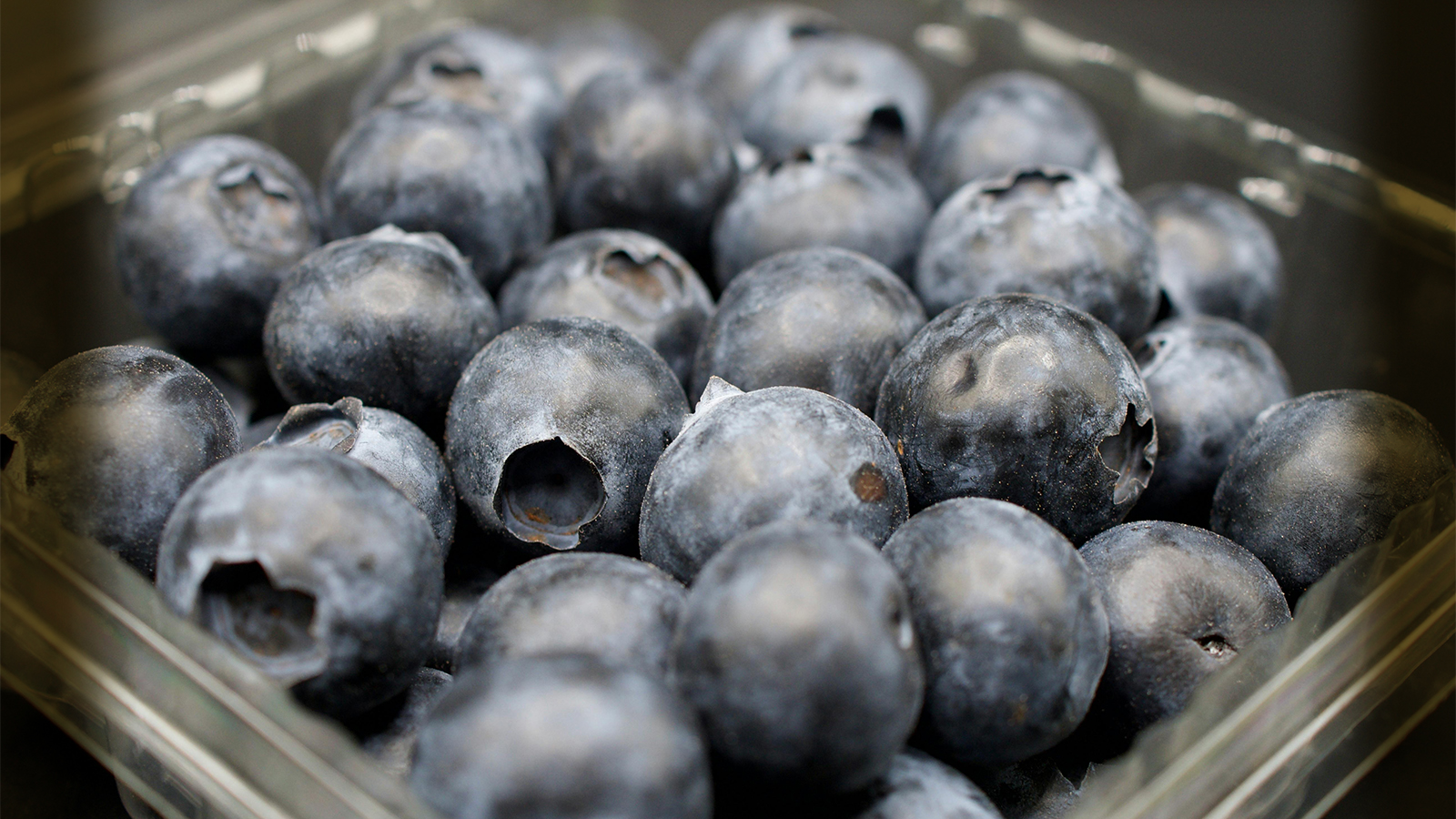
Last but not least, don’t confuse what appears to be a greasy gray covering on berries with mold.
“That light, dusty-looking coating you see on blueberries – called the bloom – is actually a good sign,” Thiel says. “A lot of people think something is wrong with it, but it’s a natural waxy layer that helps protect the fruit, reduce moisture loss, and even act as a barrier against pests. In fact, berries without that coating may have been handled more or are further along in their shelf life.”
Once you get the berries home, don’t wash them until you’re ready to eat them, lest you add moisture prematurely.
Manian shared her blueberry secrets with AOL.com and for that we are berry grateful.
Maine blueberry season typically runs from late July to early September, with peak harvesting occurring throughout August.
The wild blueberry harvest is most active downeast, with pick-your-own farms commonly opening in late July.
The first weekend of August is usually celebrated with a dedicated “Wild Blueberry Weekend” featuring farm tours.
Maine is the leading producer of wild (lowbush) blueberries in the U.S., thanks to a bedrock company in the Pine Tree State known as Wyman’s Blueberries.
Wyman’s, based in Milbridge since 1874, is the largest producer of wild blueberries in Maine and the U.S., managing over 17,000 acres of barrens and processing up to 2.3 million pounds of fruit daily during peak harvest.




Best way to deal with blueberries, from my Granny, and it works. Soon as you get them home, put them in another bowl or container, lined with a paper towel, also folded over the top. Cover with a plate in the fridge. Do not wash until you plan to eat them.