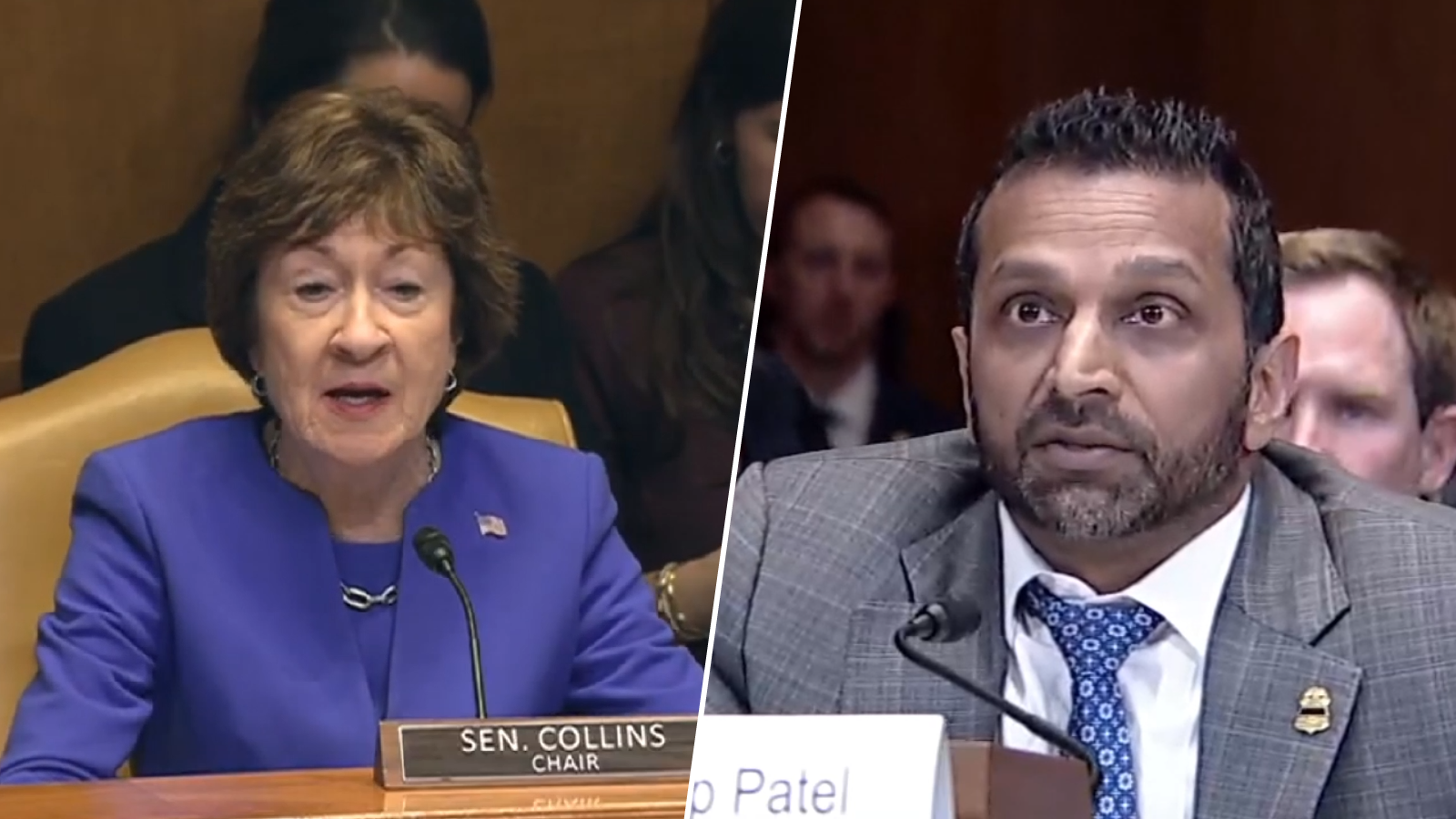
WASHINGTON, D.C. — U.S. Sen. Susan Collins pressed the heads of the FBI and Drug Enforcement Administration during a federal budget hearing over the continued spread of illegal marijuana grow houses in Maine, warning that the operations are often tied to money laundering, transnational crime, human trafficking concerns, and the destruction of badly needed housing.
Collins, who chairs the Senate Appropriations Committee, questioned FBI Director Kash Patel and DEA Administrator Terrance Cole during a hearing reviewing federal law enforcement agencies’ Fiscal Year 2027 budget requests.
Collins said the problem remains serious in Maine, where local sheriffs and law enforcement officers have led much of the enforcement effort against illegal marijuana operations connected to transnational criminal organizations originating in China.
Citing a 2023 Department of Homeland Security memo, Collins said Maine had been estimated to have as many as 270 Chinese-backed illegal marijuana operations, producing up to an estimated $4.3 billion in illicit revenue.
Since then, she said, thousands of pounds of illegal marijuana have been seized, largely due to the work of Maine sheriffs and local police.
“One other side effect of these illegal grow operations is that they usually destroy the houses in which they’re located, which exacerbates the housing shortage in my state,” Collins said.
Patel told Collins that the FBI and Department of Homeland Security have created Homeland Security Task Forces in 59 locations across the country, with a specific focus on marijuana grow houses tied to Chinese nationals.
Patel said federal investigators are working to shut down the operations and trace banking records and financial statements in an effort to identify the financiers behind them.
Collins asked whether law enforcement knows where the money is going, noting that some Maine officers believe it may be tied to the fentanyl trade.
Patel said the money often flows back into drug trafficking networks and the pockets of traffickers, though investigators have not yet seen direct evidence that money from the grow house operations is being sent back to mainland China or the Chinese Communist Party.
Collins urged Patel to intensify the FBI’s efforts, saying the problem remains significant despite the work of Maine law enforcement.
DEA Administrator Terrance Cole told Collins that the agency continues to target marijuana traffickers in Maine. He said the DEA has recently executed 44 search warrants related to Chinese underground marijuana houses, seizing about 32,000 marijuana plants and more than 500 pounds of marijuana.
Cole said investigators are also tracing funds through the Chinese underground banking system and cryptocurrency transactions, requiring skilled agents to pull financial data from the blockchain and follow transactions several layers removed.
Cole said the DEA’s Bangor office has identified up to 250 potential locations where illegal grow operations may still be occurring.
“This is ongoing cooperation with our state, local, tribal partners and our federal partners,” Cole said, adding that the work requires long-term, complex conspiracy investigations.
Collins said constituents who live near suspected grow houses often know something is wrong, pointing to covered windows, unusual activity, and the smell of marijuana. She stressed that these are not Maine’s licensed marijuana businesses.
“These individuals are not following any of the rules and they are operating illegally and causing tremendous harm,” Collins said.
She added that the latest estimate of 250 potential sites is likely an underestimate and shows the seriousness of the problem.
Collins again tied the issue to Maine’s housing crisis, saying the properties are often left uninhabitable because of black mold and other damage caused by the illegal operations.
She urged federal agencies to continue the task force effort, saying the response requires an all-of-government approach.