

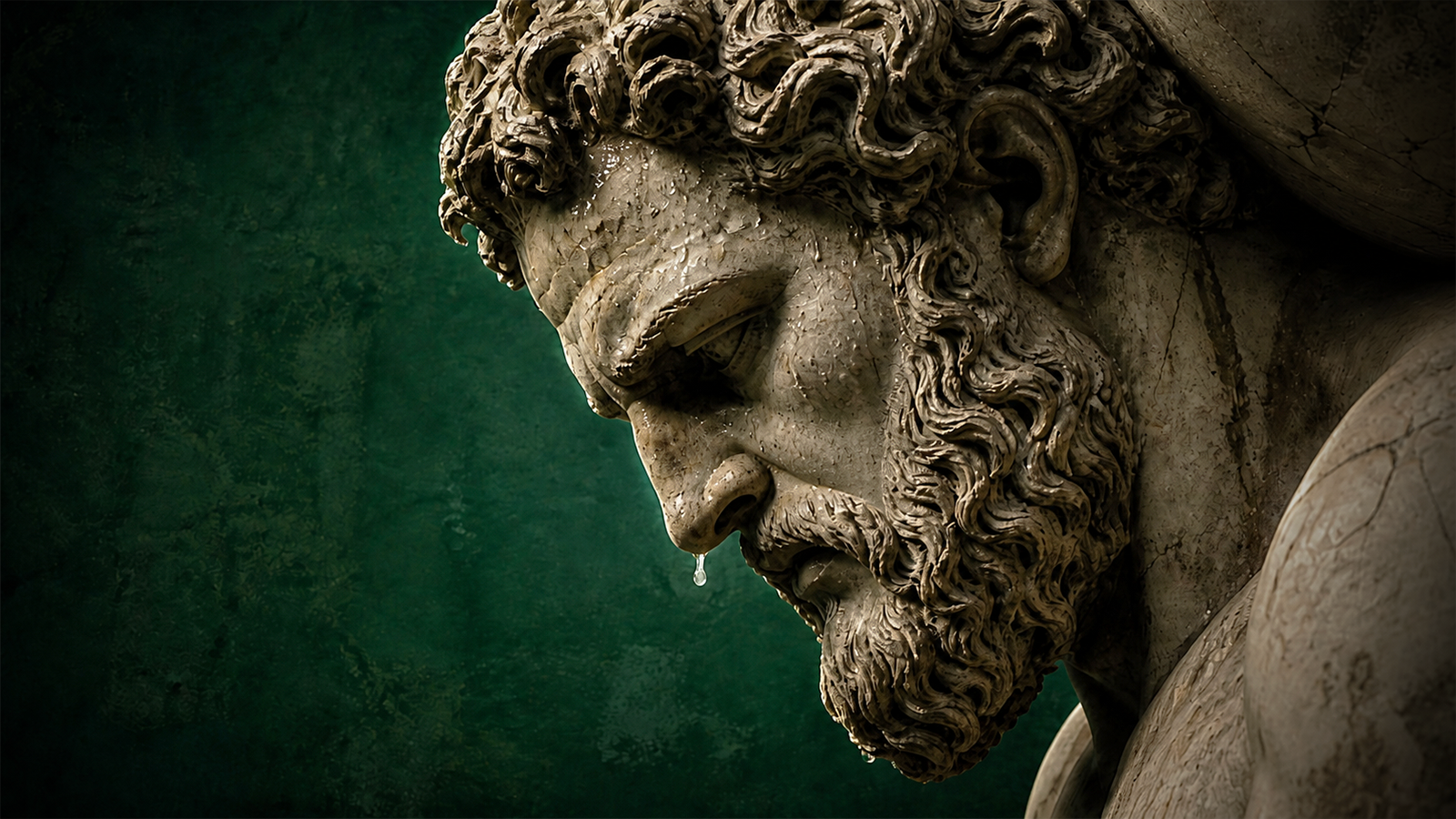
You can hold off for just so long, but as Peter with his finger in the dike learned, the dam, responding to the laws of physics, will slowly erode and eventually give way.
Similarly, Ayn Rand often liked to say, “Reality is the final arbiter.” Recent events suggest we may be witnessing this manifestation among America’s most productive members as depicted by Rand in her dystopian novel Atlas Shrugged.
America’s billionaire class of entrepreneurs and innovators, dating to the beginnings of the information revolution starting in the 1980s and largely centered on the West Coast, have performed their acts and achieved their fortunes largely immune to the countervailing and reactive political culture they helped spawn and have calculatingly embraced.
At first, this posture served their self-interest in keeping the wolves at bay, but as those predators have grown and become more powerful, those whom they prey upon have become more alarmed. We are now witnessing signs of their escalating unease, as some are speaking out and taking actions to counter the threats to their work, wealth, and “pursuit of happiness.”
Elon Musk was the first most notable figure to move the needle by actively supporting Trump and participating in his administration’s efforts to find and eliminate waste. In his adjustment to Trump’s election, he moved too quickly for many high-achievers, who held back and remained largely silent, but we are now seeing others following his lead.
The most recent and direct confrontation saw multinational hedge fund manager Ken Griffin responding bitterly to socialist mayor Zohran Mamdani. Mamdani highlighted Griffin’s New York penthouse in his advocacy of a new pied-à-terre tax on second homes. Griffin responded by threatening to cancel scheduled billion-dollar development and investment projects in the city. He reportedly asked if New York planned to get its “fiscal house in order and run itself from a position of strong government that’s pro-business,” before following up with, “Why do Americans think we can do socialism?”
Google co-founder Sergei Brin, in response to California’s proposed billionaire’s tax, which has found its way onto the state’s November ballot, has publicly denounced the plan and extolled the benefits of capitalism over socialism.
“I fled socialism with my family in 1979 and know the devastating, oppressive society it created in the Soviet Union. I don’t want California to end up in the same place,” Brin said in a statement to The New York Times.
Microsoft founder Bill Gates, a longtime supporter of environmentalist causes, recently shook up climate change activists by embracing nuclear energy and shifting away from what he described as the “doomsday outlook” many climate activists such as Al Gore have adopted to alarm nonbelievers into seeing things their way.
Are we seeing a paradigm shift in the making—a radical change in thinking from an accepted point of view to a new one, necessitated when the current paradigm increasingly produces anomalies that challenge prevailing opinion?
It would appear so, and we should welcome the no doubt ineluctable changes we are witnessing—not only among our greatest innovators in the business world, but in academia, where new leaders such as Dartmouth’s President Sian Beilock and new institutions such as the University of Austin (UATX) are brashly reclaiming the traditional roles of higher education in the face of their abandonment by mainstream colleges and universities.
Similarly, new online media outlets such as The Free Press, founded by former New York Times writer and editor Bari Weiss, and long-form podcasters such as Joe Rogan, are challenging establishment media outlets that have abandoned traditional journalism in favor of partisan activism.
In all things, reality is the final arbiter, said Rand—or more lyrically, per her favorite writer Victor Hugo:
“Revolutions spring not from accident, but from necessity. A revolution is a return from the factious to the real. It takes place because it must.”
Fred Hastings of Cutler, ME is the retired publisher/editor of the DownEast Coastal Press.


“Kill Bill” Gates embracing nuclear energy means little after pushing “vaccines” that have killed and injured millions worldwide. He’s NOT one of the “good guys”.
Trivia: What were the initials on the cigarettes? (play jepadory music)
Would it be L&M? Not sure what you mean by asking.
Sorry, initials was not what I was going for. It was the dollar sign on the cigarette. My vocabulary could use an upgrade. Figgin’ words n stuff.
The big question is will these tech billionaires, leaving Cali and NY for Texas and Florida, stop voting for democrats.
WHAT is THAT dripping from his nose ?