
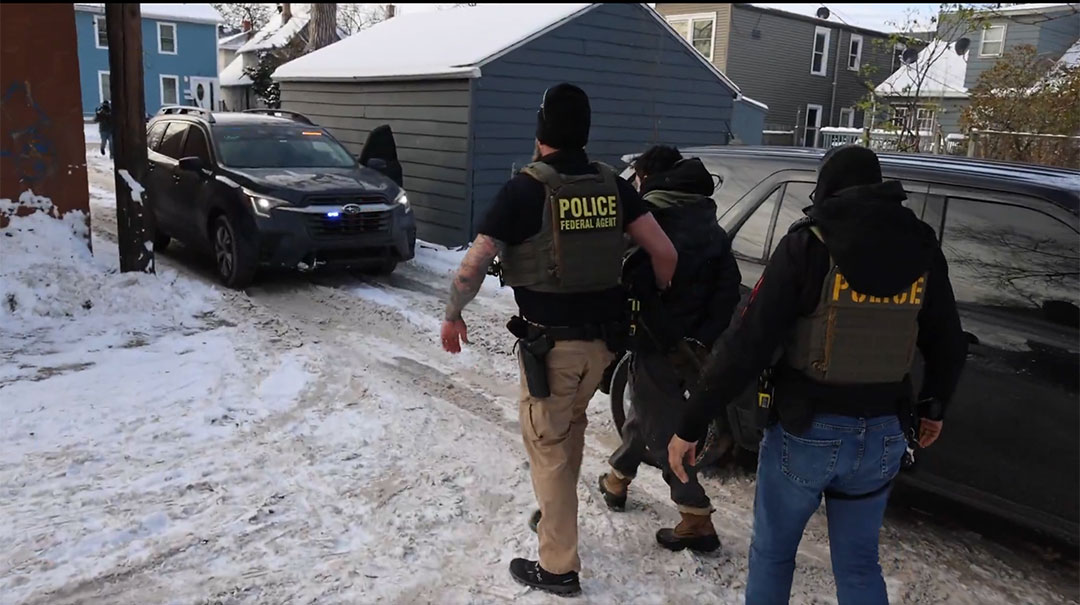
Last week, the United States Department of Justice threatened legal action against the State of Maine over a policy that allegedly blocks federal law enforcement agencies from obtaining undercover license plates if those vehicles are to be used for civil immigration enforcement operations.
Maine’s Attorney General now appears to have rejected this request in a letter responding to the DOJ in which he pushes back on the arguments made by the federal government against the state’s policy.
In a sharply worded letter addressed to Maine Attorney General Aaron Frey, federal officials argued the policy is both “deeply dangerous” and “blatantly unlawful,” warning that it undermines ongoing investigations and places federal agents and their families at risk.
The Justice Department further cautioned that exposing undercover federal vehicles could allow suspects to flee, destroy evidence, or retaliate against officers, while also referencing growing concerns about threats, doxing, and harassment targeting federal law enforcement personnel.
According to the letter, BMV has refused to issue undercover plates to federal agencies unless they certify that the vehicles “will not be used for civil immigration enforcement.” The policy allegedly does not apply to state or local law enforcement agencies.
The federal government goes on to argue that the policy violates the Supremacy Clause of the U.S. Constitution by discriminating against the federal government while continuing to provide undercover plates to “similarly-situated state and local law enforcement agencies without restriction.”
Citing the Supreme Court case United States v. Washington (2022), the letter says that states cannot regulate or discriminate against the federal government in a way that interferes with federal operations.
[RELATED: DOJ Threatens Maine Over ICE Undercover Plates as Bellows Fires Back]
The Justice Department demanded that Maine rescind the policy and resume issuing undercover plates to all federal law enforcement agencies, including Homeland Security Investigations, ICE, and Customs and Border Protection, setting a deadline of May 22 for a response.
Maine Secretary of State Shenna Bellows dismissed the DOJ’s position in comments shared by News Center Maine reporter Phil Hirschkorn.
“It’s absurd. ICE is not getting undercover license plates,” Bellows said. “Trump’s DOJ doesn’t scare me. We don’t have secret police in a democracy.”
In a letter dated May 22, Attorney General Frey more formally rejected the federal government’s arguments, stating that Maine’s policy is “neither discriminatory nor unlawful.”
According to the Attorney General, Maine’s confidential plate program “empowers the
Secretary of State, in her discretion, to issue confidential non-governmental license plates for unmarked vehicles used primarily for law enforcement purposes.”
He goes on to explain that it is the state’s position that including a requirement on the application form that plates not be used for civil immigration enforcement falls under this authority.
Frey also argued that the state’s policy does not violate the Supremacy Clause of the U.S. Constitution as governed by United States v. Washington (2022) because it “neither interferes with nor controls federal law enforcement operations.”
“Rather, the program reflects a legitimate and constitutional policy choice by the SOS not to allow its resources to be commandeered by the federal government for use in civil immigration enforcement activities that have, in Maine and elsewhere, resulted in multiple incidents of abusive and unconstitutional conduct by DHS officials,” Frey wrote.
Frey further notes that the BMV has issued a total of 48 confidential plates since January 6, 2026 for vehicles belonging to eight different federal agencies, suggesting that this is indicative that “there is no basis for the assertion that Maine’s [confidential plate] program puts at risk federal law enforcement officers.”
Click Here to Read Attorney General Aaron Frey’s Full Response
Secretary of State Bellows issued a brief statement Friday in light of Frey’s response, largely echoing her comments made immediately following the DOJ’s demand.
“When ICE asked for confidential license plates, I said no. We don’t have secret police in a democracy, and covert civil immigration enforcement is not something Maine will facilitate,” said Bellows.
“If the DOJ wants to sue us over that, we’ll see them in court. And we will win just like we did yesterday,” she said, appearing to refer to a federal judge’s dismissal of the Trump Administration’s lawsuit seeking access to Maine’s unredacted voter registration database.
Click Here to Read Secretary of State Shenna Bellows’ Full Statement
Time to cut funding,
He REALLY IS a PIECE of S”*T ……Isn’t he !
Blinded by ideology.
Come on man, use some common sense
MWC they are not blinded by ideology, they are flush with Chinese and Somali cash
Without virtue-signaling, do democrats stand for anything?
This state has become such an embarrassment. Lived here all of my life – 60+ years. My family has been here for centuries. Seriously thinking of moving if we don’t get on the right track soon. Not the way life should be anymore, the uniparty has made great strides in destroying it.
OK — run them without plates.
There’s not a damn thing that they can do about it, and if you’ll notice, post office vehicles don’t have license plates.
If the federal government decided to run every vehicle, it owns without a license plate on it, there would be such a hue and cry from every police officer in the state that this BullBleep would end in about 10 seconds.
And somebody in Augusta might be bright enough to realize that once the cops couldn’t stop the federal vehicles for not having plates, they would be hard pressed to do anything about anybody else not having license plates either because there’s no way of knowing that it wasn’t a federal vehicle.
Or maybe a police officer would tip them off to that fact, because I’m not sure that there still is intelligent life still in Augusta
F federal law enforcement. Federalism vs Statism. Look it up. 10th amendment baby.
You dummies supporting federal law enforcements are traitors to America!
ICE may borrow any of my license plates anytime. All they have to do is ask.
Frey is asking for a direct attack. He will get what he deserves and nothing will stop it.
Ice should arrest the AG
And Maine taxpayers fund this progressive insanity.
It never ends with the Super Poser Fryed-Boy. Now citing US v. Washington claiming the denial of “confidential plates” (which is how they are referred to for 30+ years by BMV) does not violate the Supremacy Clause nor the tenets of the Washington decision as it does not “interfere” with federal LE operations. Where was this same legal prowess when the Lib-Drunk legislature passed (and Janet allowed to become law) statutes forbidding Maine LE from assisting, aiding or participating in the enforcement of codified federal immigration statutes, criminal or civil. Call that what you want but “interfering”, “obstructing”, “hindering” and the list goes on speaks volumes to what our so-called leaders in Augusta have orchestrated with tons of social justice clickbait for their self-promoting media platforms. Did our esteemed AG as their legal counsel give them sound legal advice or notice such acts are on par with any old insurrection or was he one of the ringleaders? I suspect the later. Now Maine has decided that it is permissible to ignore, reject and obstruct federal law but what if that federal law was the 1967 Civil Rights Act and all its provisions both criminal and civil? Can you hear the screaming now from the usual suspects so embolden by their fantasy self-image as social justice champions they made Maine a sanctuary state. It’s what’s called in the business a “slippery slope” and the Capital Bolsheviks have lined up to be on the next sled down the hill until others promoting ignoring and obstructing other federal laws they like come knocking.
On the Pic: “Nice Bean Boots Bub” You kept it here in Maine by Jesus. BUT….you got tah go. Do not pass GO, do not collect your rent, nope, not ever nearest railroad. Yup, you guessed it bub. BUT three rolls…you know the rules.
Sorry about that invitation from the last President of The United States. Your more than welcome to come back when you learn the rules and play (work) nice.
Keep the boots as our apology.
Pretty sure ICE can have their own Maine plates made