

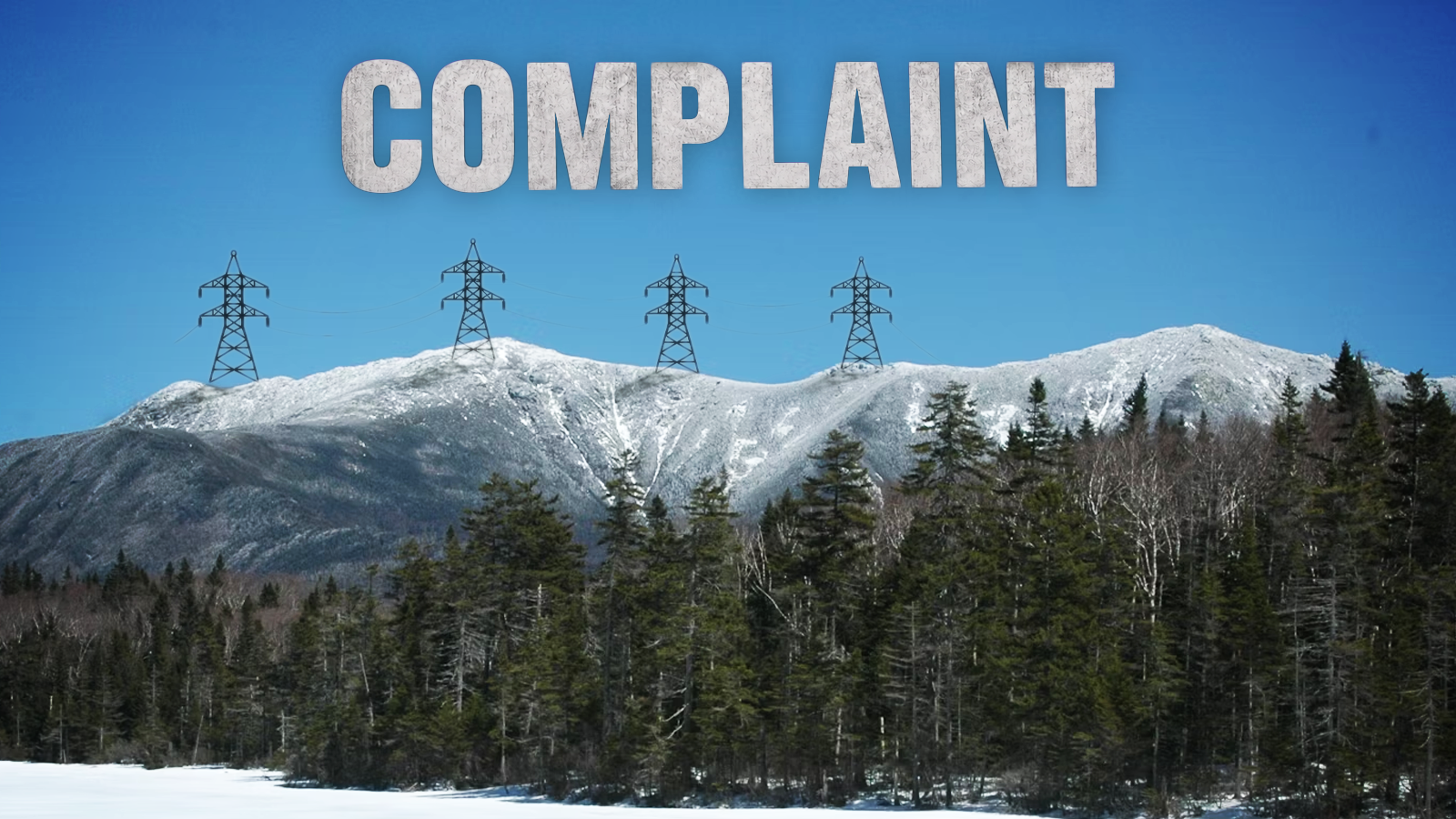
The Maine Office of the Public Advocate (OPA) has filed a complaint with the Federal Energy Regulatory Commission against Eversource Energy Service Company, or Eversource, for allegedly “mischaracterizing” a major transmission line project.
The X-178 transmission project involves reconstructing 49 miles worth of transmission facilities and roughly 580 poles in the White Mountains of northern New Hampshire and is expected to cost New England ratepayers $360 million.
In a statement announcing the complaint, OPA explained that Eversource’s own analysis showed that only 41 of the poles needed to be replaced.
The $360 million price tag will be borne by ratepayers throughout the region proportionate to their respective degree of energy usage.
Because Eversource has categorized the project as an “asset condition project,” wherein “damaged or destroyed” infrastructure is replaced.
Although stakeholder input was sought, Eversource is able to move forward regardless of stakeholder concerns due to this designation.
“By Eversource’s own admission, fewer than 10 percent of the poles involved in this project are in need of replacement,” explained Heather Sanborn, Maine’s Public Advocate.
“Eversource appears to be shoehorning the full rebuild of non-damaged transmission assets into the ‘asset condition project’ designation to avoid the scrutiny other projects qualifying for regional cost allocation must satisfy,” said Sanborn. “That will directly cost Mainers more money because there is no meaningful check on Eversource’s plans.”
Sanborn told Maine Public that ratepayers in Maine can be expected to bear about 10 percent of the project’s total cost, or $36 million.
Public advocates in New Hampshire, Vermont, Rhode Island, and Connecticut also filed complaints seeking to halt the transmission project and require Eversource to submit the proposal for full review by New England’s electric grid operator.
Eversource spokesperson Jamie Ratliff said in a statement shared by Maine Public that more recent information concerning the state of the transmission line indicates that at least 40 percent of the structures need to be replaced.
According to Ratliff, rebuilding the entire line at one time is more efficient and could save $90 million compared to replacing additional components at a later date.
“[This project] is essential to enhancing reliability for customers and making the transmission system more resilient to extreme weather by addressing aging, rapidly deteriorating infrastructure that in many cases was originally built over 50 years ago,” Ratliff said.



Well, well, well. So Sanborn doesn’t want Maine ratepayers to pay for a New Hampshire transmission upgrade arranged by ISO-NE.
How about New Hampshire paying 11 per cent of the $2 billion plus.costs for an ISO-NE transmission upgrade to attach a wind project that will not even be in the ISO -NE network? New Hampshire was the one New England state that wanted nothing to do with the Maine PUC Request for Proposals from all New England states to buy into the Aroostook County boondoggle, yet could be on the hook for over $220 million dollars. Let me not forget to mention Maine will be on the hook for 10 percent of the costs
The real question is one of reliability versus cost, and are we willing to deal with the occasional blackout to avoid doubling our electric bills. I am…..