

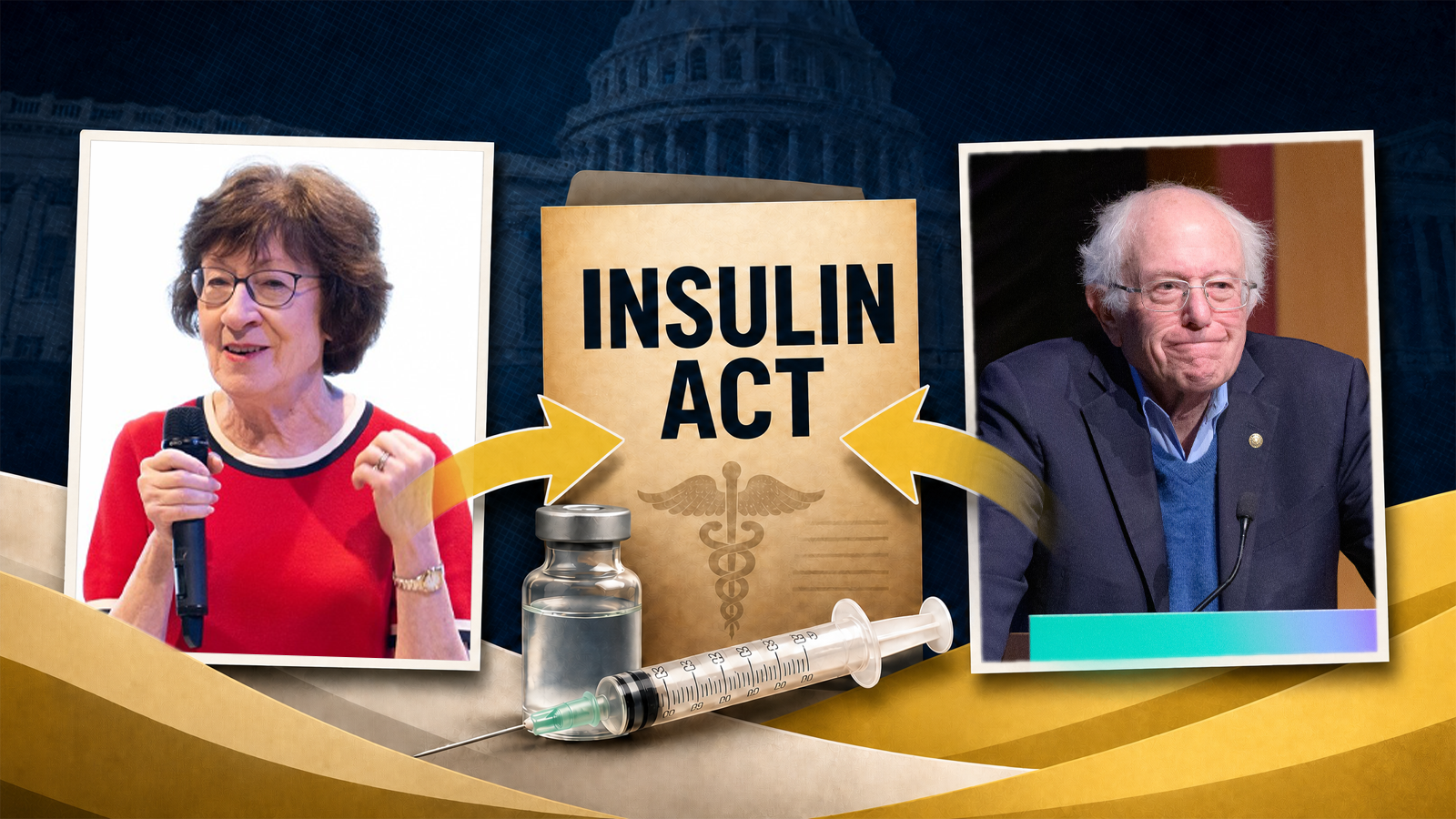
Sen. Susan Collins (R-Maine) celebrated Sen. Bernie Sanders’ (I-Vt.) strong support for her bipartisan push for affordable insulin after the socialist endorsed Graham Platner’s campaign against her.
[RELATED: Collins, King Announce More Than $16 Million for Economic Development Projects Across Maine…]
“I find it extremely interesting that Ranking Member Sanders has proposed nine amendments to this common-sense bill. He has not proposed amendments to any other bill. I think it’s pretty easy to figure out what the motivation is here. I am pleased that the Ranking Member finally supports the insulin bill and has proposed it as an amendment to this bill,” said Sen. Collins.
“I’ve worked, alongside Senator Shaheen, my co-chair of the Senate Diabetes Caucus, on legislation to lower the cost of insulin since 2019. And before that, I held a hearing in the Aging Committee on the cost. That’s what led us to the INSULIN Act, which has many components, including the Ensuring Timely Access to Generics Act. This bill is the one before us now, and passed out of the HELP Committee in 2023,” she added.
In March, Sen. Collins, along with Sens. Jeanne Shaheen (D-N.H.), Raphael Warnock (D-Ga.), and John Kennedy (R-La.) Introduced the INSULIN Act that aimed to cap insulin costs at $35 per month for insured Americans and create a pilot program to ensure the same pricing for the uninsured.
Sen. Sanders introduced the INSULIN Act as an amendment to another bipartisan bill from Collins, the Ensuring Timely Access to Generics Act, also aimed at lowering the costs of prescription medication.
The amendment passed through the Senate Committee on Health, Education, Labor, and Pensions (HELP) 15-8.
“The Committee voted 15-8 to approve Senator Sanders’ amendment, with every Democratic member of the Committee voting in favor—signaling the broad, bipartisan support Senator Collins’ INSULIN Act enjoys in the Senate,” said Collins’ press release.
By highlighting Sanders’ action, Collins is reaffirming her ability to work across the aisle, even with radical senators, when she believes that it benefits Mainers or the American people broadly. It also establishes a contrast between her and Platner, who promises to serve as a radical leftist, with little to no bipartisan compromise.



Ya. Susan Commie Collins has a heritage foundation lifetime conservative score of 24%. The average republican score is 78%.
Are YOU back again …. ? ..I was hoping you fell off the bridge and drowned .
It sounds like another mentally challenged Lot Lizard looking to find a maggot or a house fly to eat because it’s starving to death. Probably should be on a diet anyway.
Nice job Susan, now start voting on the behalf of your constituents, unlike how you voted against the SAVE act.
I took a Republican primary ballot and left your bubble blank.
We’re sick of holding out noses and voting for you.
Change your tune Susan.
I fail to find it encouraging that Collins is voting, along with an avowed Communist, in favor of a socialist bill that provides meds at a reduced cost to people who should be buying their own meds at full cost. Their lower cost will be made up with higher costs paid by the rest of us. Socialism is a wonderful economic model, until you run out of other peoples’ money.