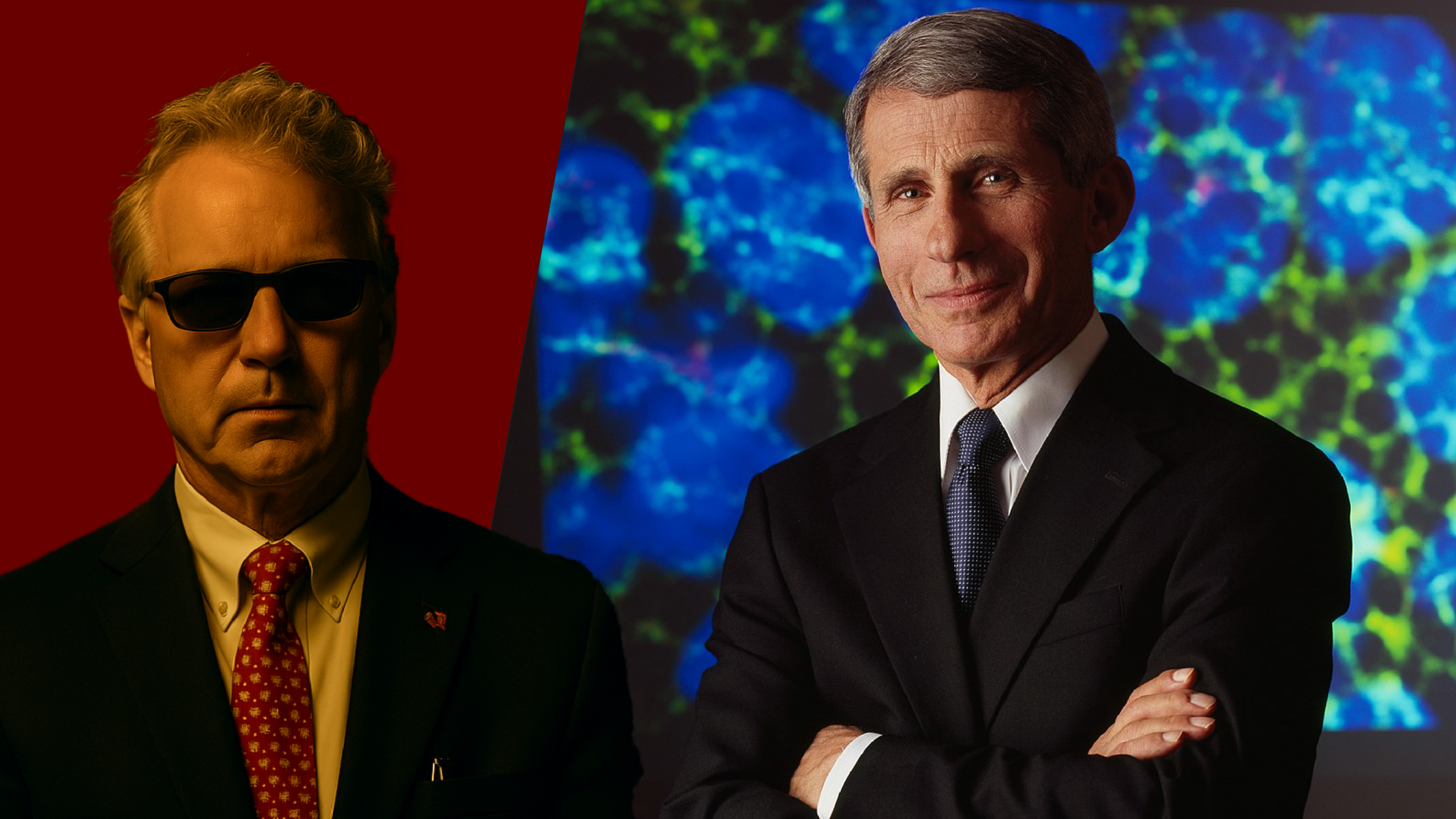
Former White House COVID-19 adviser Dr. Anthony Fauci is returning to Capitol Hill this week under subpoena, where he is expected to face some of the toughest questioning of his public career as Senate investigators revisit the origins of COVID-19, U.S. funding of coronavirus research in China, and whether Congress was misled during the pandemic.
Fauci is scheduled to testify before the Senate Homeland Security and Governmental Affairs Committee on Wednesday, July 29, at 8:30 a.m., after Committee Chairman Sen. Rand Paul (R-Ky.) compelled his appearance. The hearing is expected to focus on the National Institutes of Health’s relationship with EcoHealth Alliance, federal grants connected to the Wuhan Institute of Virology, gain-of-function research, and Fauci’s previous sworn testimony before Congress.
The hearing comes at a pivotal moment, with investigators armed not only with years of emails, grant records, and intelligence reports, but also with Fauci’s personal diaries, portions of which were released by Sen. Paul over the weekend.
The diary entries, written during the height of the pandemic, are expected to become a focal point during the hearing because they provide investigators with Fauci’s own contemporaneous account of major events, his interactions inside the Trump White House, and his thoughts as he became one of the most recognizable public figures in America.
Among the entries released by Paul are passages in which Fauci reflected on the intense media attention surrounding him, writing that the press was “hot and heavy” and describing his “national and international fame” as “explosive.” Other entries discuss invitations for television appearances, including an invitation to appear on Dancing with the Stars, while also describing his concern that media coverage was making him appear to “outshine” then-President Donald Trump. The diaries were released just days before Fauci’s testimony, with Paul arguing they offer a revealing look at Fauci’s priorities during one of the nation’s most consequential public health emergencies.
Whether the diary entries ultimately change lawmakers’ conclusions remains to be seen, but committee members are expected to use them to compare Fauci’s private observations with his public statements and previous congressional testimony.
The hearing follows the April indictment of Dr. David Morens, Fauci’s longtime senior adviser at the National Institute of Allergy and Infectious Diseases (NIAID). Federal prosecutors allege Morens concealed government records, deleted communications, and sought to evade Freedom of Information Act requests involving EcoHealth Alliance and its former president, Peter Daszak. According to the indictment, Morens used personal email accounts while discussing official government business in an effort to avoid public disclosure.
Although Fauci has not been charged with any crime, Morens’ indictment has intensified congressional scrutiny of the agency Fauci led for nearly four decades and renewed questions about transparency surrounding the government’s pandemic response.
Adding another layer of controversy, former President Joe Biden issued Dr. Fauci a sweeping preemptive federal pardon during the final hours of his presidency in January 2025. The unprecedented pardon covered any potential federal offenses Fauci may have committed dating back to January 1, 2014, despite Fauci never having been charged with a crime. The White House said the move was intended to shield current and former public officials from what it described as politically motivated prosecutions. Critics, however, argued the pardon fueled public skepticism by suggesting the administration anticipated future criminal investigations into Fauci’s actions during the COVID-19 pandemic. The pardon does not prevent Congress from subpoenaing Fauci or requiring him to testify under oath.
Republican investigators are also expected to revisit Fauci’s repeated assertions that the NIH did not fund gain-of-function research at the Wuhan Institute of Virology, an issue that has remained one of the most contentious disputes stemming from the pandemic. Fauci has consistently denied misleading Congress and has defended the scientific decisions made by NIH throughout the COVID-19 response.
Since the pandemic began, multiple congressional committees, inspectors general, and federal agencies have examined thousands of pages of emails, grant documents, intelligence assessments, and internal communications. The debate over COVID-19’s origins has also shifted considerably. While the lab leak theory was initially dismissed by many public health officials and media organizations, several U.S. government agencies now assess that a laboratory-related incident is a plausible explanation for the pandemic, though the intelligence community has not reached a unanimous conclusion.
Wednesday’s hearing is expected to be Fauci’s most significant public testimony since leaving government service and could provide lawmakers with their first opportunity to question him using evidence that was unavailable during his previous appearances before Congress, including his own personal diary.
For supporters, Fauci remains the physician who helped steer the nation through an unprecedented public health crisis. For his critics, Wednesday’s hearing represents another opportunity to seek answers about decisions that reshaped American life and continue to generate political, scientific, and legal debate years after the pandemic began.