

By Jon Fetherston
“Harm reduction.”
Sounds good, right?
Who could oppose reducing harm? Who doesn’t want fewer overdose deaths, fewer infectious diseases and more people connected with treatment?
But after years of Maine embracing harm reduction, there is a question our elected officials and public-health establishment should have to answer:
Is this actually working?
Don’t start with a government press release.
Look around.
Walk down Preble Street in Portland and look at people staggering along the sidewalk, seemingly disconnected from the world around them.
Spend time around Kennedy Park in Lewiston, where the debate over discarded needles became serious enough that the City Council considered restrictions on syringe distribution.
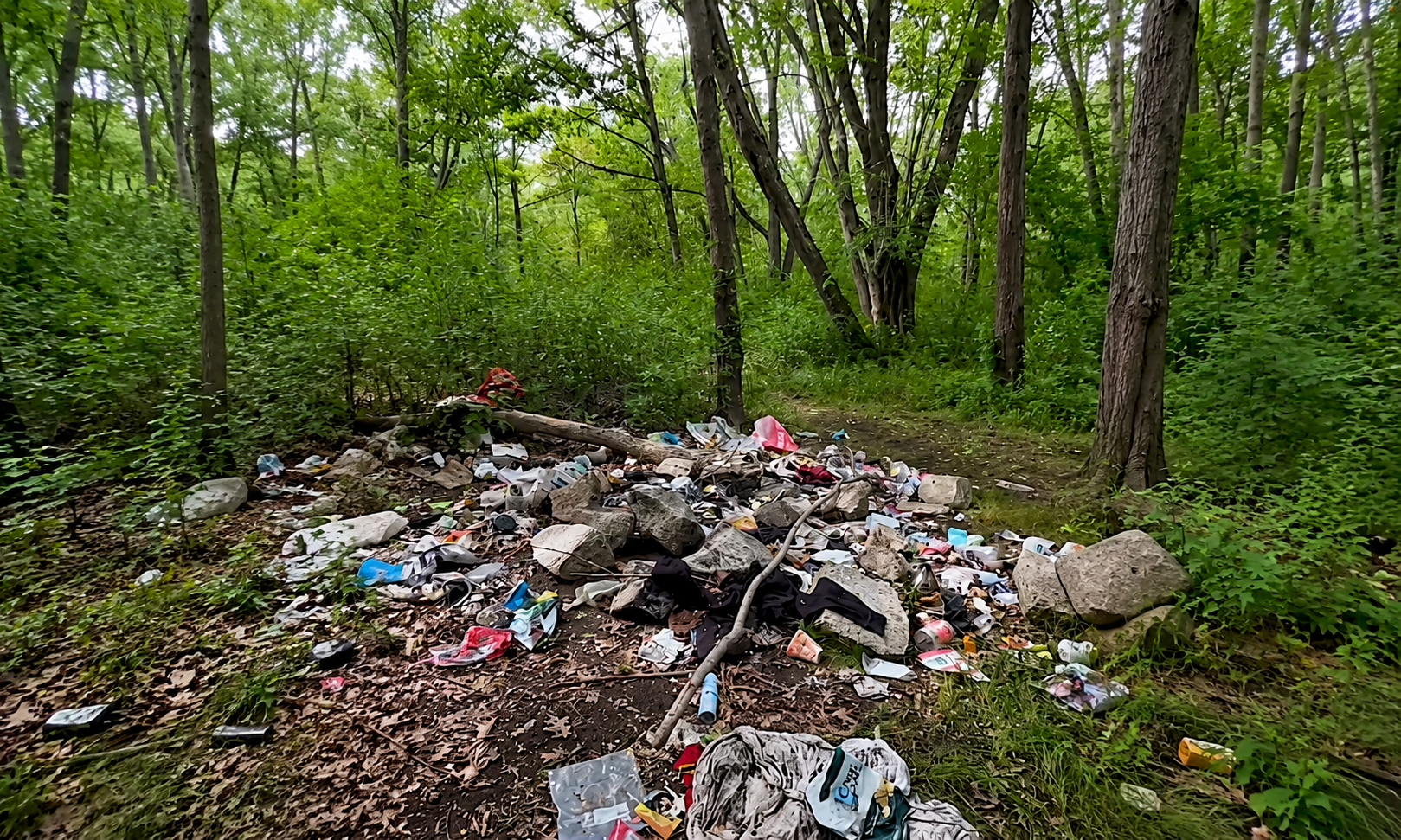
I’ve walked through homeless encampments in Saco and Biddeford myself. I found more than 100 needles.
Not statistics.
Not political rhetoric.
Not something somebody told me.
I saw them.
And then there is Maine Wire reporter Joe Sokol’s reporting from the Bangor area.
In July, Sokol reported on something that should horrify every parent in Maine: a three-year-old child was stuck by a discarded syringe while walking along Brewer’s Riverwalk. Brewer Police Chief Christopher Martin later said first responders searched the area and recovered additional syringes, a crack pipe and a needle cap.
“One person being poked, one kid, is one too many,” Martin said.
He’s right.
So what do your eyes tell you?
Because increasingly, Mainers are being asked to ignore what they can plainly see.
Millions of Needles
The numbers should make people uncomfortable, too.
According to Maine CDC’s own 2025 Syringe Service Program report, certified programs distributed 2,696,610 sterile syringes in a single year.
They collected 2,483,916 used syringes.
That means the statewide programs distributed roughly 212,700 more syringes than they collected in 2025 alone.
Nearly 2.7 million needles handed out in a state with only about 1.4 million residents.
Maine’s syringe programs recorded 26,393 exchange events during the year, averaging 98 syringes per exchange event. They also recorded 11,658 enrolled participants.
Supporters will correctly point out that syringe programs do more than distribute needles. Maine CDC says they provide naloxone, testing supplies and referrals for medical care, substance-use treatment, housing and other services. Programs reported more than 51,000 referrals in 2025.
Fine.
Those services have value.
But Mainers are still entitled to ask what happens to the needles that don’t come back.
Portland has actually demonstrated that demanding better accountability can work. The city’s program distributed more than one million syringes last year and reportedly achieved a return rate approaching 90 percent after offering clients a small financial incentive to bring used syringes back.
If incentives and accountability improve return rates, why shouldn’t accountability be central to the policy statewide?
Why should communities simply accept discarded syringes as collateral damage?
Then Explain Penobscot County
The most troubling numbers may be coming from Penobscot County.
As of Aug. 13, Maine CDC reported 45 confirmed HIV cases connected to the ongoing Penobscot County outbreak.
Forty-one of those people, 91 percent, had injected drugs within a year of diagnosis. Forty-one had experienced homelessness. Forty were also infected with hepatitis C. Before the outbreak, Penobscot County averaged just two new HIV diagnoses annually.
To be clear, those numbers do not prove syringe-service programs caused the outbreak. Maine CDC’s response actually includes expanding syringe services, testing and other harm-reduction efforts.
But they certainly justify hard questions about whether Maine’s broader strategy is achieving its stated objectives.
We are told harm reduction helps prevent infectious disease.
Yet Maine is confronting an extraordinary HIV outbreak overwhelmingly affecting people who inject drugs.
At what point is asking questions no longer considered controversial but necessary?
Yes, Overdose Deaths Are Falling
There is another fact that cannot be ignored.
Maine’s overdose deaths have fallen substantially.
Preliminary state figures show 390 people died from drug overdoses in 2025, down from 490 in 2024, a decline of about 20 percent. Nonfatal overdoses also fell approximately nine percent. It was Maine’s third consecutive year of declining fatal overdoses.
That is unquestionably good news.
Every one of those lives matters.
Naloxone saves lives, and nobody serious about this issue should suggest otherwise.
But even the state’s overdose report notes that changes in the illicit drug supply appear to be an important factor in the national decline. Fentanyl was present in nearly 80 percent of Maine’s fatal overdoses in 2022 but in less than 60 percent in 2025.
So declaring victory for one policy would be just as simplistic as blaming one policy for every needle on a sidewalk.
And this is where Maine’s conversation needs to change.
Keeping someone alive through an overdose must be the beginning of recovery — not the finish line.
When Did This Become Acceptable?
How have we allowed this to become normal?
When did compassion come to mean accepting people living incapacitated on sidewalks?
When did protecting someone from the immediate consequences of addiction become more important than getting that person out of addiction?
There is nothing compassionate about watching somebody deteriorate in public while congratulating ourselves for making that deterioration marginally safer.
There is nothing compassionate about abandoning downtown businesses and neighborhoods to open drug activity.
There is nothing compassionate about telling police officers to repeatedly administer Narcan, respond to the same locations and clean up the consequences while lawmakers increasingly restrict what law enforcement can do about the behavior surrounding addiction.
And there is certainly nothing compassionate about a three-year-old being stuck by a discarded syringe on a public riverwalk.
Is that enough?
What about a child playing in a park?
A dog walking through the grass?
A tourist visiting Maine?
How many needles must residents encounter before politicians stop telling them that questioning the system means they don’t understand harm reduction?
Your Eyes Aren’t Lying
Maine doesn’t need to abandon compassion.
It needs to redefine it.
Naloxone should be readily available because dead people don’t recover.
Clean needles can have a legitimate public-health purpose when they prevent disease and contaminated equipment is properly collected.
But those measures need to be coupled with something much bigger:
Treatment.
Recovery.
Mental-health services.
Mandatory intervention when circumstances legally warrant it.
Consequences for criminal behavior.
Public-order enforcement.
And accountability for every taxpayer-funded program operating in Maine.
We should be measuring success by more than how many syringes were distributed, Narcan kits handed out or contacts made.
How many people entered treatment?
How many completed it?
How many obtained stable housing?
How many returned to work?
How many remained sober?
How many public spaces became safer?
How many people got their lives back?
Those should be the numbers plastered across government reports.
Because the goal cannot simply be helping someone survive another day on the street.
The goal should be helping that person get off the street and reclaim his or her life.
Maine’s leaders should walk through these neighborhoods without handlers, talking points or carefully staged tours.
Walk Preble Street in Portland.
Walk Kennedy Park in Lewiston.
Walk the encampments in Saco and Biddeford.
Walk Bangor.
Walk Brewer’s Riverwalk and imagine your three-year-old stepping on that syringe.
Then tell Mainers everything is working as intended.
Your eyes aren’t lying to you.
Something is terribly wrong.
Maine needs a new plan, and it needs leaders courageous enough to acknowledge that compassion without accountability isn’t compassion at all.
It’s surrender.
And this November, voters should ask every candidate for office one simple question:
Are you willing to keep accepting what we’re seeing, or are you finally willing to change it?

Mills and crew at work making life ” better “.