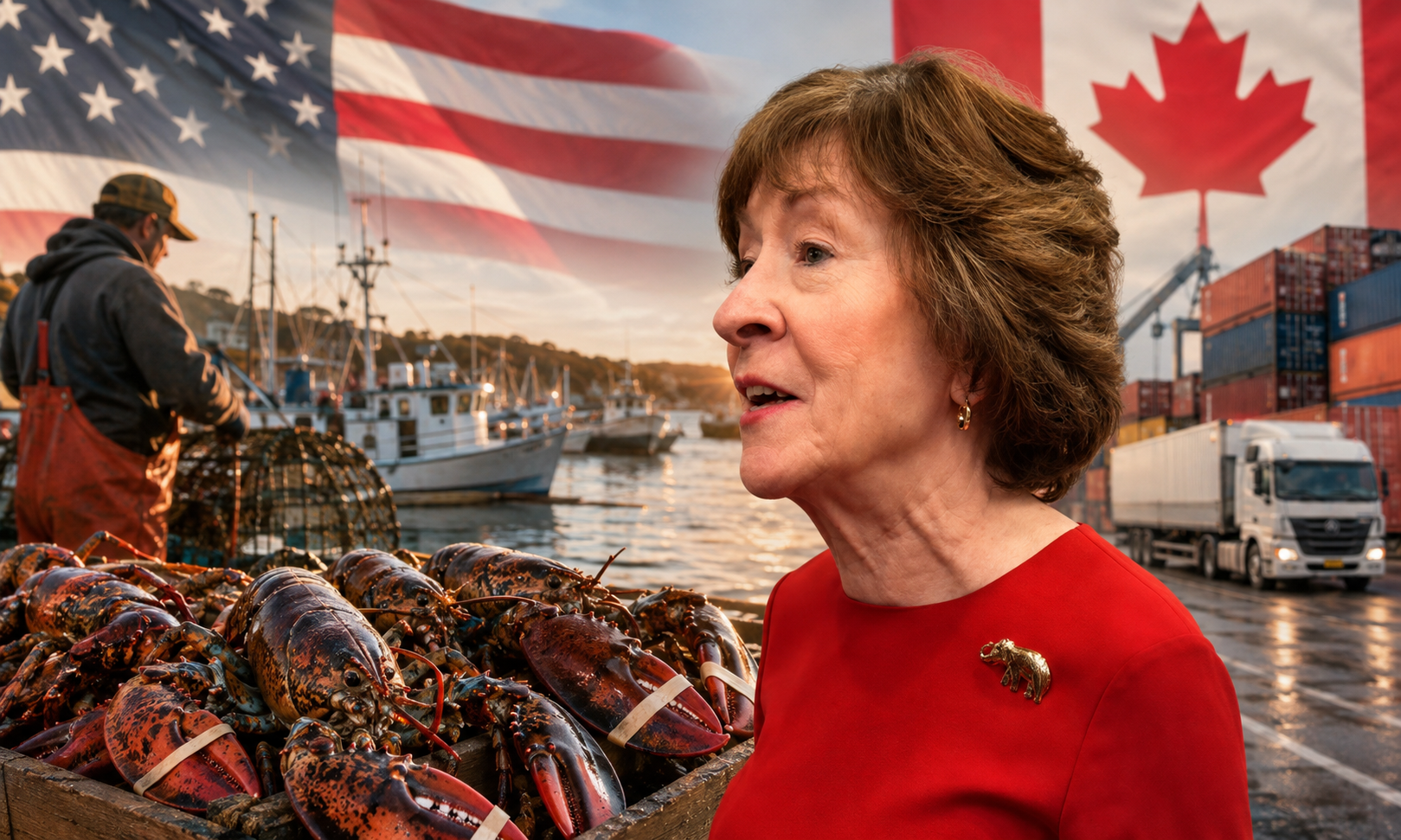
Sen. Susan Collins (R) has praised the Canadian government’s decision to exclude Maine lobster from upcoming retaliatory tariffs on U.S. goods, imposed in response to tariffs President Donald Trump levied earlier this month.
The White House announced last week that the United States would impose a new 50 percent tariff on roughly $20 billion in Canadian products as trade negotiations continued to break down.
Canadian Prime Minister Mark Carney told reporters Saturday that Canada is “at war” with the United States on trade.
While in Brewer Monday, Vice President J.D. Vance defended the tariffs imposed by the U.S., saying that America is “going to fight back against unfair trade practices, whether it’s coming from China or Canada.”
Although Canada’s retaliatory tariffs cover about $20 billion worth of U.S. products, Canada’s finance ministry announced in a post on X that seafood would be removed from the tariff list after initially saying the $300 million trade sector would be affected.
[RELATED: Canada to Exclude Maine Lobster, Seafood from Retaliatory Tariffs on U.S.]
“I very much appreciate Canada’s decision to remove seafood and fish products from its retaliatory tariff list,” said Sen. Collins in a statement Thursday. “These tariffs would have caused tremendous harm to Maine’s lobstermen, disrupting one of their most important markets during the fall fishing season.”
Collins went on to urge the Trump administration to resume trade negotiations with Canada in light of this decision.
“I urge the U.S. to respond to this show of good faith from our Canadian friends by returning to the negotiating table and working to amicably resolve this trade dispute,” she said.
“Canada is not China. Canada is one of our closest allies and largest trading partners. Our economies are inextricably linked, especially in the border regions,” said Collins. “Continuing with these tariffs will harm Maine families, small businesses, municipalities, manufacturers, and farmers.”
Collins also raised concerns about the impact of these tariffs on several other key Maine industries, including forest products, food, cement, and road salt, as well as highlighting their potential downstream effects.
“When I spoke with U.S. Trade Representative Jamieson Greer this week, I stressed the negative impact U.S. tariffs will have on Maine — especially our forest, food, cement, road salt users and producers,” she said. “Tariffs will also stress municipal budgets, as small towns in Maine rely on Canadian road salt and cannot afford to incur extra costs to keep their roads safe in the winter.”