

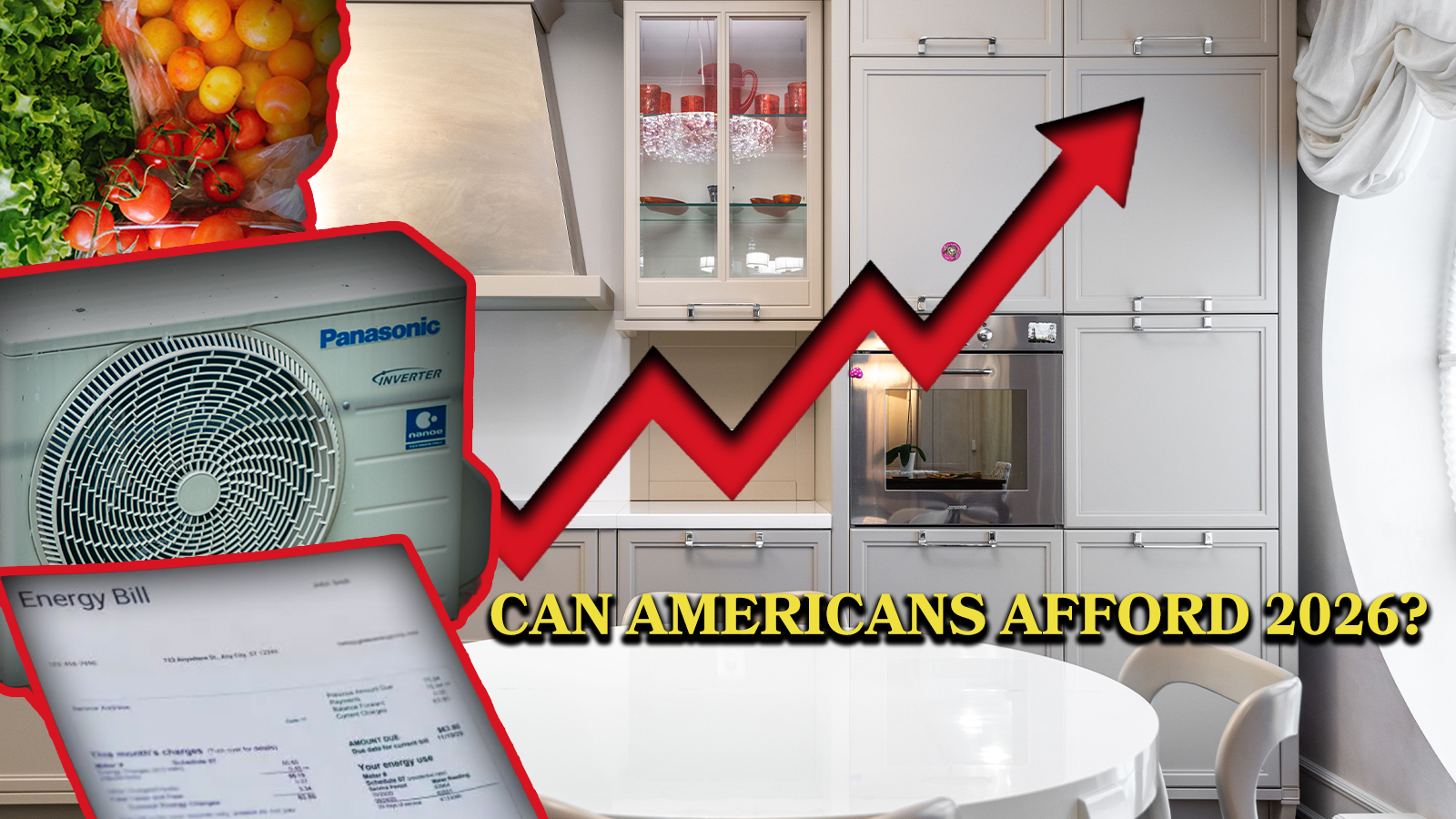
Inflation may no longer dominate the headlines the way it did several years ago, but for millions of Americans, the damage has already been done.
Groceries cost more. Housing remains out of reach for many younger families. Electricity bills are climbing. Gasoline prices have jumped again. And even as politicians in Washington point to slowing inflation as evidence that the economy is stabilizing, voters are increasingly asking a different question:
When will America become affordable again?
That question could loom over nearly every competitive congressional race in November.
A Reuters/Ipsos poll released Aug. 25 found Democrats holding a 36 percent to 28 percent advantage over Republicans when voters were asked which party they trusted more to handle the cost of living. But perhaps the most important number was the 37 percent who chose neither party or said they were unsure.
That means more than one-third of voters remain unconvinced that either political party has figured out how to make everyday life more affordable.
The concern is hardly isolated.
A July Pew Research Center survey found that economic issues were by far the most commonly cited topics voters wanted congressional candidates to address. Cost of living and affordability stood near the top of the list.
For candidates trying to understand the political mood heading into November, there may be a simple explanation: Americans do not live inside government economic reports. They live inside family budgets.
And those budgets remain under pressure.
Inflation Slowed. Prices Did Not Go Back Down.
The distinction between inflation and affordability is crucial.
When the inflation rate declines, prices generally do not return to where they were before the inflationary spike. They simply rise at a slower rate.
The Consumer Price Index stood at 273.003 in July 2021. By July 2026, it had risen to 333.918.
That represents an increase of roughly 22 percent in the overall price level in just five years.
Something that cost a family $100 in the summer of 2021 would now cost approximately $122, based on the broader inflation index.
Food has risen even faster.
The federal food-at-home index climbed approximately 24 percent over that same period.
That helps explain why many Americans remain skeptical when political leaders celebrate declining inflation.
A mother standing at the grocery store checkout does not experience a “lower inflation rate.” She experiences the total on the receipt.
The same is true at the gas pump, when paying the electric bill or when renewing an insurance policy.
In July, overall consumer prices were 3.4 percent higher than a year earlier. Food prices were up approximately 3 percent, shelter costs increased 3.2 percent, electricity rose more than 4 percent and gasoline prices were sharply higher.
For families already absorbing years of price increases, another 3 percent increase is not relief.
It is simply a smaller increase piled on top of all the previous ones.
Paychecks Are Struggling to Keep Up
Affordability becomes an even larger political problem when wages fail to outpace prices.
Average hourly earnings increased roughly 3.2 percent over the past year, while consumer prices increased approximately 3.4 percent.
According to the Bureau of Labor Statistics, real average hourly earnings declined slightly from July 2025 to July 2026.
In other words, even though workers were making more dollars, those dollars were buying slightly less.
That gap between the numbers on a paycheck and what those numbers can actually purchase may be one of the clearest explanations for voter frustration heading into the fall.
Politicians can point to job creation, investment or economic growth.
A voter who has less money left after paying rent, buying groceries and filling the gas tank will likely judge the economy differently.
Housing Has Become a Generational Problem
Nowhere is the affordability crisis more severe than housing.
Mortgage rates remain above 6 percent, while median home prices remain above $400,000 nationally.
For many first-time buyers, the combination has made homeownership extraordinarily difficult.
The problem extends beyond home prices.
Monthly mortgage payments remain high because buyers are financing expensive homes at interest rates substantially above what buyers enjoyed earlier in the decade.
Renters are also under pressure.
Although rents in some major markets have recently declined, they remain significantly higher than before the pandemic.
The result is a financial trap for younger Americans.
Rent is expensive enough to make saving for a down payment difficult.
Buying a home is even more expensive.
That equation has consequences far beyond housing policy.
Home affordability affects marriage, family formation, where people can work, whether they can remain near relatives and whether younger generations believe they can achieve the same economic stability their parents enjoyed.
That makes housing one of the most politically dangerous long-term issues facing both parties.
Energy Could Make the Problem Worse
Energy prices could become an even bigger factor before Election Day.
Gasoline prices were sharply higher in July, while electricity costs continued to climb.
Energy prices matter because they do not stop with a household utility bill.
Higher fuel and electricity costs affect agriculture, manufacturing, trucking, shipping, construction and retail.
Eventually, those costs reach consumers.
That is particularly significant in states like Maine, where families face some of the highest residential energy burdens in the country and where heating costs become increasingly important as Election Day approaches and colder weather returns.
For Maine candidates, affordability may therefore become inseparable from debates over electricity rates, heating oil, housing, property taxes and transportation costs.
https://www.bls.gov/news.release/archives/cpi_08122026.htm?utm_source
Tariffs Present Another Challenge
President Donald Trump’s trade agenda may also become part of the affordability debate.
Tariffs can be used to protect strategically important industries, confront unfair trade practices or strengthen American manufacturing.
But tariffs can also raise prices.
Federal Reserve research examining tariffs imposed in 2025 found measurable increases in consumer prices for heavily tariffed goods, with lower-income households often feeling the effect more severely because they spend a larger percentage of their income on basic necessities.
That does not necessarily mean tariffs are bad policy.
It does mean policymakers should be willing to distinguish between tariffs that serve an important national-security or economic purpose and tariffs that simply increase the cost of everyday consumer goods without delivering a meaningful strategic benefit.
If Republicans want to campaign on affordability, that distinction could become increasingly important.
So What Would Actually Lower the Cost of Living?
There is no single piece of legislation capable of reversing five years of price increases.
But there are several areas where government policy could make a meaningful difference.
Housing may be the best place to begin.
State and local governments could make it easier to build homes by accelerating permitting, reducing unnecessary zoning barriers, expanding infrastructure and encouraging construction of starter homes, apartments and accessory dwelling units.
The country cannot subsidize its way out of a housing shortage.
Eventually, more homes must be built.
Energy is another major opportunity.
Increasing reliable domestic energy production, modernizing the electric grid and streamlining permitting for pipelines, transmission, nuclear power, natural gas and other generation sources could help reduce the cost of producing and transporting nearly everything Americans buy.
Washington could also review tariffs individually rather than treating them as a single ideological question, preserving those tied to national security while reconsidering those that primarily raise consumer prices.
Lawmakers should also be cautious about trying to solve affordability exclusively by sending Americans more government money.
Tax relief can certainly help struggling families.
But injecting more money into an economy without increasing the supply of housing, energy and goods can simply push prices higher.
The longer-term answer is economic growth that allows wages to rise faster than living costs.
That requires investment, productivity, competition, workforce development and policies that make it easier to build and produce things in America.
The Question Candidates Will Have to Answer
For Republicans, Democrats and independents running this fall, affordability may become the issue that cuts through nearly every other political debate.
The question is not whether inflation has improved from its worst levels.
It has.
The question is whether Americans feel better off.
Polling suggests many do not.
For the voter sitting at a kitchen table in Lewiston, Bangor, Portland or Presque Isle, the economy is not measured by a government chart.
It is measured by what is left in the bank account after the mortgage or rent is paid, groceries are purchased, the truck is filled with gas and the electric bill is covered.
That may explain why the 2026 midterms increasingly look less like an election about inflation and more like an election about affordability.
The political party that understands the difference, and can convincingly explain how it intends to fix it, may have the advantage when voters head to the polls in November.



Democrat policies and taxes are a big part of the problem. High taxes, high energy costs, illegals are all part of the problem. The more government gets in the way the worse it will be. You cannot expect the democrats who have caused the problem to fix the problem. Fifty plus years of democrat control and this where we are.
Vote Red or Maine is dead
Check it out, maine is the 5th highest taxed state in the nation. Thank the democrats.