

After months of shootings, juvenile arrests and growing concern over repeat offenders, Lewiston officials are moving toward a more visible, neighborhood-based policing strategy aimed at putting officers directly into some of the areas most affected by the city’s recent violence.
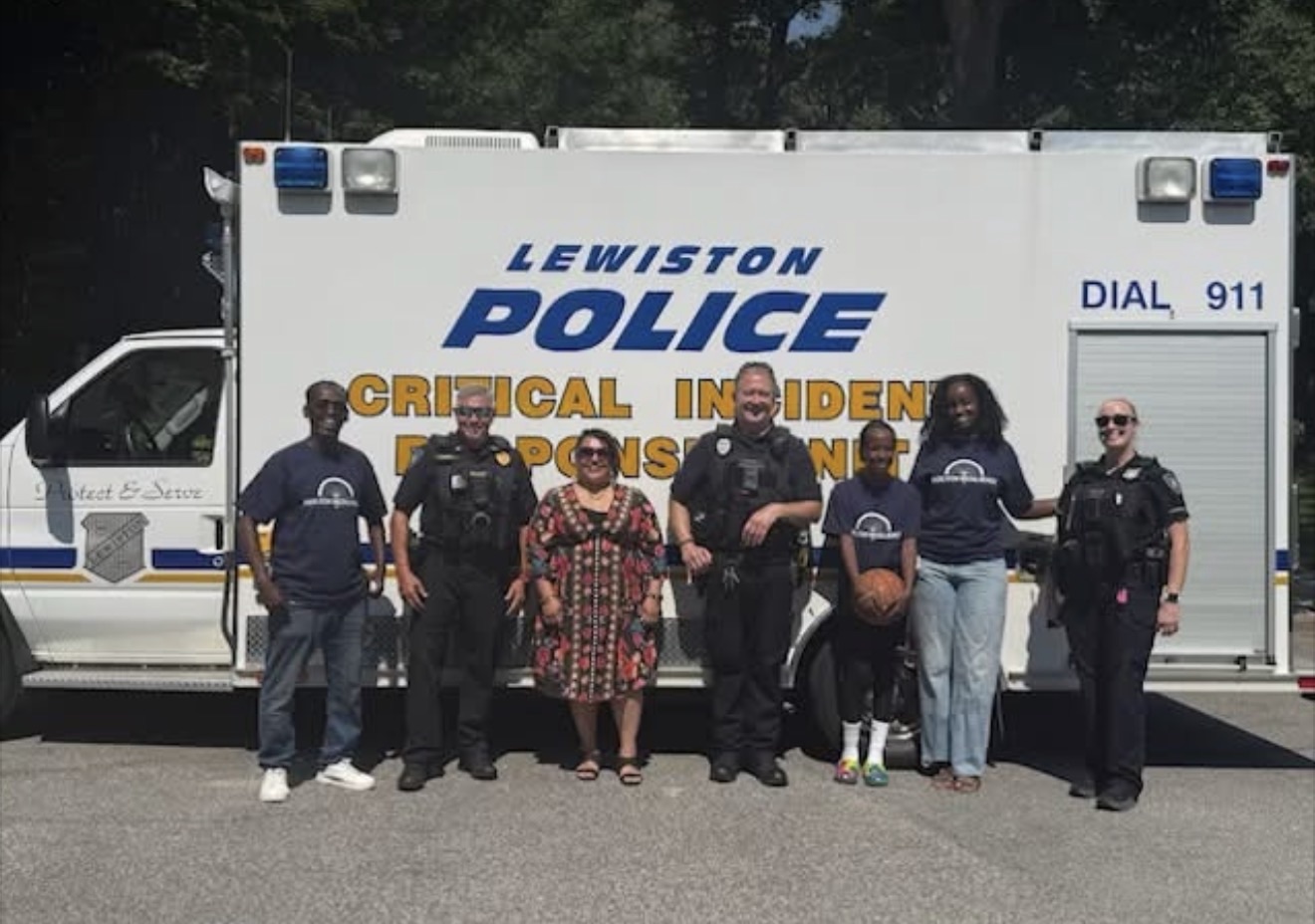
The Lewiston Police Department on Wednesday launched its new C.E.A., Community Engagement and Accountability Initiative, beginning with officers conducting foot patrols and staffing the department’s Mobile Command Unit in the Sunnyside Park neighborhood.
The initiative represents another step in what has become a noticeably more proactive response from City Administrator Bryan Kaenrath and the Lewiston Police Department under Chief Carly Conley as city officials grapple with an extraordinary level of gun violence involving young people.
“Throughout the day, Lewiston Police officers will be in the Sunnyside Park neighborhood conducting foot patrols and staffing our Mobile Command Unit,” the department announced Wednesday.
Police encouraged residents to approach officers, ask questions and meet the people policing their neighborhoods.
The next community engagement operation is scheduled for Friday, Aug. 14, from 3 p.m. until 11 p.m. in the Pine, Bradley and Jefferson streets area, according to the department.
That location is significant. Sections of Lewiston’s downtown neighborhoods have repeatedly been the scene of shootings, reports of gunfire, stolen vehicles and other violent incidents during 2026.
A City Responding to a Surge in Youth Violence
The new effort comes after months in which Lewiston police officers have repeatedly found themselves responding to incidents involving teenagers, firearms and stolen vehicles.
At a June 30 special City Council meeting devoted to youth gun violence, more than 150 residents attended as police, prosecutors, school officials and state corrections representatives discussed the problem. The meeting was called amid what the city itself described as a “sustained increase in gun violence involving youth.”
The numbers presented by police have been stark.
By the end of June, Lewiston had recorded 19 shooting incidents in 2026, with police reporting that 12 involved juveniles and seven involved adults. Thirteen of those 19 cases had been solved, representing a clearance rate of approximately 68 percent.
By early August, the number of shooting incidents had climbed to 20 during the first seven months of the year.
Chief Conley has repeatedly warned that the problem extends beyond individual shootings and includes repeat juvenile offenders, stolen vehicles, firearms and limitations within Maine’s juvenile justice system. In a May interview with The Maine Wire, Conley described the increase in juvenile gun violence as one of the most troubling trends she had encountered during more than two decades with the department.
April was particularly violent. Ten violent incidents were reported over roughly a month, including shootings on Walnut, Pierce, Jefferson and Bartlett streets and arrests involving juveniles accused of assaults and possessing stolen firearms.
The violence has continued into August.
On Monday, police investigated an early-morning shooting before becoming involved later that night in a separate vehicle pursuit that ended with a police cruiser being struck and multiple suspects fleeing.
The incidents have placed additional pressure on a police department already dealing with staffing shortages.
Kaenrath and Police Shift Toward More Visible Enforcement
The C.E.A. initiative follows another major step taken by Kaenrath and the City Council earlier this month.
Councilors unanimously approved $200,000 in additional police overtime funding designed to increase the number of officers on the streets and make patrol patterns less predictable.
Kaenrath said the strategy was intended to increase police visibility while allowing the department greater flexibility in deciding where and when officers are deployed.
The funding came as the department faced a significant officer shortage while simultaneously trying to respond to the city’s youth gun violence problem.
The city has also established a Public Safety Committee specifically tasked with examining gun violence. The committee includes Conley, Fire Chief Mark Caron, city officials and community representatives and is charged with reviewing crime trends, gathering public input and recommending strategies to the mayor and City Council.
Taken together, the overtime funding, mobile command presence, foot patrols and C.E.A. initiative signal a shift toward putting more officers where residents can see and interact with them rather than relying exclusively on traditional vehicle patrols and responding after crimes occur.
For Conley and Kaenrath, the challenge is now turning those initiatives into measurable reductions in shootings and juvenile crime.
Community Policing Meets Accountability
The name of the new program itself, Community Engagement and Accountability, highlights the two-pronged approach police appear to be taking.
The department is attempting to strengthen relationships with residents while maintaining an enforcement presence in neighborhoods experiencing persistent crime.
Lewiston already operates several community policing programs intended to build relationships between residents and officers, including its Citizens Police Academy and other community outreach efforts. The department says those programs are designed to build trust while giving residents a better understanding of police operations.
But the C.E.A. initiative arrives under considerably different circumstances.
It is being rolled out while Lewiston is confronting one of its most difficult stretches of juvenile gun violence in recent memory, and after residents have repeatedly demanded that city government do more.
Wednesday’s deployment at Sunnyside Park offered the first glimpse of what that response will look like on the street: officers outside their cruisers, a mobile police command center positioned in the neighborhood and residents being encouraged to interact directly with law enforcement.
Friday’s deployment into the Pine, Bradley and Jefferson streets neighborhood will put that strategy into another section of the city that has experienced the consequences of Lewiston’s ongoing public safety problems.
Whether the effort succeeds will ultimately be measured by more than community meetings and police visibility.
After 20 shootings in seven months, repeated juvenile arrests and continued concern about offenders cycling back onto Lewiston’s streets, residents will be watching to see whether the city’s increasingly aggressive public safety response translates into fewer guns being fired and safer neighborhoods.




Lack of parenting, hardly any consequences, tribal mentality are the real issues, imo.
youth = blacks
Maybe Bobby Charles can station some Maine National Guard troops in Lewiston .
It certainly worked in Washington DC .
It certainly worked in Memphis TN
It certainly will work in Lewiston ME
If the Somalis don’t like it they are welcome to go back to where they came from .
I can’t imagine anyone “ but them “ being opposed to the idea .
“After 20 shootings in seven months, repeated juvenile arrests and continued concern about offenders cycling back onto Lewiston’s streets, ” Well, that would seem to be the problem right there. LOCK EM UP!
Louisewoods
I can’t imagine anyone “ but them “ being opposed to the idea .
*****************************************************************************************************
I don’t believe that for one second. I know you can imagine a whole gaggle of moonbats weeping, pulling their hair, rending cloths, throwing ashes, and singing “We Shall Overcome” at just the thought of it. 😉
Let’s cut the BS. This is not going to work if you arrest these Somalis and then release them back on the streets. Arrest them, throw them in jail, set bail high and if they don’t make bail hold them over for trial. These pieces of human excrement are not going to show their faces while the cops are around and posting the times the cops are there is defeating the purpose. You need 24 by 7 operations!!! Bring in the National Guard and ICE and this will end!! Oh and for the residents of Lewiston why is your City Administrator doing the work when you have a mayor? Get rid of the mayor!!!! Seriously Lewiston stupid is a choice, make better choices or this will continue and get worse.
Yea, that’s gonna make a difference
Looks like a SNL skit line-up.
NOTHING diffuses a neighborhood shooting situation better than a kid carrying a basketball!
*sarcasm*