


Another adult autism MaineCare company was terminated in March — on the same day Gov. Janet Mills attacked Dr. Mehmet Oz’s Medicaid fraud crackdown as a political stunt — according to records released Friday by the Maine Department of Health and Human Services.
Like Paradise Residential Services, Beyond Residential Care (BRC) was run by an African migrant and operated with the massive MaineCare Section 21 program that is designed to provide 24/7 residential care for disabled Mainers.
Both companies are now accused of Medicaid fraud.
Unlike Paradise, BRC was run by an alleged attorney who had his law license suspended following a Maine Board of Overseers of the Bar complaint for misconduct.
The complaint alleges that BRC CEO Felix R. Hagenimana, a Rwandan immigrant who has claimed to have entered the state in 2011, breached ethical requirements via his immigration law firm, Hagenimana Law, PLLC, and Asylum Services, LLC, a Bath-based asylum processing business co-owned with Donald Lader.
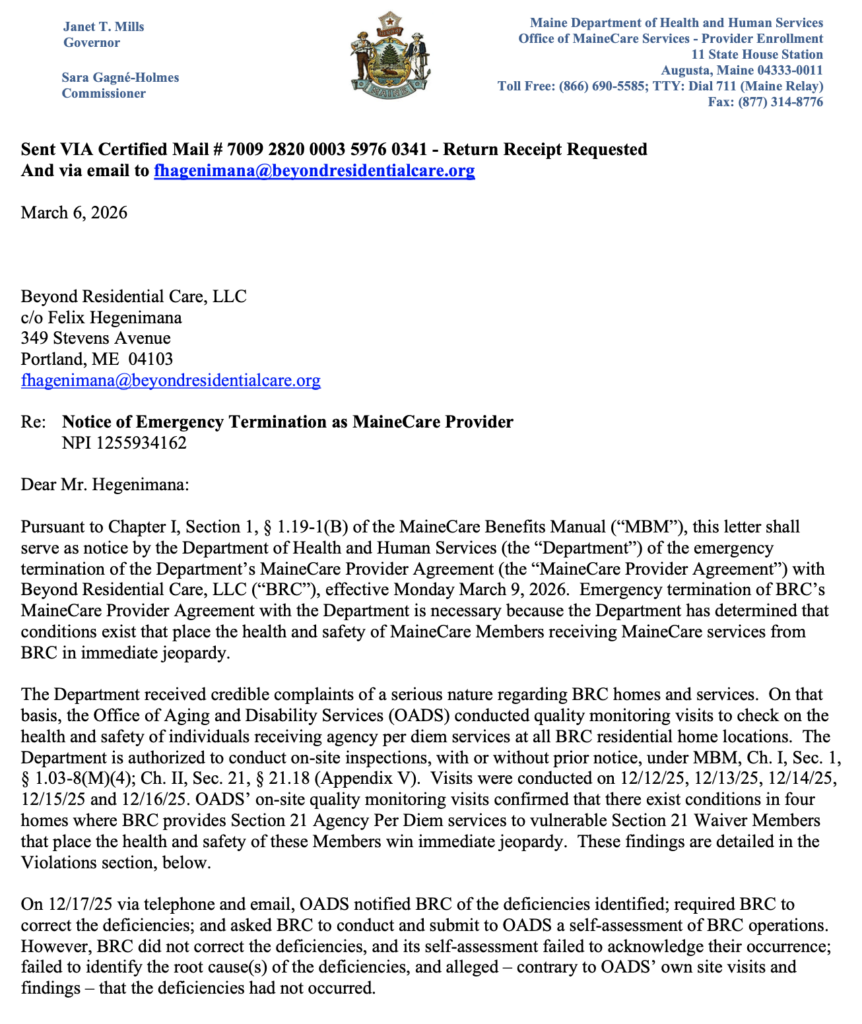
The Bar complaint arrived months after DHHS pulled the plug on Hagenimana’s $13.8 million residential autism business, citing inspections that found BRC’s disabled residents were neglected and their rights were abused.
Hagenimana, the letter asserts, “shuffled Members between settings to meet the needs of the Provider, not the Members’, and not in conformance with Members’ needs and choices as reflected in a Person-Centered Service Plan.”
At the same time, Hagenimana allegedly took on nearly 1,500 asylum cases over a five-year period, a period that coincided with the social services crises in Portland, South Portland, and other major cities, as Maine struggled to cope with the sudden influx of non-English speaking, jobless and homeless migrants from Central Africa.
The high-volume immigration racket involved charging migrants $1,000 to $7,000 to submit asylum claims on their behalf — claims that, in some instances, were allegedly written using large-language models like ChatGPT.
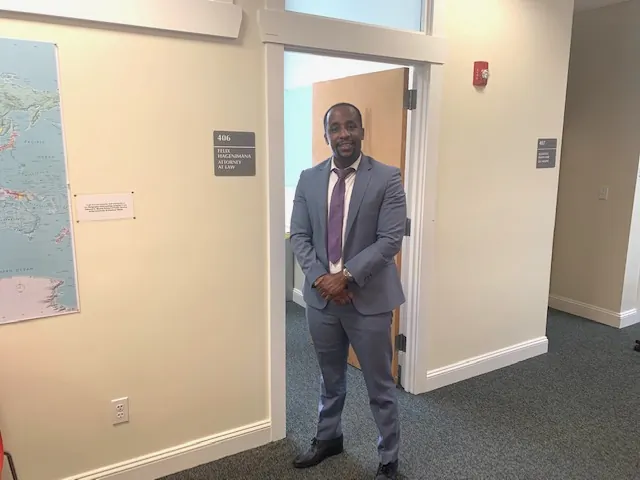
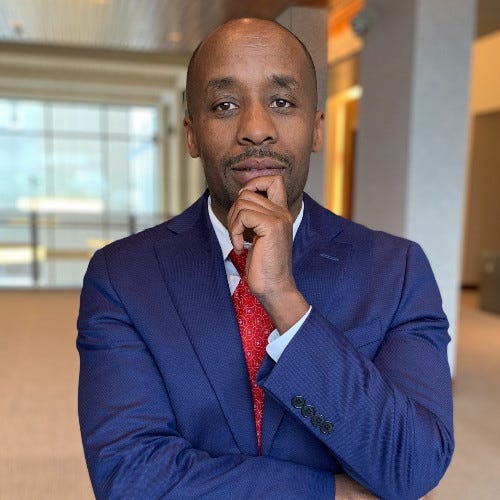
It’s not clear from the complaint how much Hagenimana’s partners at Asylum Services, LLC, were involved in the migrant pay-for-claim racket.
Lader, described as a co-owner of Hagenimana’s asylum business, says in his LinkedIn profile that “[a]pplying for asylum is very complicated.”
“My goal is to help people complete this process with an affordable solution,” says Lader.

Jamie Nohr, one of the immigration attorneys who worked at Hagenimana and Lader’s Asylum Services LLC, brags in her LinkedIn profile that she “used AI in law practice” — a practice that appears exclusively devoted to helping migrants file defensive asylum claims.
Unlike “affirmative” asylum claims, defensive asylum claims involve non-citizens who have entered the country illegally and only filed asylum claims after later encountering immigration authorities. Defensive asylum claims involve only instances where an illegal alien is already involved in removal proceedings.
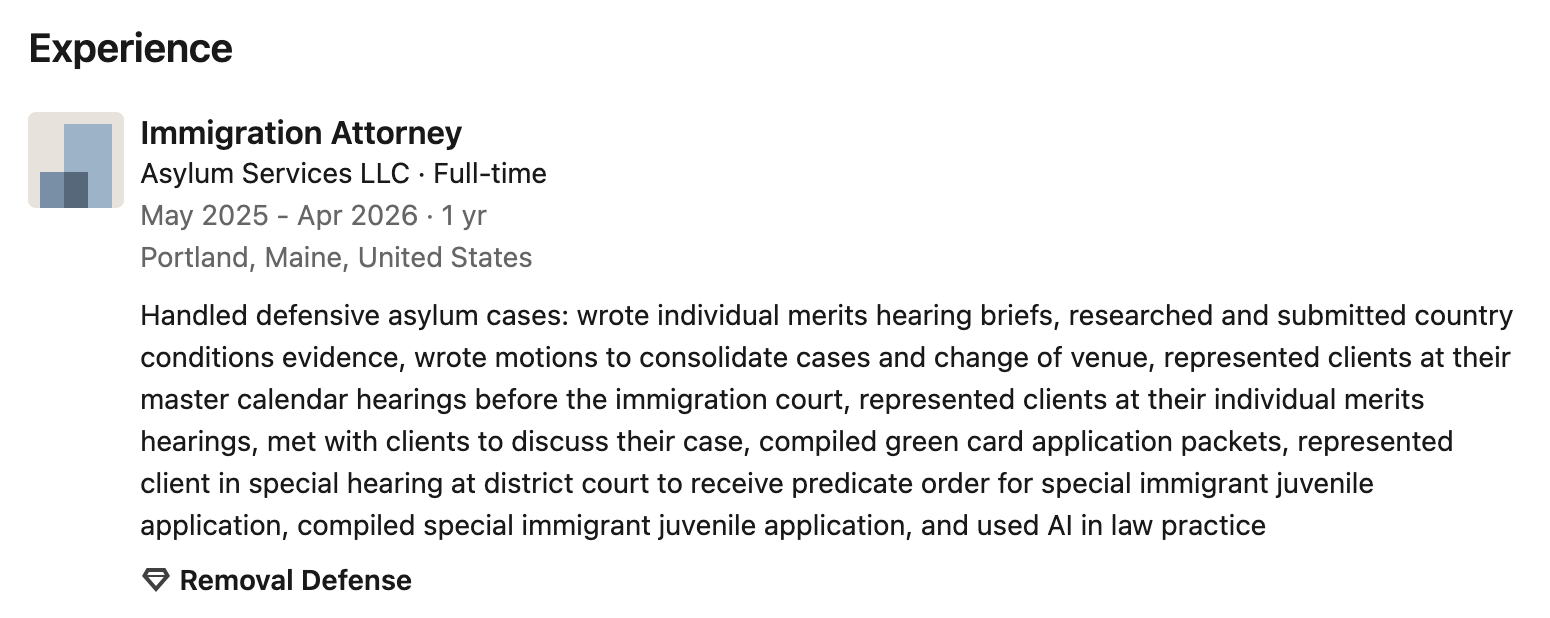
While running the alleged asylum racket, Hagenimana was a distinguished member of Maine’s liberal elite class, with a spot on the Board of Directors of the ACLU of Maine, the non-profit “Hope Acts,” and a leadership role with the Rwandan Diaspora Community Association of Maine. He has also worked as an attorney for the Immigrant Legal Advocacy Project (ILAP), a publicly funded pro-open borders NGO based in Portland.
On July 1, the Maine Supreme Judicial Court immediately suspended Hagenimana from the practice of law, finding that evidence submitted by the Maine Board of Overseers of the Bar supported “exigent circumstances,” multiple violations of the Maine Rules of Professional Conduct, and an “imminent threat to clients, the public, and to the administration of justice.” A separate receiver order appointed two immigration attorneys and the Board as receivers over Hagenimana’s law practice, directing them to secure client files, law office accounts, email, cloud storage, client funds, computer devices and case-management records for both businesses.
That order required Hagenimana and Asylum Services to provide a full list of active clients, including Alien Registration or USCIS numbers, case status, court dates, deadlines, interpreter needs and other immigration-case information.
Hagenimana has disputed the allegations, according to news reports.
Making Medicaid Millions on Adults with Autism
On the MaineCare side of Hagenimana’s business portfolio, the numbers are equally stunning: the alleged fraudster earned $13.8 million from 2022 to 2025, according to Medicaid records obtained by The Robinson Report, charging $33,905 per month, per resident.
Like Paradise, run by Burundian migrants Jocelyne Ininahazwe and Juste Arakaza, Hagenimana’s MaineCare billing placed him in the 95th percentile for all autism agencies in the country providing similar services for autistic adults.
Despite raking in millions of dollars, Hagenimana’s autism group homes were filthy and posed an immediate threat to the disabled adults under BRC’s care, according to state inspectors.
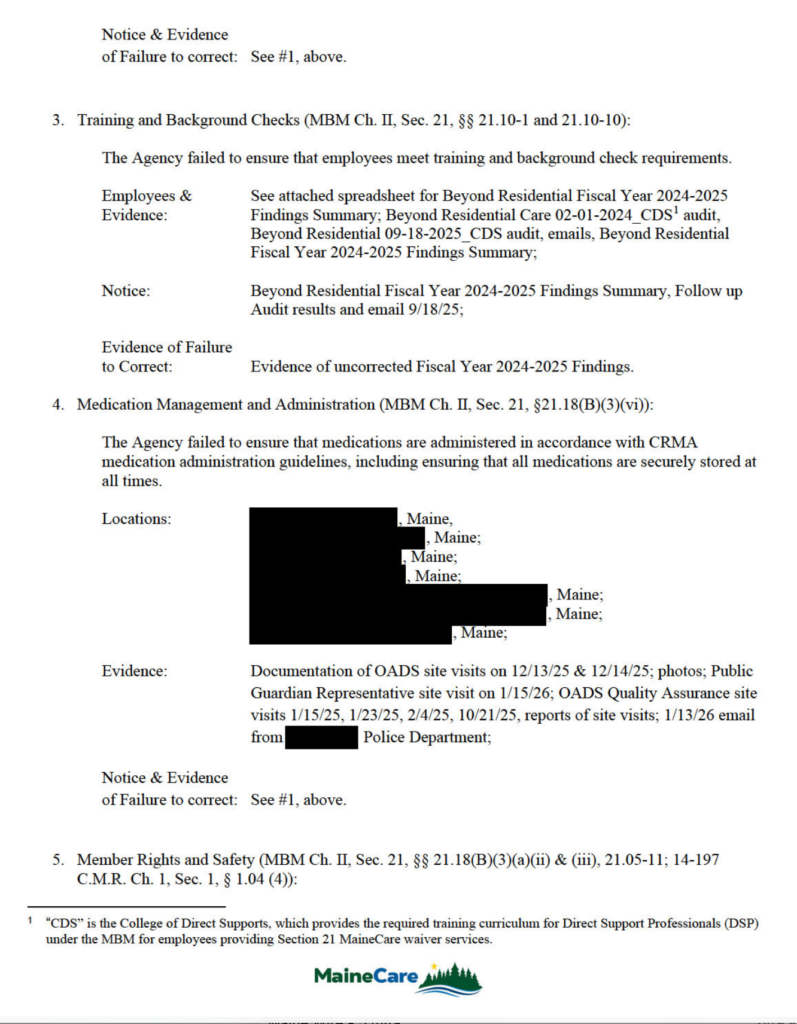
Taxpayer-funding for BRC was terminated after DHHS found disabled Mainers living in homes with uncleaned dog feces and urine, urine-soaked linens, bug infestation, inadequate food, unsecured medication, missing staff, unreported incidents, unauthorized service locations and billing without required prior authorization, according to the March 6, 2026 letter.
Like Paradise Residential Services, also suspended on March 6, state and local records tie BRC to adults with intellectual disabilities and autism spectrum disorder receiving Section 21 MaineCare waiver services. Hagenimana was running both his now-suspended migrant hustle and his MaineCare scheme out of his Stevens Ave. home in Portland, purchased in 2020.
The DHHS notice says the Office of Aging and Disability Services (OADS) conducted quality-monitoring visits at BRC residential homes on Dec. 12, 13, 14, 15 and 16, 2025, after receiving credible complaints of a serious nature.
Those visits, according to DHHS, confirmed immediate-jeopardy conditions in four homes where BRC provided Section 21 agency per diem services to vulnerable waiver members.
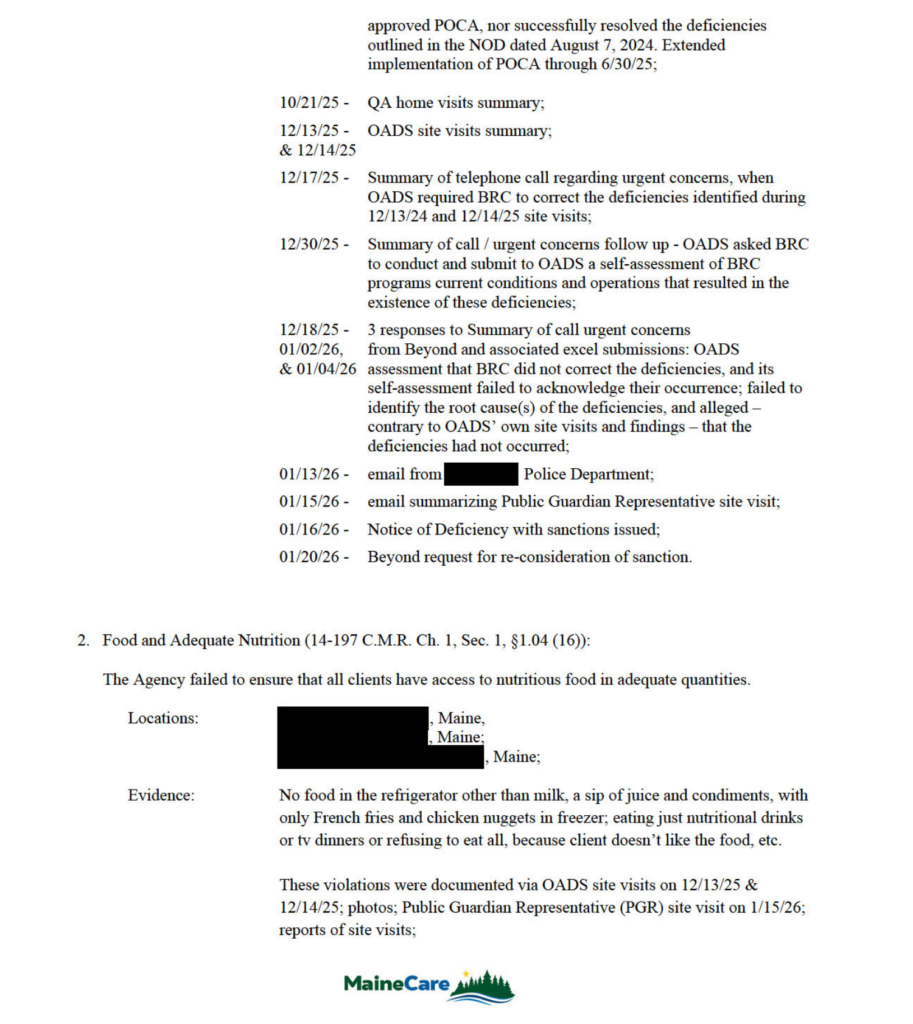
The state said it had already warned the company. On Dec. 17, 2025, OADS notified BRC of deficiencies, required corrections and asked the agency to submit a self-assessment.
BRC’s response, according to DHHS, “failed to acknowledge” the deficiencies, failed to identify root causes and alleged, contrary to OADS site visits, that the deficiencies had not occurred.
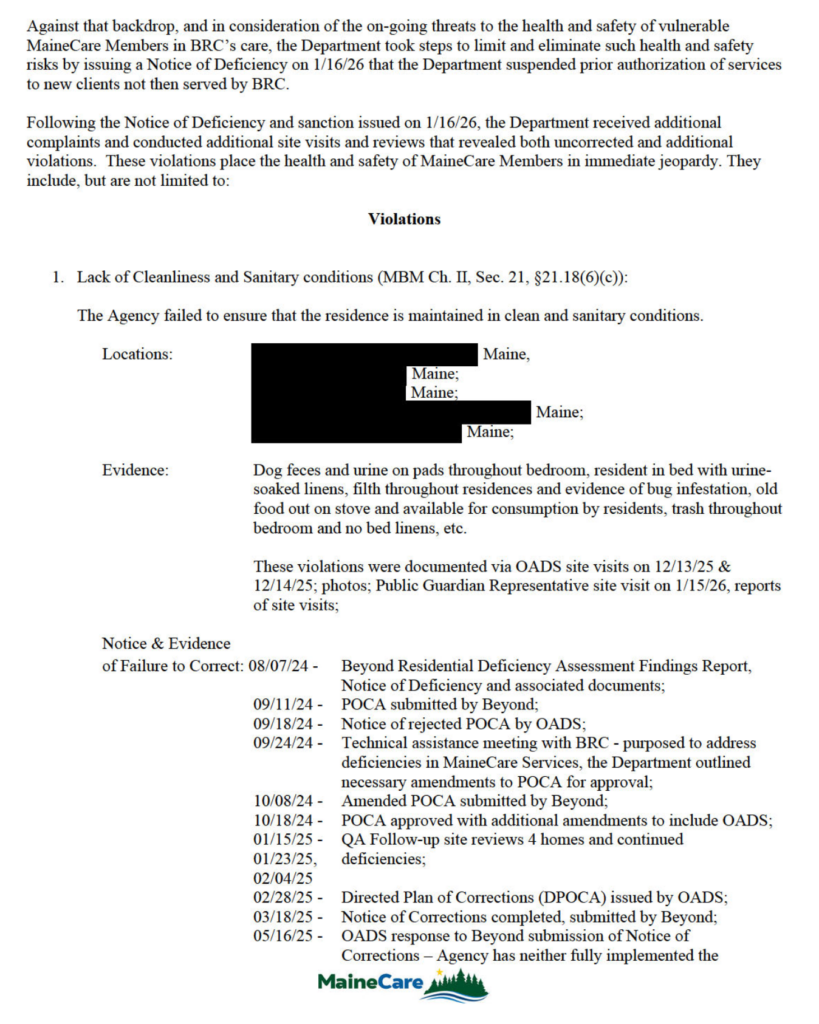
On Jan. 16, 2026, the state issued a Notice of Deficiency and suspended prior authorization of services to new clients.
Then, DHHS said, more complaints came in. Additional site visits and reviews found both uncorrected and additional violations.
Notably, the state’s increased vigilance over the MaineCare Section 21 homes came as The Maine Wire began publishing viral videos of the deplorable conditions disabled residents were living in at homes across Maine.
The state’s violation list reads like a catalog of how not to care for disabled people.
Under “Lack of Cleanliness and Sanitary conditions,” DHHS cited “dog feces and urine on pads throughout bedroom,” a resident in bed with “urine-soaked linens,” filth throughout residences, bug infestation, old food left out on the stove, trash in a bedroom and no bed linens.
Under food and nutrition, the state said BRC failed to ensure clients had access to nutritious food in adequate quantities. That’s a particularly galling finding considering that BRC was getting $33k per client — AND each client also had access to Food Stamp benefits via an EBT card.
Evidence cited by DHHS included refrigerators with no food other than milk, a sip of juice and condiments, freezers stocked only with French fries and chicken nuggets, and residents surviving on nutritional drinks or TV dinners or refusing to eat because BRC staff would not accommodate food preferences.
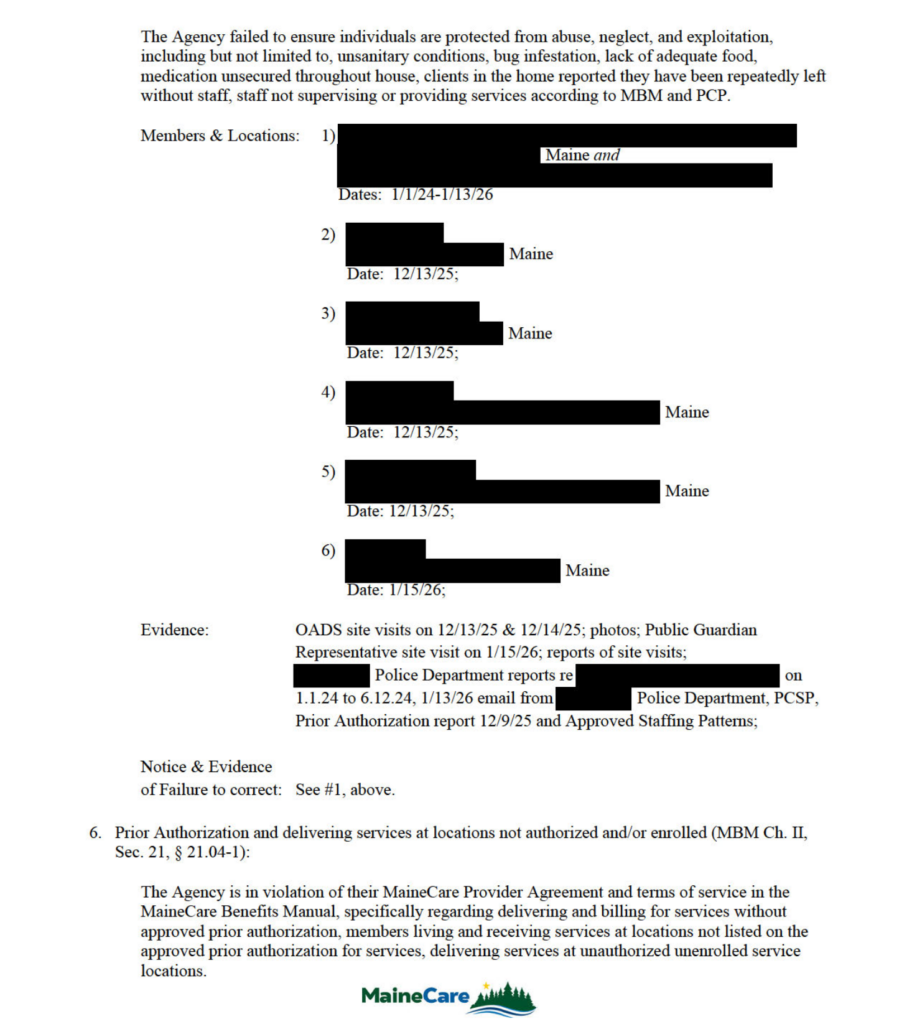
Under member rights and safety, DHHS said BRC failed to protect individuals from abuse, neglect and exploitation, including unsanitary conditions, bug infestation, lack of adequate food, medication unsecured throughout a house, residents repeatedly left without staff and staff not supervising or providing services according to MaineCare rules and person-centered plans.
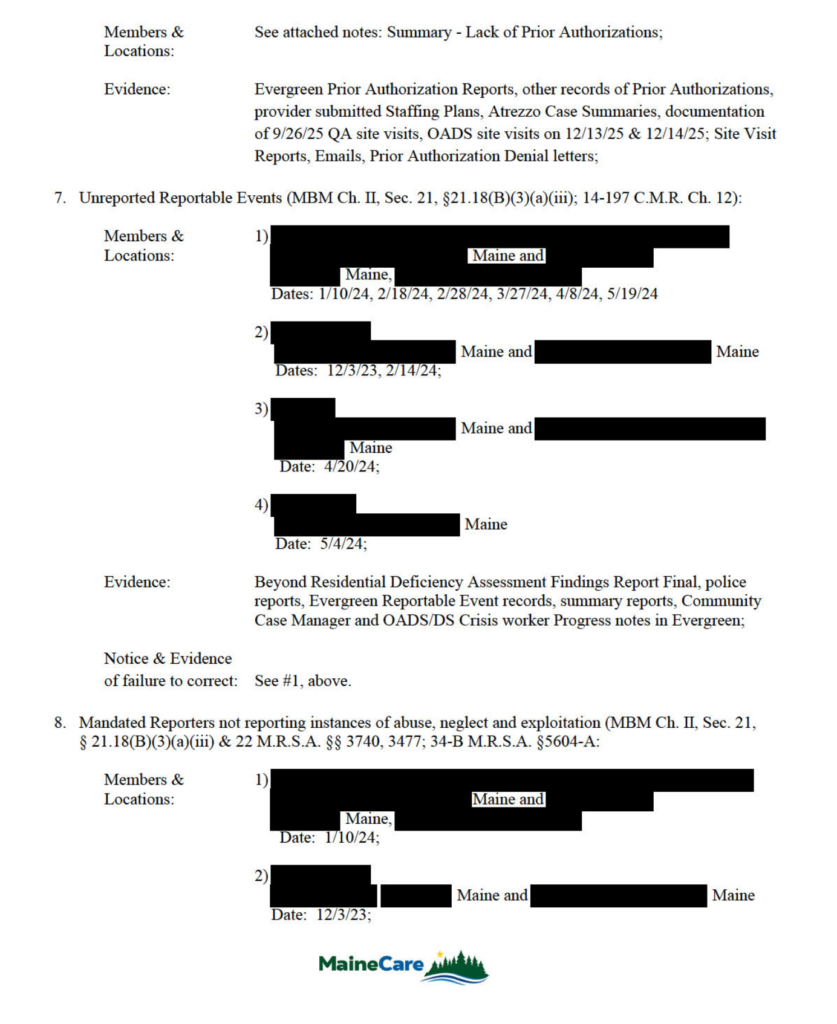
The state also cited training and background-check failures, medication-management failures, unreported reportable events, mandated-reporter failures and a long history of failing to correct prior deficiencies.
The DHHS notice paints a picture of a disorganized and dysfunctional autism business that was making up operating procedures as it went along, stuffing disabled clients wherever it could and sending invoices to the state — invoices that were automatically paid until earlier this year.
DHHS said BRC violated its MaineCare provider agreement by delivering and billing for services without approved prior authorization, serving members at locations not listed on approved authorizations and operating at unauthorized or unenrolled service locations.
The attachment to the notice says the provider “shuffled Members between settings to meet the needs of the Provider, not the Members’, and not in conformance with Members’ needs and choices as reflected in a Person-Centered Service Plan.”
In plain English: the state accused BRC of moving disabled Mainers around to suit the company, not the disabled Mainers, and then billing Medicaid in ways the state had not authorized.
Nearly all of the allegations DHHS levels in the letter — billing for work provided by uncertified staff, billing for non-approved services, billing for unenrolled locations — amount to Medicaid fraud.
In the case of Paradise Residential Services, two former employees and former clients have said the autism business almost exclusively hired direct care workers who were non-English speaking migrants.
The Robinson Report’s March investigation into Paradise Residential Services showed how one autism provider allegedly built a Medicaid-funded operation around migrant labor.
Former Paradise COO Appolonnia Sheppard said Paradise hired almost exclusively from the population of “New Mainers,” the Central African asylum seekers who arrived in the Portland area in large waves beginning in 2019 and again in 2022 — the same population served by Hagenimana’s legal businesses.
“They promised a lady they could do sign language. This poor lady couldn’t communicate with anyone. But she had all staff that not only couldn’t speak sign language — they can’t even speak English,” Sheppard said.
Former Paradise training director Carol Waig put it more bluntly.
“Paradise Residential would not hire anybody unless they came from Burundi or Rwanda,” Waig said. “For the most part. They may have had a couple [U.S. citizens] in there, but they were accidents.”
Waig and Sheppard also said Paradise failed to conduct proper background checks, failed to complete I-9 employment-eligibility paperwork and put untrained employees into homes where disabled Mainers required highly regulated care.
It’s unclear whether Hagenimana, an immigration lawyer accused of misconduct regarding 1,500 asylum claims, also leveraged his access to migrant populations to staff his autism slums.
An Extreme Medicaid Outlier
The state and federal payment records show Hagenimana’s Medicaid business was extremely profitable from the very beginning. BRC received at least $13.8 million in MaineCare payments from 2022 through 2025.
State payments grew from $1.08 million in 2022 to $3.32 million in 2023, $4.19 million in 2024 and $5.19 million in 2025.
The federal records available for BRC are narrower, but they show the scale of the business model in plain English. In the four months where BRC appears in the 2024 federal file for the group home billing code, the company drew $1.63 million for 48 client-months of care.
That works out to $33,905.50 per client per month.
At that pace, a single house with two clients would generate $813,732 a year — roughly twice the $405,000 median sale price for a single-family home in Maine in 2025, according to the Maine Association of Realtors.
BRC’s billing rate also sits above the national 95th percentile for the same type of group home, raising questions as to why it took DHHS four years to clamp down on an autism business out-billing 95 percent of its peers.
The autism profiteering BRC is accused of fits a model The Robinson Report’s long-running investigation into MaineCare fraud has repeatedly found: rapidly growing Section 21 providers, a small number of disabled clients, very large MaineCare payments, and state oversight that seems to arrive only after the smell of burning paperwork reaches Augusta.
It also landed as MaineCare was already buckling.
In January 2025, Gov. Mills sought $118 million in additional state funds to close a MaineCare shortfall for the fiscal year, warning that the money was needed to draw down additional federal funds and avoid payment disruptions.
Rather than cracking down on MaineCare fraud, Democratic lawmakers passed a series of tax increases to keep the money flowing into businesses like Paradise and BRC.



How quickly the takers have outnumbered the makers in the state of Maine.Deadbeats-Fraudsters-Pork Belliers are running this state into the ground
Jail them all after there sentence is over deport them all No Excuses. Gone
Another dark colored one from away , who needs to be horse whipped in Monument Square on a Sunday, with food trucks and corn hole gamers in attendance .
We need to put these “ New Mainers “ in State Prison for a VERY long time .
Send Janet Mills with them , it was HER administration that sat by while this was happening .
Instead she spends her time going to “ Blueberry Day “ with fellow MAGA haters .
It’s looking like the walls maybe are finally closing in on Mills illegal migrants. The Feds should take a real close look at all the so called naturalized citizens to while Mills has been in charge. Every asylum claim could have been AI generated to!
There’s most likely more dirt that hasn’t come to the surface yet. I hope it all gets exposed sooner than later!
Janet likes to wear pantsuits, I wonder if orange will be her new color
You know what amazes me the most about importing all these Africans the most? Besides no prior paperwork or background checks on them, before President Trump became President again. They all boarder the DRC if the Mills administration tries to bring any more new people from Africa she will be seriously flirting with Ebola. Probably already has!
The countries boarding DRC are
Angola
Zambia
Rwanda
Burundi
Uganda
South Sudan
Central African Congo
Equatorial Guyana
Somalia being further east of Uganda
Interesting little tid bit I thought I would toss out there.
So glad that President Trump has put restrictions on people returning or trying to enter from the affected areas into the United States.
It’s not the color of there skin either it’s there place of origin.
From cdc – KEY POINTS
CDC is responding to an outbreak of Ebola disease caused by Bundibugyo virus in remote areas of the Democratic Republic of the Congo (DRC) and Uganda.
Mills is a jacka$$. To say this is a stunt…. Unbelievable
This is why the dems want one payer. They can use it as a piggy bank.
How did he get his law degree?
Is he a graduate of the UMaine law school.
And where is the bill of particulars of what he did as a lawyer?
The only thing I could fight with two orders that he’s not allowed to be one anymore.
How did these people learn about setting up these schemes? Who told them what to fi?
The new American dream:
10 million illegal aliens swimming back home with a lawyer under each arm.
I didn’t realize the Learing Center gave out law degrees.
In the words of the famous Ron White….”they throw’d me out of there like a frisbie”
” as Maine struggled to cope with the sudden influx of non-English speaking, jobless and homeless migrants from Central Africa.” Thank you Catholic Charities for bring this wave of trash to break on the coast of Maine. I once spent 18 months in Ethiopia repairing radios with the U S Navy. We do not want these illiterate people in Maine, where they are living off of the generosity of the socialist democrats who are spending our tax money