Sixty years ago Nobel Prize-winning economist Milton Friedman argued that just because we finance education through government that does not mean government should be in charge of education.
“Education spending will be most effective,” Friedman explained, “if it relies on parental choice and private initiative—the building blocks of success throughout our society.”
Today, parental choice in education includes publicly-funded voucher scholarships, privately-funded tax-credit scholarships, as well as personal-use tax credits and deductions to help offset out-of-pocket education costs. Together these programs are helping more than 1.2 million students nationwide.
Meanwhile Maine clings to a 19th century schooling model that rations children’s education options based largely on where their parents can afford to live. The state should be enhancing its 142-year-old voucher program instead by implementing education savings accounts (ESAs).
ESAs are the latest advance in educational choice, fostering an unprecedented level of personalized learning opportunities for students customized by those who know and love them best: their parents.
The concept behind ESAs is simple. Parents who do not prefer a public school for their child simply withdraw him or her, and the state deposits 90 percent of what it would have spent into that child’s ESA. Parents receive a type of restricted-use debit card to pay for authorized expenses including private school tuition, online courses, testing fees, tutoring, and special education therapies. Any leftover funds remain in the child’s ESA for future education expenses, including college.
ESA funds are disbursed quarterly, but only after parents submit expense reports with receipts for verification. Regular audits also help prevent misspending. If parents misuse funds they forfeit their child’s ESA and must repay misused funds or face legal prosecution.
Today ESAs are helping nearly 3,000 Arizona and Florida students. Arizona became the first state to enact ESAs for special needs students in 2011, followed by Florida in 2014. Arizona has since expanded ESA eligibility to students from failing public schools, the foster care system, military dependents, and children who reside on Indian Reservations. Florida also expanded its program this year by making more students with disabilities eligible and tripling funding to $54 million.
Having the freedom to choose not just where but how their children are educated has resulted in an unprecedented 100 percent program satisfaction rating among participating Arizona parents. Not surprisingly, program demand is strong, roughly doubling each year from 130 ESAs to more than 1,300.
Research has long shown that parental choice benefits students. Disadvantaged students attending schools of their parents’ choice perform better in reading and math, have higher high school graduation rates, college attendance rates, and higher college graduation rates than their peers who do not participate in choice programs. Competition for students has also resulted in documented improvements in public school students’ reading and math performance, as well as higher graduation rates, teacher salaries, and smaller class sizes.
Parents in Arizona and Florida report their children are performing better academically and socially because their ESAs enabled them to customize instruction and related services. Students at risk of dropping out of high school are now heading off to college. Young children who were years behind are now performing at grade level. ESAs are truly, as one parent put it, “a game-changer.”
ESAs are public policy game-changers, too. Analyses of Arizona’s program show that the state saves approximately $2.5 million for every 1,000 student ESAs. Arizona and Florida state courts have also ruled that ESAs are constitutional.
So far this year ESAs have been enacted in Mississippi, Tennessee, and Nevada, which is the first state to make virtually all school children eligible. If recent polling results are any indication, several more states should follow suit—including Maine.
Fully 57 percent of Maine voters support ESAs, and more than two-thirds believe choice programs should be open to all students, not just those with special needs or circumstances.
A schooling system that rations education based on families’ zip codes is a relic of a by-gone era. ESAs empower parents to customize their children’s learning to degrees no one-size-fits-all system could ever match—no matter how lavishly funded.
Rather than debating the future of parental choice, Maine policymakers should be enacting it.
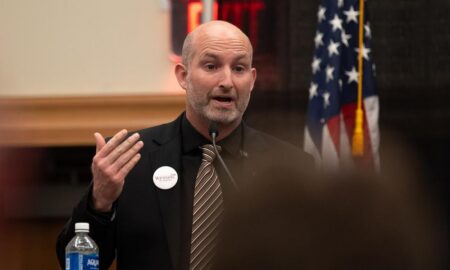
Vicki Alger will be speaking at Dimillos On The Water in Portland on the future of school choice in Maine on Friday, July 31 at 11:30 am. For more information, and to register for the event, please click here or contact Nathan Strout at [email protected] or 207-321-2550