

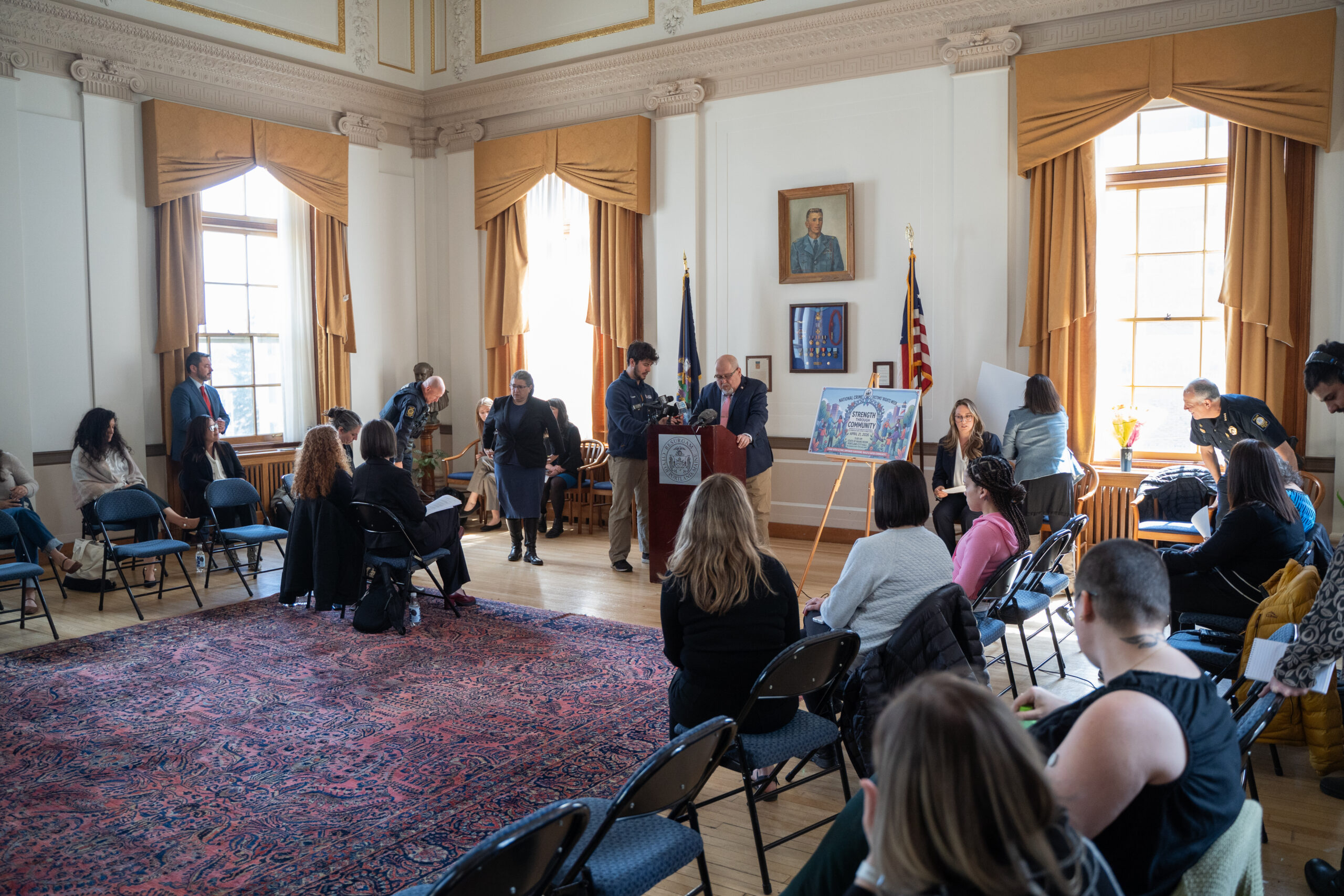
PORTLAND, Maine — Portland Mayor Mark Dion opened Tuesday’s National Crime Victims’ Rights Week press conference at Portland City Hall, welcoming the crowd and setting the tone for an event centered on victims, survivors, and the advocates who work to support them.
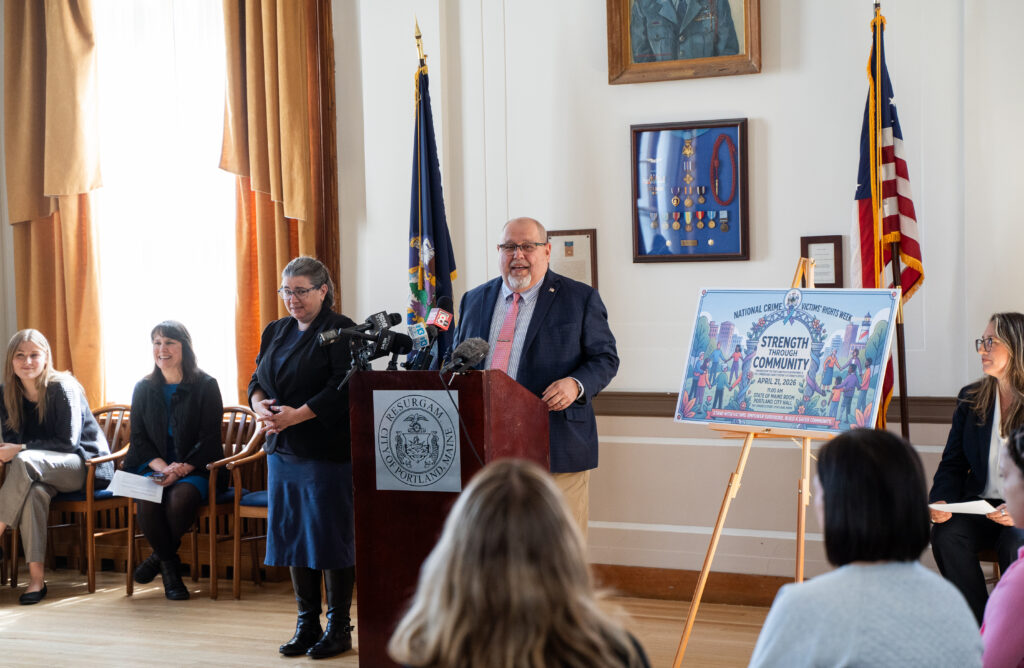
Dion, the first speaker at the event, reflected on how the criminal justice system has evolved over the decades. He said that when he first entered law enforcement, the system was overwhelmingly focused on crimes, investigations, and prosecutions, with little attention paid to the needs of victims. Over time, he said, that began to change as advocates and community leaders pushed to make survivors a more central part of the process.
His remarks framed the event’s broader theme: that the justice system must do more than punish offenders. It must also recognize trauma, support healing, and ensure that victims are treated with dignity.
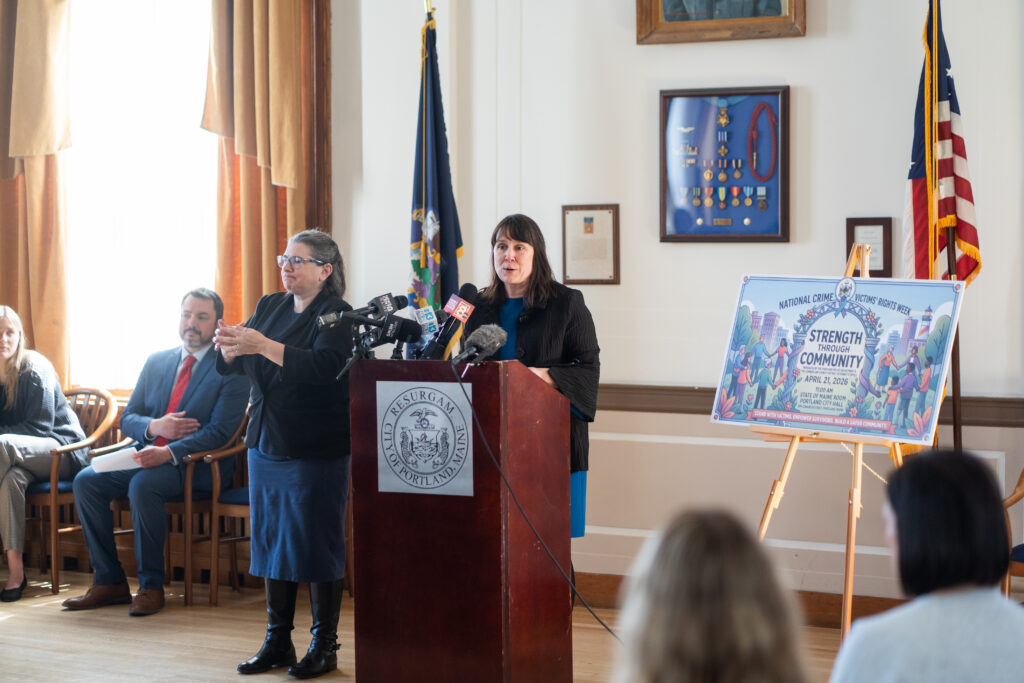
Cara Cookson, director of victim services for the state of Maine in the Office of the Attorney General, followed Dion and emphasized the importance of listening, community, and support for those navigating the aftermath of crime. She described the work of victim advocates across Maine as essential, saying they help survivors through some of the most painful and difficult moments of their lives.
Cumberland County District Attorney Jacqueline Sartoris also addressed the crowd, outlining steps her office has taken to strengthen support for victims. She pointed to the creation of a sexual assault division, efforts to address a rape kit backlog through a federal grant, and the hiring of an additional victim witness advocate.
Sartoris also highlighted a new Maine Survivors Resource Guide, which she said is designed to connect victims with organizations and services across the state, whether or not their cases move forward in court. She said victims need support that extends beyond the courtroom and said restorative justice can, in some cases, offer survivors another path to confront those who harmed them.
https://maine-survivors-resource-guide.base44.app/
Deputy District Attorney Chris Coleman echoed that message, saying a true response to crime requires more than prosecution alone. He described Cumberland County’s broader approach as one that includes multidisciplinary teams, restorative justice efforts, and partnerships between prosecutors, advocates, law enforcement, and service providers.
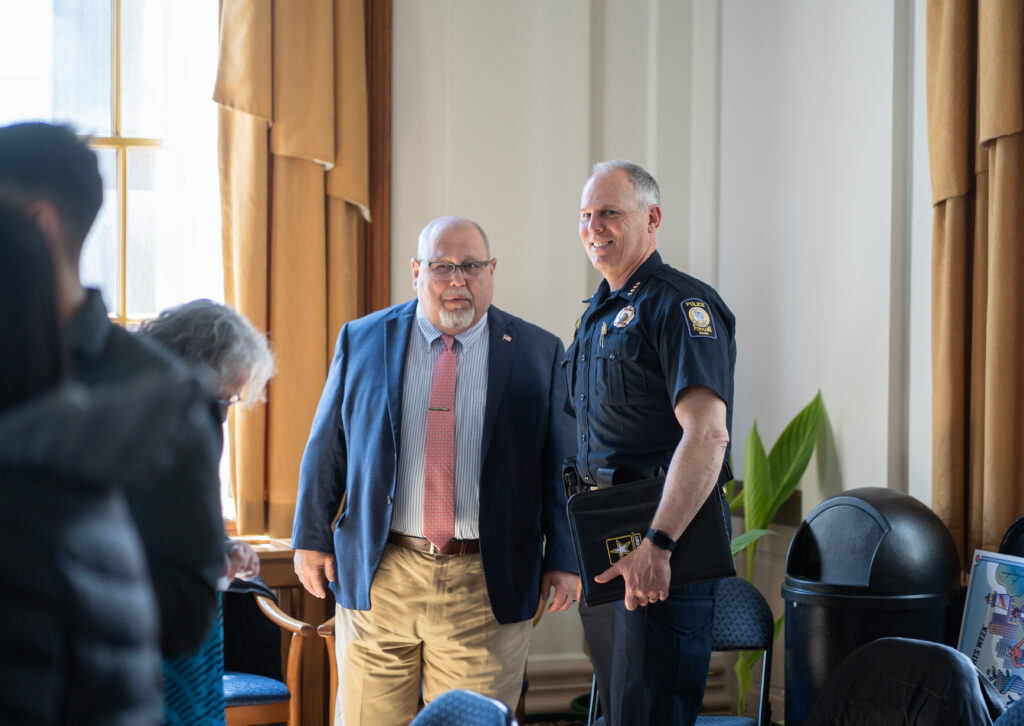
Portland police officials,including Police Chief Mark Dubois, also used the event to reaffirm the department’s long-standing involvement in victim services. The department noted that it has maintained a victim witness advocate position since 1988 and announced it has now added a second advocate to better serve the community.
Survivors who spoke during the event offered emotional accounts of fear, frustration, recovery, and healing. Their remarks underscored the central message repeated throughout the press conference: that victims must be heard, supported, and not forgotten.
But after the formal remarks concluded, the tone shifted.
When this reporter attempted to compliment the event and speak with District Attorney Sartoris about restorative justice, she cut off the conversation and said, “I do not speak with the Maine Wire.”
The exchange came at the close of an event where speaker after speaker stressed the importance of listening, community, and ensuring that people are heard.
That made the response all the more striking. On a day devoted to compassion, openness, and support for victims, one of the state’s top prosecutors had no interest in engaging with a member of the press from a publication she apparently preferred to avoid.
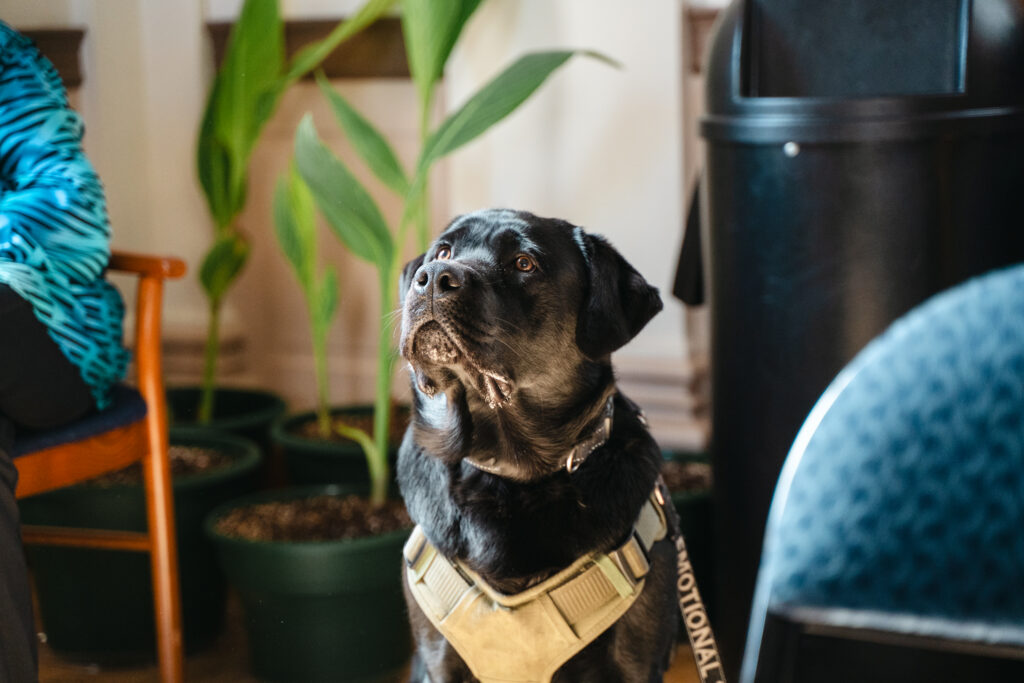
Bonus pic – The goodest of boys:



Sartoris is Soros appointed scum
Well if you prove yourself to be a rage baiting institution people are going to lose patience. Ya think? Maine Wire was not there for condolence that’s for sure.
Wouldn’t it be far easier to provide longterm support to victims by keeping their assailants in prison? I would think it would be easier to recover if you know you’re not going to run into the same thief/violent thug/rapist on the street a week later.
“….Rights Week” I don’t need some tinpot dick tater doling out “special rights”. BUT someone needs to explain to dion (i’ll take boof of ’em) that FREE OF SPEECH and FREEDOM of The PRESS IS A RIGHT, A GOD GIVEN RIGHT, IN THE UNITED STATES CONSTITUTION>
Now.
How ’bout wez had a “H” as in Home to DA. It would from now on be……DAH!
There. I have spoken.
This is Portland. Is anyone surprised by this commie bs? It’s just SOP. Business as usual
THe people of Portland and any other Maine towns that agree to this ignorant idea will just prove how stupid Maine people are. Get ready for the crime waves in Portland. Oh and Dion is out for himself, he could care less about Portland. Dion is only looking for the next political hack job he can fill.
How intolerant of the tolerant left!