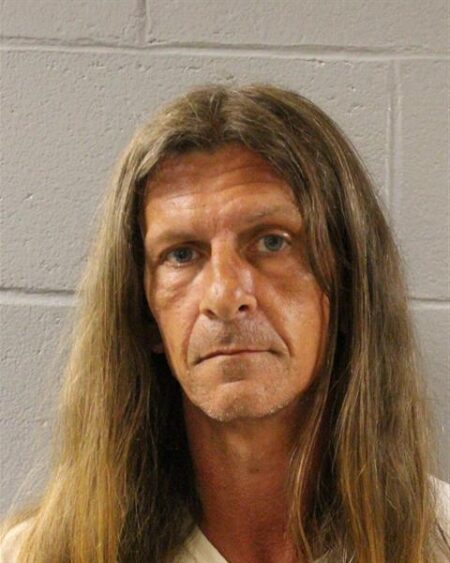
Lucas Sirois, the Franklin County businessman accused of leading a multimillion-dollar marijuana conspiracy in western Maine, is now facing new federal charges.
Sirois effort to challenge the government’s conspiracy case at the highest level has come to an end. The U.S. Supreme Court has declined to hear his appeal, leaving a lower court ruling against him in place. But his legal problems appear to be compounding.
Sirois, 45, alleged by prosecutors to be the head of the “Sirois organization,” was charged in October 2020 in a case centered on industrial cultivation and distribution of marijuana that authorities valued at $13 million. The FBI says he recently met with a witness and allegedly said, if the case did not go his way (which it hasn’t), he wanted to “end everyone that put me in this position.”
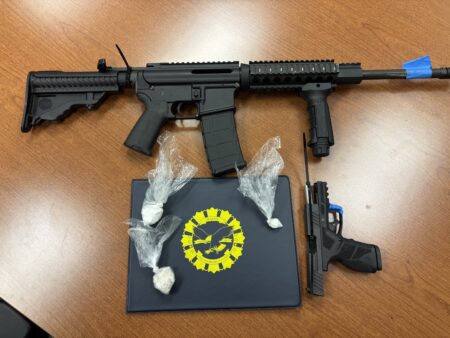
Agents say they then arrested him after he took guns from the witness’s property, and he now faces a new federal charge of receiving a firearm while under indictment. His trial in the marijuana case is scheduled to begin next week.
A federal grand jury previously indicted Sirois, then 44, and his now-ex-wife, Alisia, in 2021 on allegations that out-of-state marijuana sales formed the foundation of a black-market operation that generated millions of dollars. Prosecutors added counts including conspiracy to distribute marijuana, money laundering, bank fraud and tax evasion.
“The defendants failed to show that their marijuana operation complied with Maine’s medical marijuana laws,” Assistant U.S. Attorney Noah Falk said when the indictment was upheld, adding that the prosecution would continue.
Sirois has denied criminal conduct, arguing his large cannabis businesses attempted to follow complex and evolving rules set by Maine’s Office of Cannabis Policy after marijuana legalization in 2016. His petition to the U.S. Supreme Court centered on the Rohrabacher–Farr Amendment, a federal budget rider that bars the U.S. Department of Justice from spending money to interfere with state-legal medical marijuana programs.
In the petition filed in February, his lawyers argued the investigation violated that amendment and that the prosecution was therefore invalid. They pointed to a split between federal circuit courts over how the rider should be applied, saying the Supreme Court could resolve the disagreement. Federal prosecutors waived their right to respond. After considering the petition , the justices denied it, leaving a U.S. Court of Appeals for the First Circuit decision against Sirois in place.
Sirois obtained a medical marijuana caregiver license in 2010 and later purchased a historic building in Farmington that he converted into a cultivation facility. Vendors rented space and sold marijuana to his business, Lakemont LLC, which then sold to patients, according to court records.
His attorneys argued that any violations would have been regulatory matters handled by the state, not grounds for a federal conspiracy prosecution.
The allegations against Sirois have drawn in a number of public officials and law enforcement officers.
Former Franklin County sheriff’s deputies Derrick Doucette and Bradley Scovil pleaded guilty to tipping off Sirois in exchange for cars and money. Former Rangeley Selectman David Burgess admitted to accepting tens of thousands of dollars to advocate for Sirois in town matters. Former Franklin County Assistant District Attorney Kayla Alves pleaded guilty to tampering with documents and was suspended from practicing law for nine months.
In addition, Randal Cousineau of Farmington, described as Sirois’ “right-hand man,” pleaded guilty to conspiring to possess and distribute more than 1,000 kilograms of marijuana and more than 1,000 plants. Alisa Sirois pleaded guilty to conspiracy.
Charges against then-Wilton Police Officer Kevin Lemay and then-Oxford County Deputy James McLamb were dismissed. Sirois’ father, Robert Sirois, and tax preparer Kenneth Allen have also been charged with related offenses.
With the Supreme Court declining to intervene, the First Circuit ruling allowing the prosecution to move forward remains in place, and Sirois now heads into trial facing charges of conspiracy to distribute marijuana, money laundering, bank fraud, tax evasion, and receiving a firearm while under indictment.