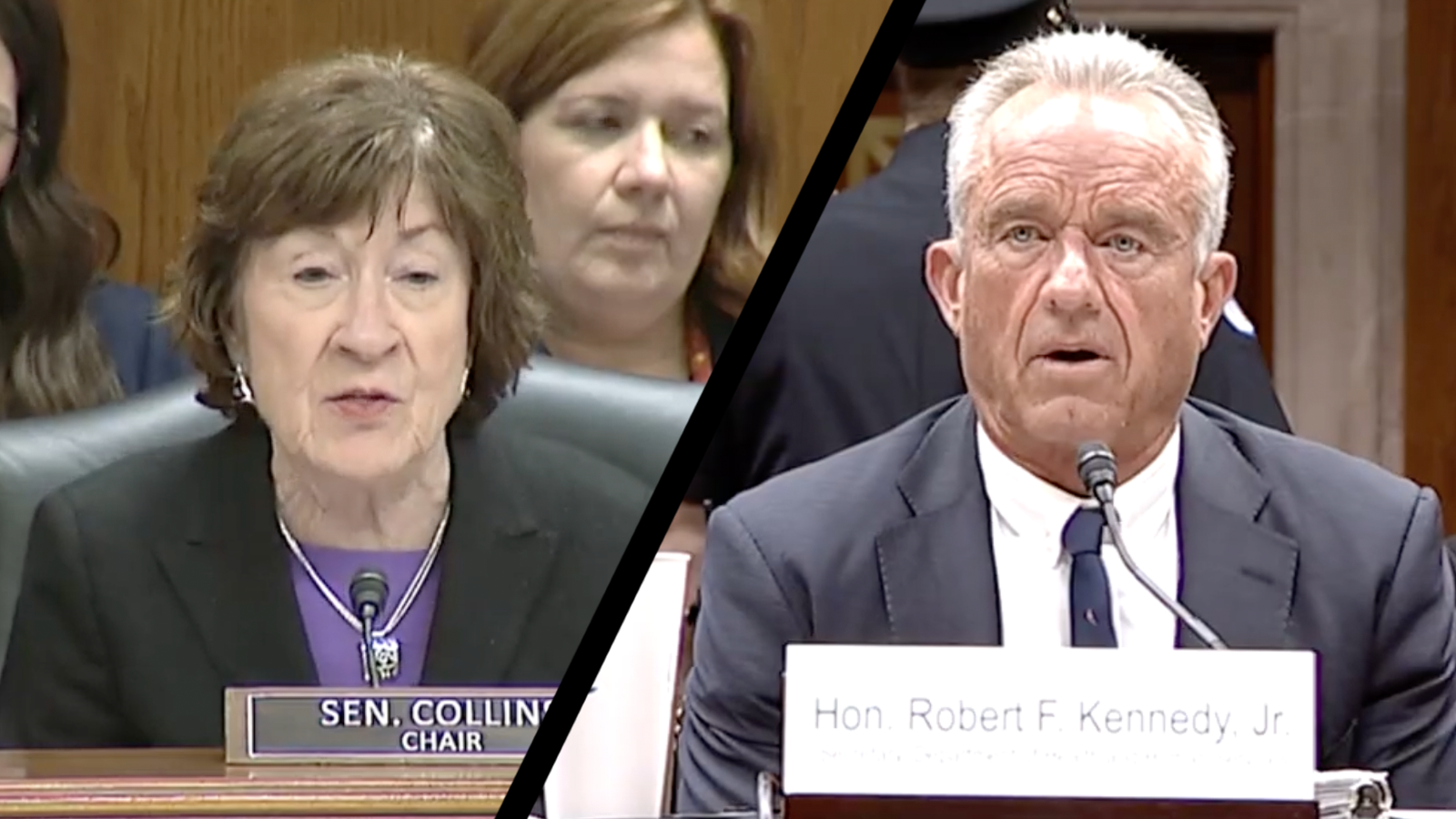
WASHINGTON – U.S. Sen. Susan Collins ® used a Senate hearing on the Department of Health and Human Services’ fiscal year 2027 budget request to challenge Secretary Robert F. Kennedy Jr. over declining support for women’s health research and the administration’s renewed push to cap indirect costs tied to biomedical grants.
Collins, who chairs the Senate Appropriations Committee, pointed to a reported 31 percent decline in the number of NIH-funded research projects in 2025 that included the word “women,” raising concerns that the administration’s crackdown on diversity-related grants is having a direct effect on research focused on women’s health.
During the exchange, Collins said disparities in women’s health are well established, citing higher rates of Alzheimer’s disease among women and differences in maternal morbidity among racial groups. She questioned how the administration plans to address those disparities if diversity is no longer considered in funding decisions.
Kennedy responded by pointing to what he said would be a major upcoming ARPA investment in Alzheimer’s research, along with existing NIH grants studying Alzheimer’s and diabetes. He also said the department is now focusing more heavily on chronic disease and maternal health.
As part of that response, Kennedy cited a perinatal pilot program involving 220 hospitals that he said reduced maternal mortality by 42 percent in one year.
Collins said she appreciated those efforts but warned that a broader problem remains if grants are being screened for the word “women” and then clawed back or left unfunded. She urged the administration to look more broadly at the issue.
The Maine senator also used the hearing to push back on the administration’s proposal to impose a flat 15 percent cap on indirect research costs, a plan she noted Congress rejected last year with bipartisan opposition. Collins said such a cap would harm research at universities, nonprofit laboratories, and medical centers, while undermining the country’s leadership in biomedical innovation.
Collins asked Kennedy whether he would work with lawmakers on a better approach to improving transparency and accountability without damaging biomedical research. Kennedy said he would, while also defending the administration’s broader effort to reduce spending as the federal government faces a $39 trillion debt.
Kennedy said HHS has been asked to cut 12 percent from its budget and argued that the United States is losing ground to China in drug development, clinical trials, and biomedical innovation. He said the department is focused on accelerating approvals and protecting America’s research edge.