

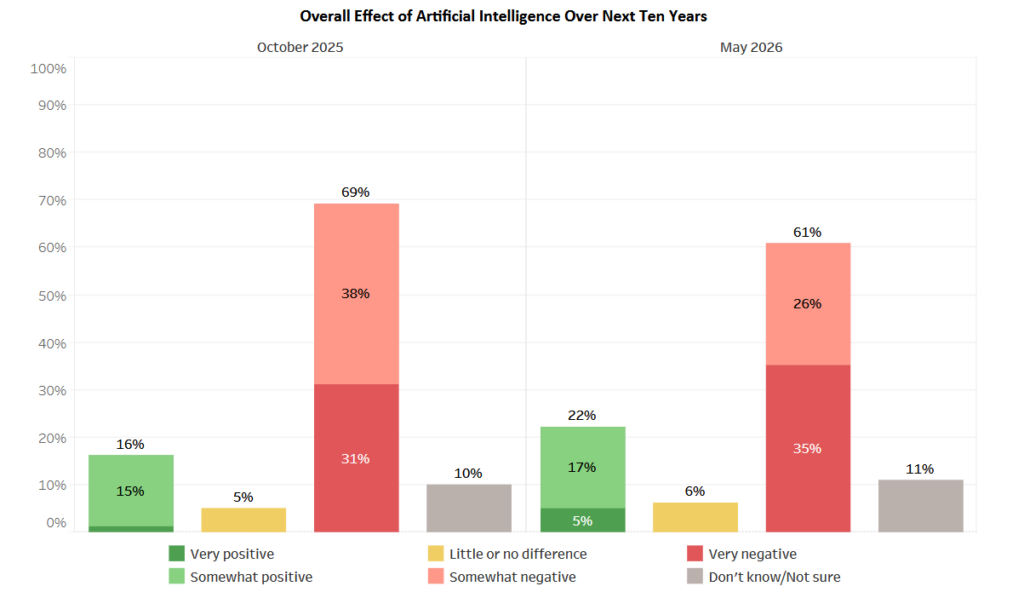
Roughly three out of five Mainers believe that artificial intelligence (AI) will have a negative effect on the country over the next decade, according to the latest Pine Tree State Poll, a States of Opinion Project from the University of New Hampshire Survey Center.
Just 22 percent feel that AI will have a positive effect on the nation in the next ten years. This is up from 16 percent in October 2025.
An even larger share of Mainers, however, have indicated that they think AI will result in fewer jobs nationwide by 2036.
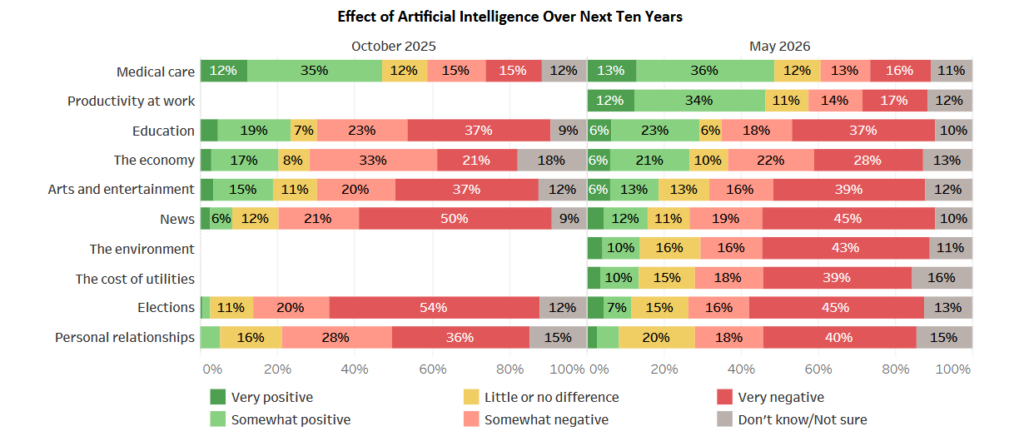
Despite this, respondents appeared optimistic about the impact of AI on medical care (49 percent) and productivity at work (46 percent).
Majorities hold negative opinions on the projected impact of AI on all other aspects of life included in the survey, such as education, news, elections, and personal relationships.
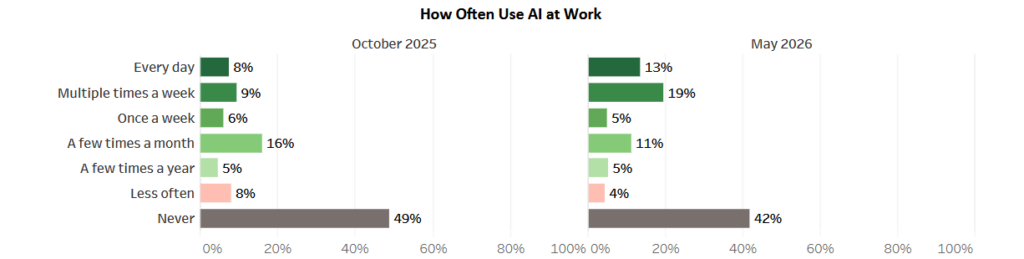
Employed respondents were asked to indicate how often they personally use AI in their jobs.
Since October, the share of Mainers who never engage with AI in their work has dropped slightly from 49 percent to 42 percent, while the percentage that use it multiple times a week has jumped by 10 points.
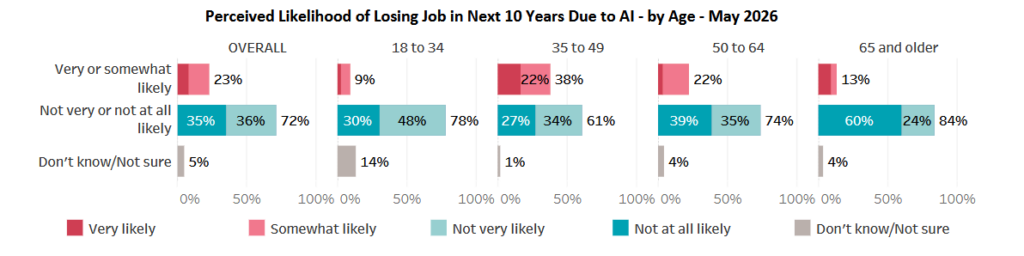
Those between the ages of 35 and 49 were by far the most likely to express fear that they would lose their job to AI over the next ten years (38 percent), followed by those 50 to 64 (22 percent).
Large majorities across all age groups were relatively unconcerned about this becoming a reality for them.
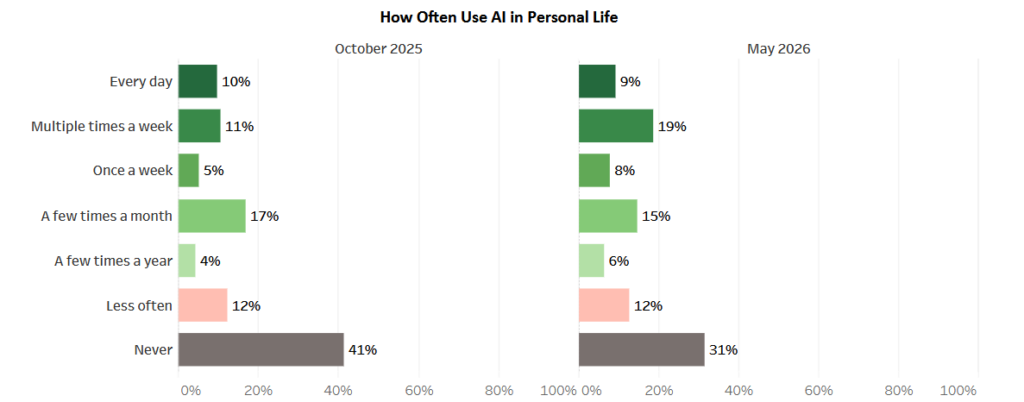
Much like the increased workplace usage indicated by these results, more Mainers seem to be using AI in their personal lives as well.
Last October, 41 percent said that they never use AI, a share that has now shrunk to just 31 percent.
Nearly 20 percent of Mainers now say that they use AI in their personal life multiple times per week.
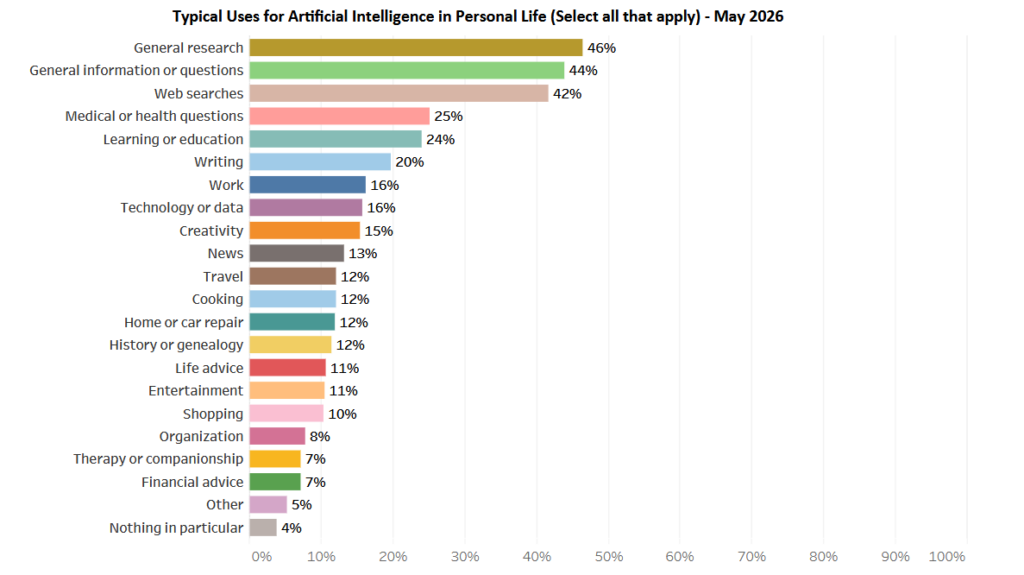
A follow-up question reveals that the vast majority of those who use AI regularly outside of work use it to aid with research and information gathering, effectively substituting it for a traditional web search.
20 percent say that they use it for writing, while 15 percent use it for creativity. Another seven percent indicated using AI for therapy or companionship.
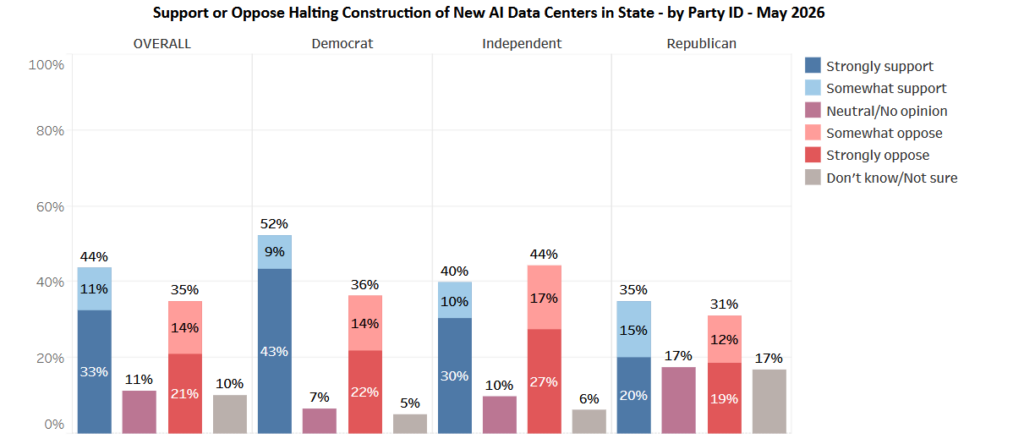
The survey also asked Mainers to share their thoughts on AI data centers. Across the political spectrum, respondents were largely divided on whether or not the further construction of data centers was a positive thing.
At 52 percent, Democrats were the most supportive of halting data center construction, independents and Republicans were more evenly split.
At 17 percent, Republicans were the most likely to say they were neutral on the matter. The same share of Republicans also said that they were unsure of their stance.
During the most recent legislative session, lawmakers attempted to pass a bill putting a pause on AI data center construction, but the measure was vetoed by Gov. Janet Mills (D).
Just hours after lawmakers failed to overturn this veto, the governor signed an executive order establishing a Data Center Advisory Council which will be required to provide input on and evaluate policy related to data centers.
[RELATED: Mills Establishes Data Center Advisory Council Amid Backlash Following Her Veto]
The council will be responsible for evaluating data center projects in light of the state’s green energy and environmental policies and will ultimately provide a strategic report to the legislature.
It will be composed of members from a variety of governmental offices and industries and groups.
The order also instructs the Department of Energy Resources and the Maine Public Utilities Commission to work to prevent data center development from increasing costs for energy ratepayers.



I doubt AI will replace the folks in the trades, farmers, fishermen etc. Learn a trade
Islander is right !
AI isn’t going to fix your electrical panel or replace your toilet .
Good luck finding someone here in Maine who will call you back .
Learn a Trade .
Electricians and Plumbers will always have work and will be paid well to do it .
Your Univ.of Maine at Augusta degree in Social Sciences and Communication won’t even get you a job at the local pizza shop because you’ll be overqualified .
Learn a Trade .