

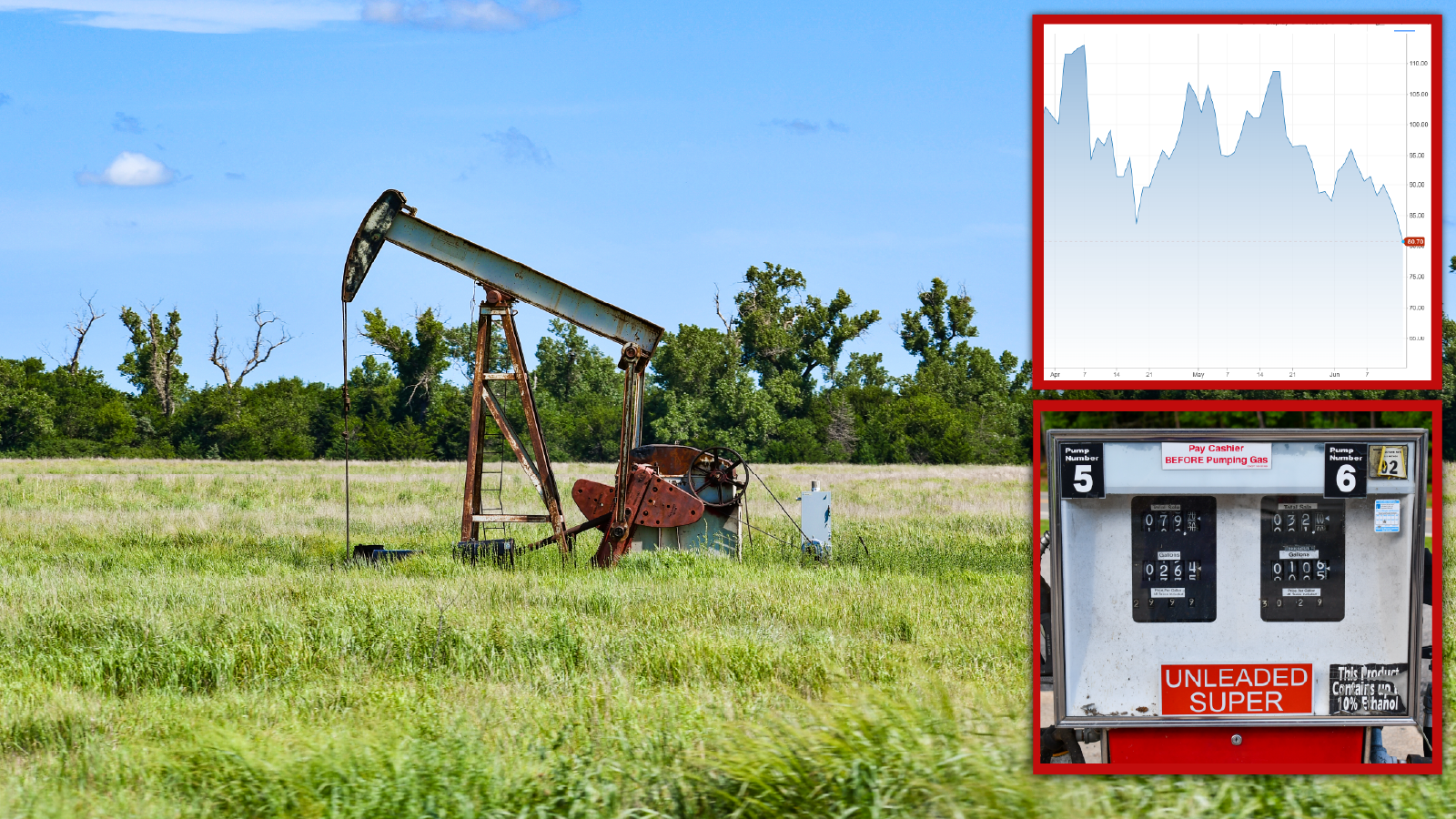
Oil prices are beginning to fall as the war in Iran appears to be winding down, raising hopes that drivers in Maine and across the country could soon see additional relief at the gas pump.
Before the Iran war escalated in late February, Brent crude settled at $70.85 per barrel, while West Texas Intermediate, the U.S. benchmark, settled at $65.42 per barrel. At the same time, the national average for regular unleaded gasoline was just under $3 per gallon.
Today, crude oil remains significantly higher than it was before the conflict. Brent crude is trading at roughly $83 per barrel, while West Texas Intermediate is around $80 per barrel. Even after the recent decline, oil prices remain up by about $12 to $15 per barrel from their pre-war levels.
Gas prices have followed the same pattern.
The national average for regular gasoline is now $4.065 per gallon, while Maine’s statewide average is $4.151 per gallon. In Lewiston-Auburn, drivers are paying an average of $4.082 per gallon, while Portland’s average stands at $4.138.
That means motorists are still paying more than $1 per gallon above where national gas prices stood before the war.
A standard barrel of crude oil contains 42 gallons. But a barrel of oil does not turn entirely into gasoline. At a refinery, crude oil is heated and separated into different petroleum products, including gasoline, diesel fuel, heating oil, jet fuel, propane, asphalt, and other materials.
On average, U.S. refineries produce about 19 to 20 gallons of motor gasoline from one 42-gallon barrel of crude oil. They also produce roughly 11 to 13 gallons of distillate fuel, most of which is sold as diesel fuel or heating oil, along with several gallons of jet fuel and other petroleum products.
Because of the refining process, the total volume of finished products can actually exceed the original 42 gallons of crude oil. That increase, known as processing gain, happens because many refined petroleum products are less dense than crude oil.
That is why changes in crude oil prices do not translate penny-for-penny into the price of gasoline. The cost of oil is a major driver of what consumers pay at the pump, but refining costs, transportation, distribution, seasonal fuel blends, taxes, and retailer margins also help determine the final price.
The recent decline in crude oil prices comes as markets react to signs of a possible U.S.-Iran peace framework and the potential reopening of the Strait of Hormuz, a critical global energy shipping route. Disruptions in and around the strait helped fuel the sharp increase in oil prices during the conflict, driving up costs for refiners and consumers.
If the peace framework holds and shipping lanes reopen safely, analysts expect gas prices to continue falling through late June and into July. But any relief at the pump is likely to be gradual rather than immediate.
Even with fighting winding down, it could take weeks or months for oil traffic, supply chains, and market confidence to return to normal. Until crude prices fall closer to their pre-war levels, gasoline prices are unlikely to return quickly to where they were before the conflict began.
For Maine drivers, the bottom line is clear: prices are moving in the right direction, but the cost of filling up remains well above where it stood before the war in Iran sent global energy markets into turmoil.



“Oil Prices Fall as Iran War Winds Down, Offering Hope for Relief at the Pump”
Well, if I were like all the rest of the impatient, I would run right down today and demand why the price hasn’t gone down. Must be friggin’ price fixin’.
Yea Yea, what he said.
Fill up fast!
This fight ain’t over.
The musloid mullahs must be eliminated.