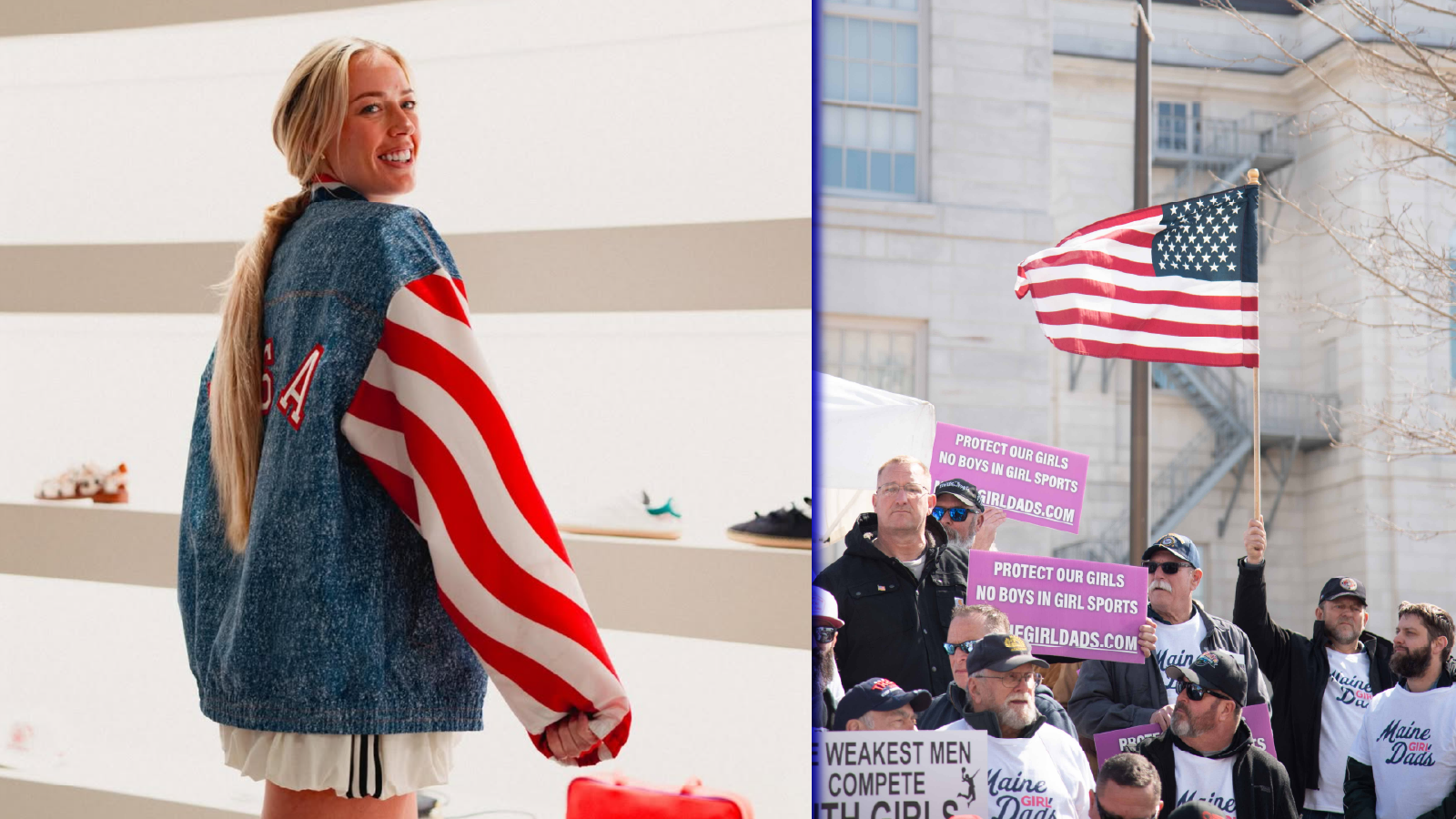
Indiana Fever guard Sophie Cunningham is once again at the center of the national debate over transgender athletes competing in women’s sports, saying this week that protecting girls’ athletics is simply “common sense” despite the backlash her comments have generated.
Cunningham, one of the WNBA’s fastest-rising stars, reiterated her position after an ESPN profile sparked widespread discussion across the sports world.
“I said what I said,” Cunningham told reporters. “I think it’s kind of common sense, and I think I’ll always believe in that.” She added that she believes it is important to protect children and opportunities for biological women in sports.
In the original interview, Cunningham said young girls “shouldn’t have to go against biological men” in athletic competition or share locker rooms with them. At the same time, she rejected accusations that she harbors hatred toward transgender individuals, saying her position comes from “love” and “truth” while seeking to preserve opportunities created under Title IX.
She also pushed back against political labels such as “MAGA Barbie,” describing herself as politically independent and saying she agrees and disagrees with positions on both sides of the political spectrum.
A Growing Voice Beyond Basketball
Cunningham’s profile has grown dramatically during the 2026 WNBA season. Already known for her physical style of play and vocal defense of teammates, she recently became an internet sensation after her finger-pointing exchange during a game went viral, spawning countless memes, celebrity recreations, and even references from the White House and sports fans around the world.
Her popularity has also made her a role model for many young female athletes, with supporters praising her willingness to publicly discuss issues surrounding women’s sports despite knowing the criticism that would follow.
Sharp Divide Over Her Comments
Cunningham’s remarks have drawn praise from prominent advocates for women’s sports, including former NCAA swimmer Riley Gaines, author J.K. Rowling, and tennis legend Martina Navratilova, who have argued that female athletes deserve protected competitive opportunities.
At the same time, transgender-rights advocates and many WNBA fans have condemned her comments as discriminatory and called on the league to distance itself from her views.
The Indiana Fever has not endorsed Cunningham’s position but said its players are free to express their own opinions while the organization remains committed to treating everyone with respect.
Debate Mirrors Ongoing Fight in Maine
The controversy also echoes an issue that has become one of Maine’s most closely watched political battles.
Over the past year, the grassroots organization Maine Girls Dad has become one of the state’s leading advocates for preserving girls’ and women’s sports based on biological sex. The group has organized rallies, testified before lawmakers, and backed legal challenges, arguing that female athletes deserve fair competition and the protections originally envisioned under Title IX.
The issue has placed Maine at the center of a national dispute between Gov. Janet Mills and President Donald Trump.
Earlier this year, the Trump administration accused Maine of violating federal Title IX protections by allowing transgender athletes to compete in girls’ sports and threatened to withhold federal funding. Mills publicly rejected those demands, arguing the state would follow Maine law and defend its policies in court, setting up a highly publicized legal and political battle that drew national attention.
For supporters of Cunningham’s position, her remarks reinforce what they view as a straightforward issue of competitive fairness.
As Cunningham put it this week, protecting girls’ sports is “common sense.”
Whether Americans agree with that assessment continues to fuel one of the country’s most contentious cultural and political debates, one that shows no signs of fading, either nationally or here in Maine.